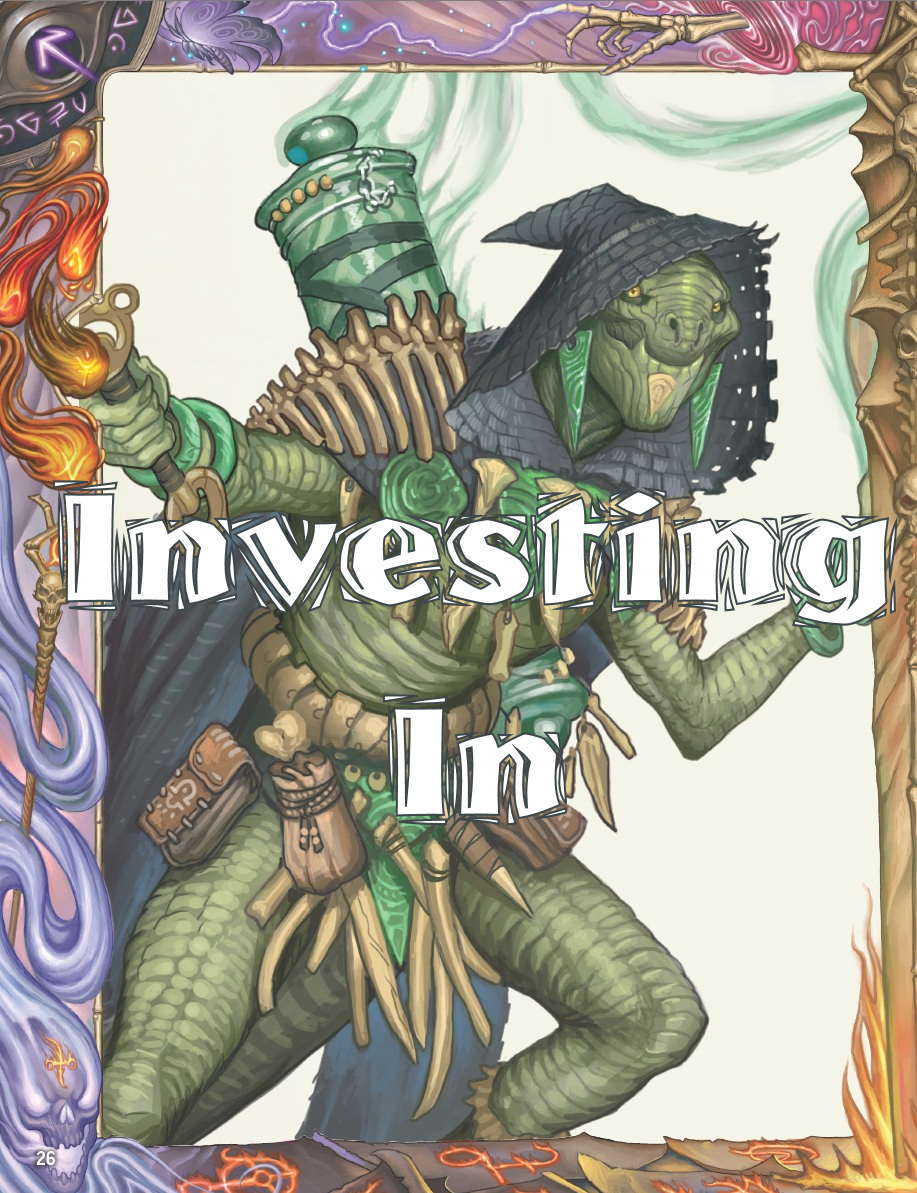

“Death is as common, if not more so, than life. Despite this, death and decay are considered subjects of the macabre, and those willing to dive headfirst into the fascinations they invoke are necromancers.”1
Ready to dive in?
EDIT: You can find coverage of levels 6-10 with High Seas context and Part 2 (levels 10-20) here. And check out our discussion of Impossible Magic with Josh Birdsong!
I’m thrilled to hype the Necromancer class for Pathfinde2E. Ever so thankful to the Paizo folks, including Joshua Birdsong, for the opportunity to talk about Impossible Magic’s necro. They’ve been great allowing me to ask questions and poke into the design, which hopefully helps all of you. Truly a privilege! A reminder too it’s been a rough time recently for them – these folks are real people who put a lot of effort and passion into their work. Please remember that and discuss with respect, or I’ll send thralls after you!
I should remind: I’m currently playing a necromancer (named Varatin) in an Impossible Lands campaign, and I have been using the playtest rules at the table. So basically I’m not reading in a vacuum here. I’m definitely looking at them and immediately thinking how that changes my build, “Oh here’s how I’ll now run a typical turn,” how I need a new 2nd level feat… I’m definitely happy my haunted little spirits are going to be much more active too! (Yes, moving!)
I’m not covering the runesmith here, though you’ll be able to find that elsewhere, which I’ll call out where as soon as I can. Also, I’ll definitely highlight the Runesmith along with the rest of Impossible Magic during my full hype piece on launch day 7/30. Today is all about the Necromancer from level 1 through level 4, because there is enough going on in those early levels that I want room to really sit with it. A future article will go through higher levels. But for now let’s start where all of our delightful, ghost-rattling journeys begin because I’m hoping you’re like me and you’re eager to see the Necromancer’s grave debut!
From the Bones Up
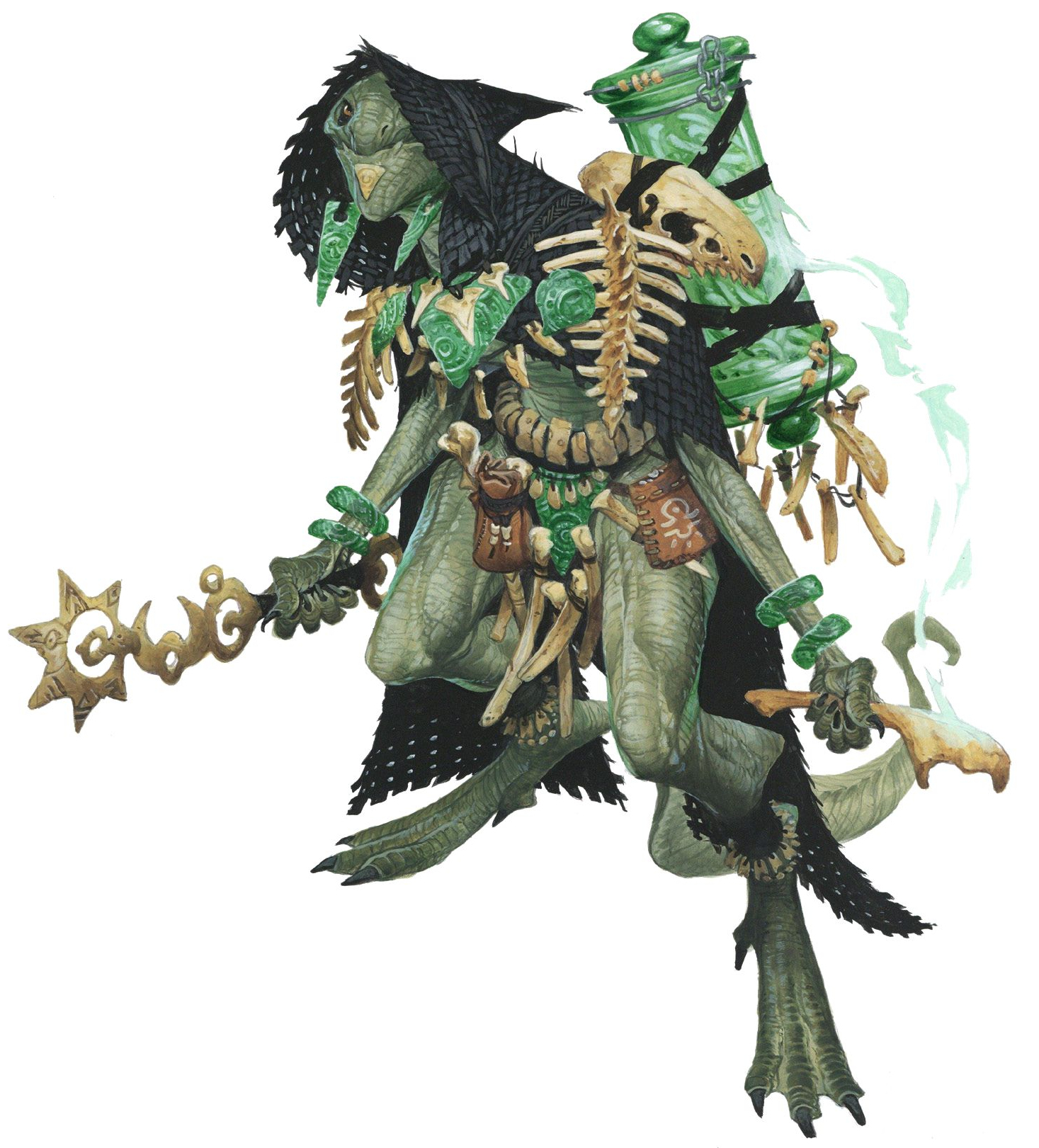
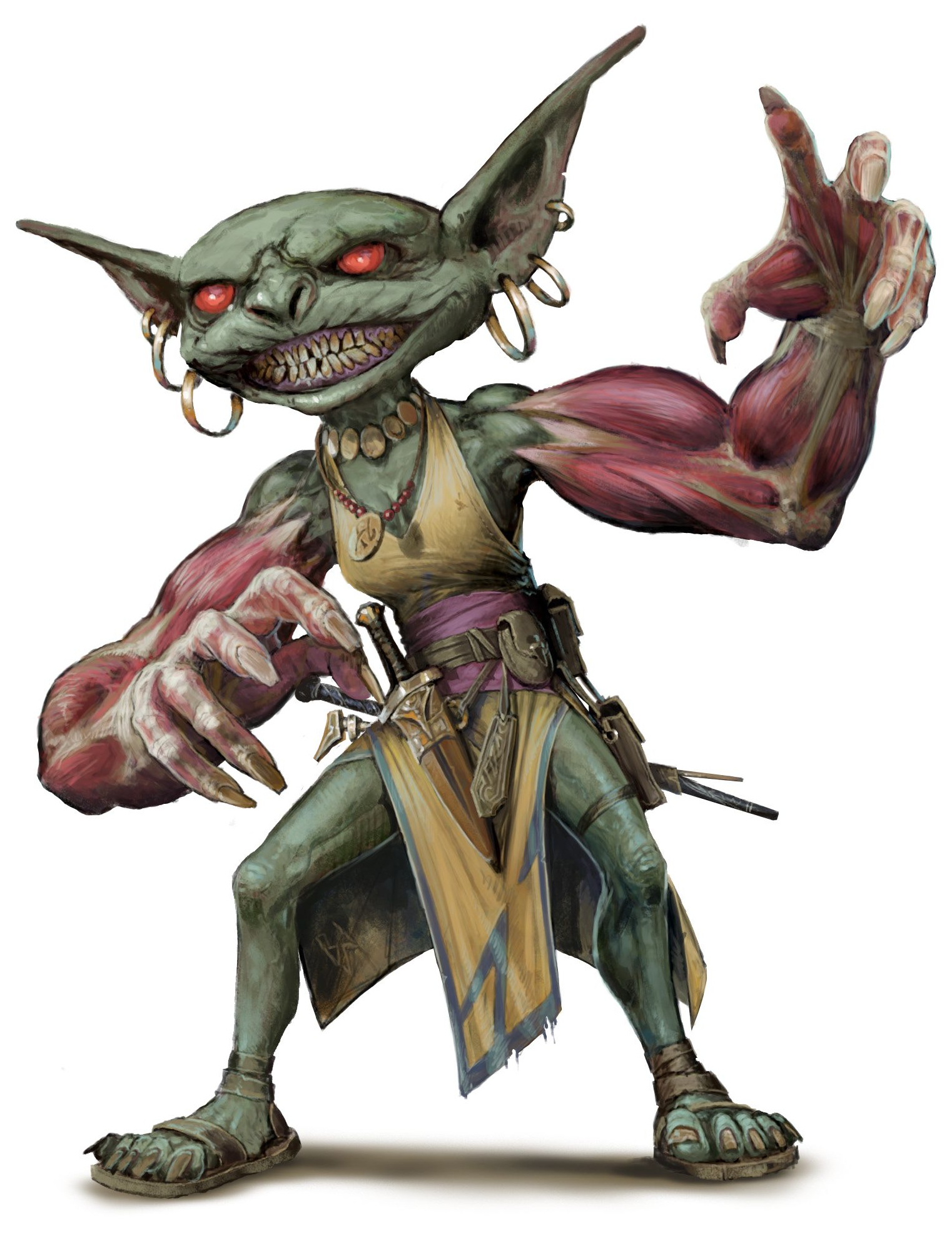
Firstly, Wayne Reynolds did amazing work with Usharak! So great to see an Iruxi iconic too! Definitely check out the iconic necromancer’s story by clicking on his link.
But yes to the Necromancer class details! One of the things that stuck with me from my PaizoCon conversation with Josh was how much Impossible Magic seems to understand that magic classes are table presence. Guess that shouldn’t be a surprise either with Josh’s theatre background. Really all classes should have that table presence though magic effects perhaps make it a bit easier in their descriptions. There’s also the consideration of the action defining whom they are oftentimes. It’s in combat that everyone at the table truly learns what your character does because they just saw it happen in the middle of a fight. The Necromancer in the playtest already had a strong identity: make thralls, spend thralls, reposition pressure, and turn death into more resources. The final version keeps that skeleton, if you’ll forgive the obvious joke, but it has grown a lot more muscle, blood, and spirit around it. (yes, this is going to happen a lot)
There are some big first-level changes, empowering the class so it feels more complete, and certainly stronger, right out of the grave (see, I warned you). In the playtest, your grim fascination gave you your first grave spell, and Necrotic Bomb was a 2nd-level feat. As I revealed on bluesky in the final version, every Necromancer starts with Necrotic Bomb for free, plus the grave spell from their grim fascination. That means you begin with two focus spells and a focus pool of 2. That means right out the gate at 1st level, you are already thrumming with power. Welcome to the iconic “my thrall explodes in void energy” as well and your subclass-defining trick. The focus spell itself also changed (and no I’m not giving ya every detail of every feat and spell, but we all get Necrotic Bomb at first level so…)
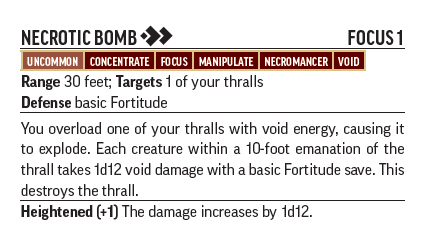
In the playtest, it was a 60-foot range spell with a basic Reflex save. In the final version, it has a 30-foot range and uses a basic Fortitude save. It still destroys the thrall, still creates a 10-foot emanation of void damage, and still scales by 1d12 as it heightens. Sure it’s closer range, but you get it immediately and I like relying on Fort instead of Reflex to balance out the d12 but also so all those weaker folks can’t dodge it so easily. You might be like “hey Rob I’ve got a bone to pick with you, those front liners probably have good fort saves!” and sure, maybe you’re right. But don’t worry. Hold on we’ll get there, like your thralls to the back line, when we talk movement.
Josh mentioned some classic necromantic spells that aren’t on the occult list. Well that changes immediately now at first level! The final necromancer specifically gives you eight occult cantrips, harm, and four other 1st-rank occult spells. It’s normally only divine, but the Necromancer studies the energies of life and death as if they were one thing. They’re not politely asking for power, they’re pushing boundaries with or without permission. (Pharasma’s watching probably.) Mechanically, it also means every Necromancer begins with a core void/vitality tool that interacts beautifully with Mastery of Life and Death while you also are probably choosing Volid Warp as a cantrip.
Speaking of Mastery of Life and Death, this feature feels cleaner and more exciting now. The playtest version let you use the weaker of a target’s void or vitality resistance or immunity when you dealt void or vitality damage. The final version lets you choose whether a spell or ability deals void or vitality damage to each target separately, and it lets abilities that target only living creatures or only undead creatures affect both. This can really matter, say with a 3-action Harm. Note that there is an important limitation: this does not apply to healing effects. The book’s own example calls out that you can have harm deal vitality damage to undead enemies, but that does not mean you can use that same trick to heal living allies. Not yet anyway… Still, this is such a strong identity piece. The Necromancer is spooky, studying death, sure. But I love that they are more than that as a practitioner who understands the seam between life and death and can choose which side of that seam to cut from. I think this is great for both in-game lore and roleplay, as I’m sure Usharak would agree.
How Do You Want To Do This?
The other major addition at 1st level is your Fatal Method. Your Fatal Method determines whether you are a Puppeteer or a Reaper. That choice does a lot of work. Puppeteer is the ranged, thrall-slinging, battlefield-populating necromancer. You gain Consume Thrall instead of every Necromancer getting it. It’s a free action now, but only once per day. You also get Thrall Proliferation, which lets you create one additional thrall once per round when you cast create thrall. That is a very loud sentence for anyone who wants to litter the battlefield with disposable undead problems. Mind you, Create Thrall change as you’ll see later.
Reaper is the more martial Fatal Method. You get martial weapon and medium armor proficiency. While we’re focused on low levels at the moment, I’ll note the martial weapon proficiency increases to expert at 11th level and the medium armor at 13th. Thrall Teamwork lets you make a melee Strike as a free action once per round after you cast create thrall, as long as your target is adjacent to one of your thralls. This is the Necromancer who brings the graveyard to the frontline. It is a very different character from the Puppeteer. I appreciate that distinction because it means the class is not only asking what kind of death magic you study, but also how close you want to stand to the consequences. You could also get two very different approaches of a Necromancer in the same group if you wanted!
Fascinating Fascinations
Ah yes, now to the Grim Gascinations. In the playtest, your grim fascination gave you a class feat, a general feat, and a thrall enhancement. In the final version, it gives you a grave spell and a thrall enhancement, removing the free general feat. Considering the other benefits we’re getting now at first level, I’m very okay with that.
This makes the focus tighter. Bone, Flesh, and Spirit are still here, but they have changed in ways that matter. Bone no longer gives you the Reflex-save protection flat check for thralls. Instead, Bone increases each of your thralls’ Speed by 5 feet. Think of it less as save my fragile undead from a fireball and more my skeletons are better pieces on the boards, skittering around. Flesh still leaves difficult terrain when your thralls are destroyed, which remains beautifully gross and tactically annoying. Spirit still lets your thralls turn physical damage into spirit or void damage, but now it keys off a thrall making a Strike, which matters much more in the final class because thralls can actually be commanded to Strike after they are created! Again, we’ll get there below.
Yep, that’s it. Oh what’s that? You crave blood?
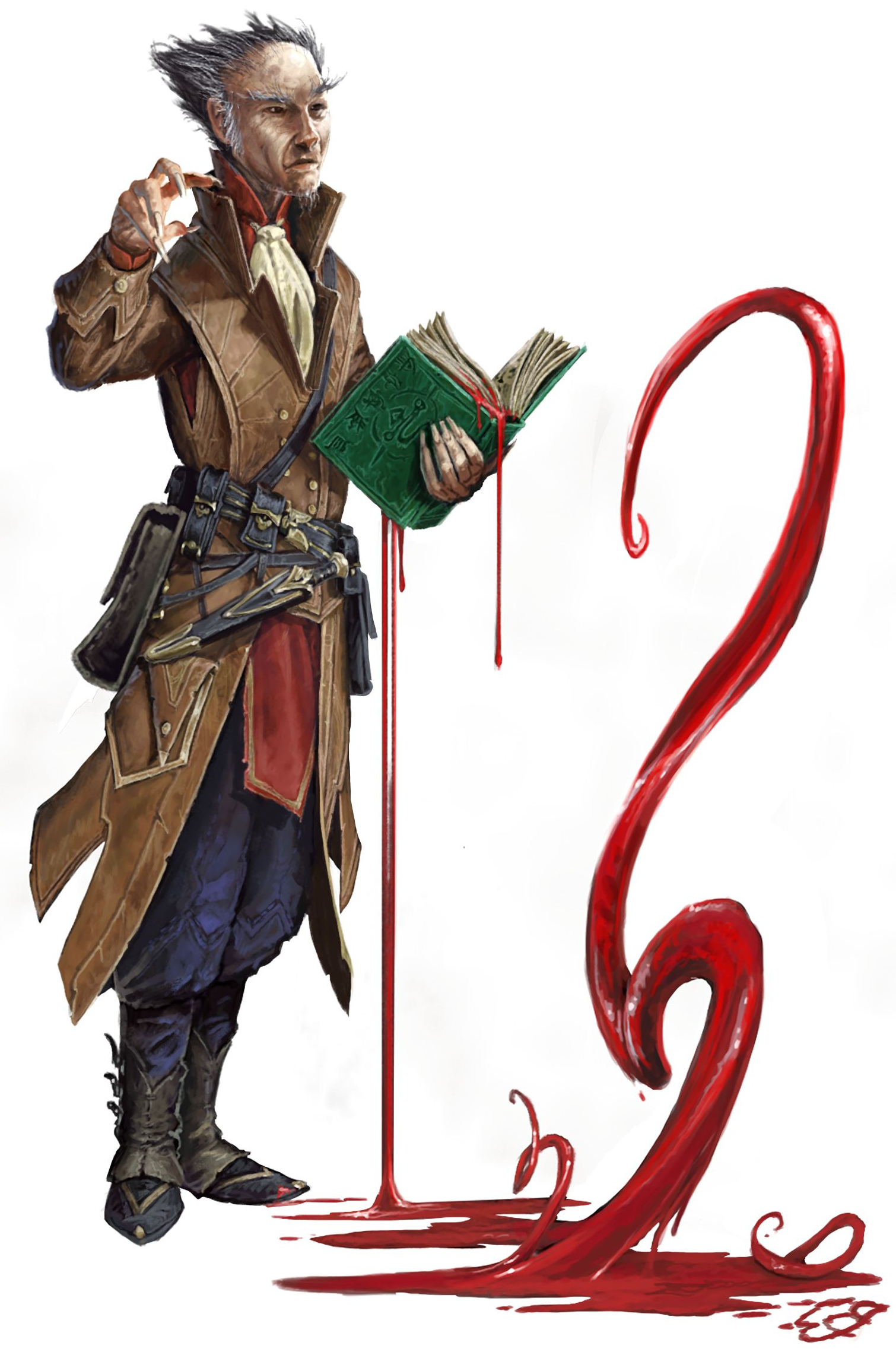
Blood is the new grim fascination that we all begged for, Josh promised, and it rules. Blood necromancers, also called sanguimancers, manipulate their own blood and the blood of enemies. This notes sometimes they’re malevolent looking vampire spawn or perhaps constructs of solidified vitae. Their grave spell is Blood Infusion, which destroys one of your thralls to affect a creature within 15’. On a success or worse, the target loses immunity to bleed, is treated as a creature with blood for effects and requirements, and takes persistent bleed damage. I love this, as I’m sure your rogue will too. It’s a very specific and gruesome little piece of magic. The Blood thrall enhancement is also immediately understandable: whenever one of your thralls is destroyed, you regain 1 Hit Point, and that amount increases every four levels. No one makes me bleed my own blood, but they sure do help return it to me! I mean, to the Necromancer. I’m not a vampiric necromancer no matter what they said of me 100 years ago.
Simply Enthralling
Let’s talk more about Thralls, because as Josh said “Necromancer = thralls”. And I think this is where the final Necromancer really starts to sing… from its dirge… In the playtest, thralls were useful, but they did not take actions. They were more like disposable battlefield objects that could flank, be destroyed, and occasionally fuel a focus power. In just two levels with my necro Varatin, I was already feeling more of it as the thralls appeared and mostly sat there. The final version keeps them simple, but makes them much more active. A thrall is still a level –1 mindless undead creature with 1 Hit Point, not a minion, not summoned, and still extremely disposable. However, now thralls can take actions when commanded by a grave spell or Necromancer ability. They have a Speed of 15 feet unless something says otherwise. They still contribute to flanking. It’s clearly noted their spaces are difficult terrain, and creatures can move into their spaces by pushing them into an adjacent space. Thralls are not walls. They are not replacing the fighter. They are haunting and hindering, but ultimately disposable.
Necromancers now gain Command a Thrall. For one action, you can make one of your thralls Crawl, Drop Prone, Escape, Interact, Stand, Stride, or Strike. When a thrall Strikes, it uses your spell attack modifier, deals 1d6 bludgeoning, piercing, or slashing damage, and that damage scales every 4 levels after. This is a major difference from the playtest and one I saw heavily asked for. In the playtest, create thrall could make one newly-created thrall Strike when you cast it, but after that, your thralls were largely static fuel. In the final version, the battlefield remains alive – or should I say undead – after creation.
Create Thrall changed with this too. The final version lets you either create two thralls in unoccupied squares within range or create one thrall and immediately Command that Thrall as one action. Reminder that Puppeteer makes that even better by creating one additional thrall once per round when you cast create thrall. So a Puppeteer can create three thralls with one action, or create two and immediately command one. Either way, the class is now asking a very fun tactical question: do you need more bodies, or do you need one body to do something right now? It also means a Puppeteer could create 7 thralls for three actions, with one of them taking a Strike!
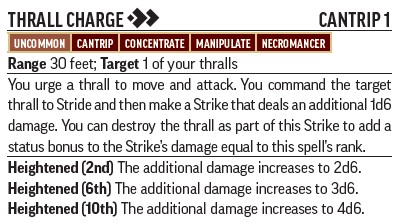
Thrall Charge is also now part of your base abilities as a grave cantrip. Also gained at first level, it gives you a two-action way to command a thrall to Stride and Strike with extra damage. You can even destroy the thrall as part of the Strike to add a status bonus to damage equal to the spell’s rank. Again, yes, sure thralls are spell batteries but they aren’t passive while still balancing the number of actions a Necromancer commands. I love how they can actually lurch across the battlefield and hit something. It also means the back line of the enemy will live in fear as you maneuver some thralls toward them.
Inevitable Return also changed, still gained at 3rd level though by all. In the playtest, you could trigger it as a reaction when an enemy within 60 feet died and created a thrall in the corpse’s space that fell apart after 1 minute. In the final version, the trigger is narrower: a Small or Medium enemy within 30 feet dies. You create a thrall in the corpse’s space, and it is the same size as the triggering creature. The range reduction is real, but remember they can move, and it’s easier to create more. It certainly makes the positioning game more intimate. The Necromancer wants to be near death. Not necessarily in melee, depending on your Fatal Method, but near enough that the battlefield’s casualties become part of your next turn.
Consume Thrall is different, in fact not every Necromancer will have it as I called out before. The more melee focused Necromancers care less about the focus powers, while the spell-caster focused certainly do. Hence why I feel it’s now a Puppeteer only ability. It was a one-action, once-per-10-minutes focus point recovery tool. In the final version, it is a free action, requires you’re at 0 Focus points, and can be used only once per day. It also clearly notes this focus point can only fuel grave spells. That is much more limited in frequency, but also much cleaner in action economy. I should also note the Necromancer also now has a separate Refocus rider: if you have a thrall when you begin Refocusing, you can destroy it to regain 2 Focus Points. That pushes the resource recovery into the expected Refocus timing and lets Consume Thrall become a clutch moment instead of a routine button.
About My Necromancer
Figured I’d talk a bit about my necromancer Varatin as I dug into (up?) the feats. For Varatin and I, all of these changes are very exciting and also a little inconvenient in the best way. Varatin is a Spirit necromancer, and his thralls have always been tormented and lost souls. They are pale green, spectral things tied just enough to the physical world to obey him, flank for allies, and now apparently shuffle, claw, and shriek their way across the map! He is a controlled, aristocratic figure with a scepter (mace) in hand and far too many secrets in his shadow, so Puppeteer is absolutely where I am taking him for Fatal Method. I want him directing the dead like pieces in a courtly game no one else remembers learning.
I suppose I’ll note here that at 1st level you still get Undead Lore and at 3rd level you get Mental Wards, as well as that Inevitable Return reaction mentioned above. Mental Wards is as Grim Wards was in the playtest. It gives expert Will saves and improves successes against mental or possession effects from undead or haunts into critical successes. I love this feature and early crit success change as I feel it just makes sense considering the class’ focus. You’ll definitely be thankful for it in any undead prevalent campaign or haunted dungeons as the ancient and deeply weird are all very real concerns.
First Level Feats
I am still taking Reach of the Dead with my Human ancestry feat with Natural Ambition. That feat remains one of my favorite early Necromancer options. Being able to cast a spell from one of your thralls within 60 feet is exactly the kind of eerie battlefield geometry I want from this class. It lets your thrall become a point of origin, calculate range and cover from its space, and then be destroyed. For a Puppeteer, that is perfect. Create (or call) the dead. Speak through it. Spend it. Repeat.
I’m likely to use Necrotic Bomb often this way and in fact my actual problem is that I took Necrotic Bomb at 2nd level in the playtest, and now I do not have to. That is a wonderful problem to have. It means I get to pick something new!
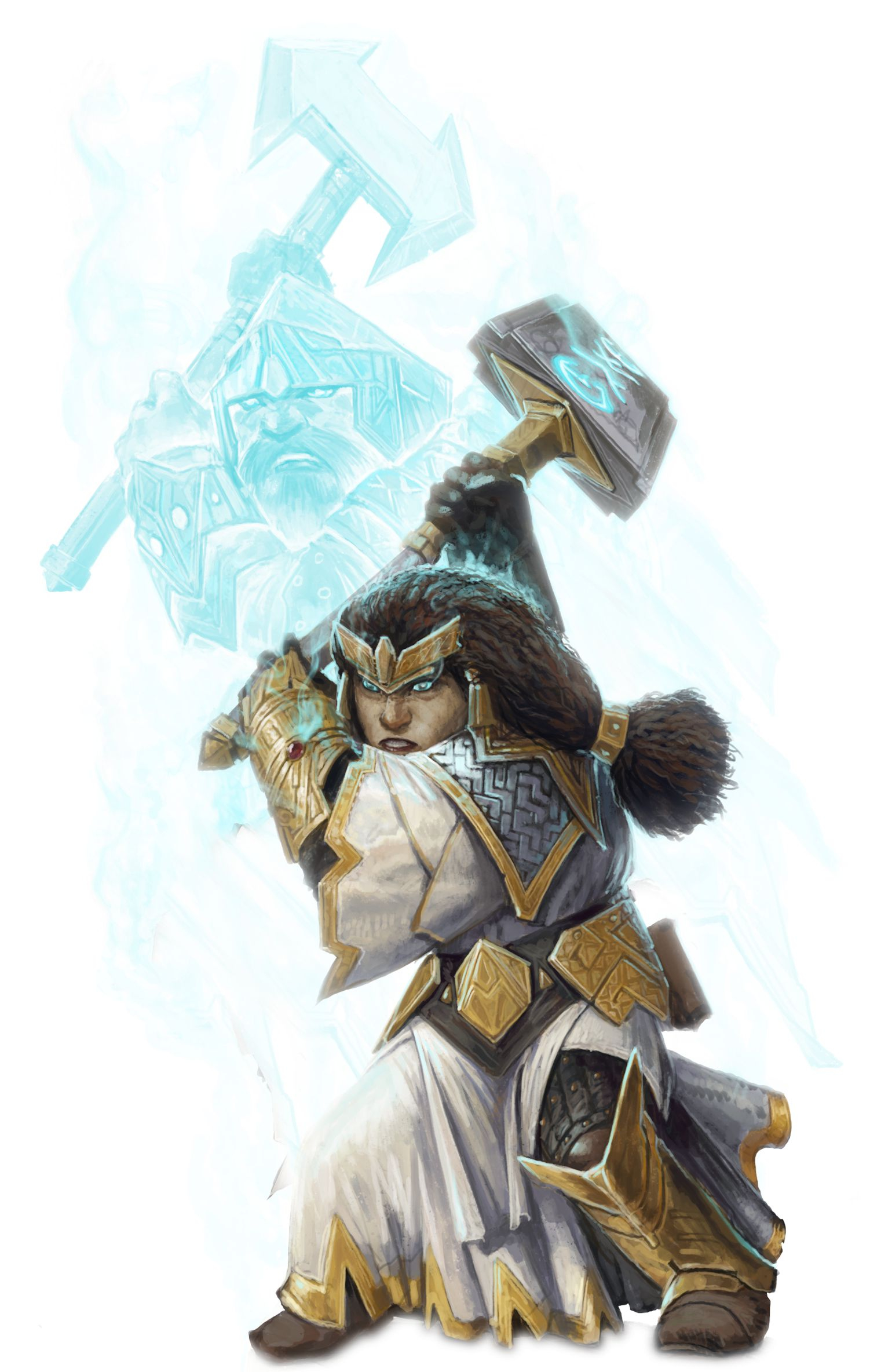
At 1st level, the final Necromancer has a much different feat menu than the playtest. In the playtest, Bone Spear, Dead Weight, and Life Tap were 1st-level feats, tied to the grim fascination structure. Now those are the actual grim fascination spells for Bone, Flesh, and Spirit. The 1st-level feat list instead includes Death Speaker, The Hallowed Dead, Reach of the Dead, Undead Familiar, The Unholy Dead, and Widespread Fascination. Death Speaker helps your magic affect undead creatures by ignoring the mindless trait and certain immunities when targeting or affecting undead. This is great when using the Occult list. The Hallowed Dead and The Unholy Dead let you lean into holy or unholy necromancy, with matching traits, anathema, and some spirit damage for good measure. You could be more like the holy warrior with spirit friends like the image above or more like the classic evil Tar-Barphon, the Whispering Tyrant. Undead Familiar is exactly what it sounds like, and I know some of you are already naming your dead little guys. Widespread Fascination lets you pick up a grave spell from another grim fascination, which is an excellent way to say, “Yes, I study spirits, but have you seen what blood can do?” or whatever else you want!
For Varatin, Reach of the Dead is still the standout because it matches both the mechanics and the visual. I want him to gesture with that calm, spectral poise while some half-formed ghost across the battlefield becomes the mouth of a spell. That is Necromancer fantasy gold so all set there for that Natural Ambition choice.
Second Level Feats
I really had to resist some inane you’ve got two feats joke here as a heading.
At 2nd level, the final feat list opens up in a big way and it’s where I have to think. Bone Speaker has moved from 1st level to 2nd level and still gives you that excellent Undead Lore angle for understanding living creatures with skeletons, as well as forensic work on corpses. Conceal Spell remains useful for any caster who wants to be subtle. Deathly Scream is new and gives you a 1-action focus spell that lets a thrall emit a spectral scream, dealing mental damage in a 5-foot emanation and frightening on a failure. Draining Strike moved down from 4th level to 2nd level and changed significantly. It now counts as two attacks for multiple attack penalty, destroys one thrall at low levels, adds 1d6 spirit damage, and heals you for the spirit damage dealt but improves at 10th and 18th level. Enhanced Undead Familiar improves that familiar if you took Undead Familiar.
A big one I’m excited for that I’m foreshadowed is Invert Harm. It lets harm heal living creatures as though they were undead, which is a very tempting bit of flexibility. That means when you do a 3-action Harm, because of your mastery of life and death, you could heal your allies and harm your enemies! Muscle Barrier is still here, giving you a focus spell that turns a thrall into temporary Hit Points and an Athletics bonus. Song of the Soul is another new focus spell, turning a thrall into an instrument that heals a living or undead creature and gives fast healing while the target stays close. Finally, Undead Creator gives access to the create undead ritual if you are not holy and you don’t need a secondary participant to cast it but still have to make all relevant checks. And yes, Create Undead still means you’re choosing a specific type of undead for the ritual when you get it. I verified with Josh!
For Varatin, the 2nd-level choice is hard in a way I love. Muscle Barrier is the practical option. It is clean, defensive, and always useful. Song of the Soul is thematically gorgeous for a Spirit necromancer. It turns a thrall into a silent instrument only one soul can hear, and that is exactly the kind of macabre beauty I want for this character. Deathly Scream is the dramatic combat option, especially because I love Will-save pressure and fear effects. Invert Harm is probably the one I will keep staring at because harm is now baked into the class, and making it more flexible is very attractive. I do not know which one I am taking yet, and honestly, that is a great sign for a class feat list! I have played a fair amount of healers, so I’m leaning away from that at the moment and toward Deathly Scream, but who knows.
Fourth Level Feats
If I’m having trouble at 2nd level, 4th level is going to be a real challenge. At 4th level, the feat menu gets even more interesting. Body Shield is still here and still lets you throw an adjacent thrall between you and an incoming attack for a +2 circumstance bonus to AC, with resistance if the attack still hits. Bony Barrage remains the Bone-flavored area focus spell, but the final version is a little cleaner about originating from a thrall, and it can protect you and allies in the area if you destroy a second thrall. Ghostly Stride is new and very stylish, letting you Stride up to half your Speed without triggering reactions and move through enemies’ spaces. Great for a Reaper! Mobile Thralls is one of those feats that looks quiet until you imagine actual maps. It gives thralls you create either a climb Speed or swim Speed equal to their land Speed, and at 8th level it adds flight as an option. Wherever you go, your thralls go! Osteo Armaments is now level 4! It still lets you create a +1 striking weapon made of bone and sinew, though you still have to wait til level 8 to be able to destroy a thrall and get a decaying rune. They really did hear y’all on that melee necromancer, hence the Reaper!
Overwhelming Harm expands the 3-action version of harm to a 60-foot emanation! Couple that with the Invert Harm and you can heal allies and harm enemies and just do crazy explosive necromanctic bursts. Have Reach of the Dead? You can do it 60 away! I’m a little worried about what Tar-Barphon is going to be able to do now… Vampiric Spell is a spellshape feat that does what you might expect and gives temporary Hit Points after a damaging spell. Void Siphon gives living Necromancers a reaction against void damage, granting resistance and then temporary Hit Points. Quite useful until you become undead!
For Varatin, Mobile Thralls is incredibly tempting. My thralls being able to climb or swim makes the battlefield stranger, and that matters in a campaign where terrain can get weird quickly. Ghostly Stride also feels perfect for a Spirit necromancer, especially one who should never seem like he is in a hurry even when he is absolutely moving through danger. Vampiric Spell is the durable caster option, and I can see it being very strong for anyone who wants the Necromancer to feel like they are always drinking a little from the damage they deal. A Blood Necromancer is bound to love it. Body Shield remains the “please do not hit my beautiful, fragile wizard body” pick, and sometimes practical wins but hopefully Varatin is staying farther away from attacks unlike a Reaper.
On Blood Necromancers
I wanted to cycle back now that I’ve gone through feats so we could look again at that Grim Fascination of blood. I really see it as a great and thematic option, not that they all aren’t. I expect many to think Reaper first as a Final Method with blood. The early package looks especially strong. Blood wants thralls to be destroyed because each destroyed thrall gives you a little healing. Puppeteers want to make extra thralls. Necrotic Bomb wants to destroy thralls. Blood Infusion wants to destroy thralls. The whole thing looks like it can become a very satisfying cycle of bodies, blood, and battlefield pressure. At 2nd level, Muscle Barrier adds more defensive value to the self-sustain package, while Deathly Scream gives another way to turn a thrall into an area of misery. At 4th level, Vampiric Spell feels thematically perfect, while Mobile Thralls helps your bloody constructs get into the places where they can be spent. If you are building Blood, I would look very hard at Puppeteer, and I would pay attention to anything that creates, moves, or destroys multiple thralls. That is where your engine starts humming but you’ll be a very happy Reaper too!
Nec-Romancer of My Heart
This is why I love investing in the Necromancer. I’ve wanted to build one beyond “simple wizard” or “evil cleric” for a long time. It’s spooky but it’s well beyond managing spell slots and lots more to do with those scary thralls, building that horde. You are managing bodies and spaces in combat in a very tactical way, matched with the debuffing nature of the occult spell list. I love the reactions of death triggers, and the emotional reality of being the person at the table who says, “Actually, I need that corpse for something.” The final version has taken a playtest concept I already enjoyed and pushed it toward something more active, more flexible, and more immediately satisfying.
I am excited to update Varatin. I am excited to see whether my spectral thralls become more useful, more dramatic, or simply more doomed. Eventually I’ll decide what replaces Necrotic Bomb at 2nd level, even if that decision is going to haunt me for a bit. And I am especially excited that we will have a chat with Josh Birdsong ahead of release, because there is so much here I want to ask about! Stay tuned for that date
Next Time
Next time, we are shifting course toward Pathfinder Lost Omens High Seas, though maybe there will be some Necromancer details in there too. You know me. If there is a way to bring ghosts onto a boat, I am going to find it. Ghost Pirates! You’ll have to wait a bit longer for the higher level abilities and feats of the Necromancer class.
Please do join me on Bluesky at https://bsky.app/profile/silentinfinity.bsky.social. I want to hear about your playtest Necromancers, and the ramifications of what I shared above, let alone what questions you want answered before Impossible Magic releases.
Again, please remember to support one another and of course, much love to all!
Investing In:
I wasn’t quite sure what to name my article series when I first started but the idea of showcasing or discussing things that make me excited, that I find new and interesting, or maybe I’m otherwise passionate about seemed to fit with the idea of Investing In something like the Pathfinder 2E mechanic. To use some magic items you have to give that little bit of yourself, which helps make these things even better. I like the metaphor of the community growing and being strengthened in the same way!
I also want to hear what you’re Investing In! Leave me a comment below about what games, modules, systems, products, people, live streams, etc you enjoy! You can also hit me up on social media as silentinfinity. I want to hear what excites you and what you’re passionate about. There’s so much wonderful content, people, groups (I could go on) in this community of ours that the more we invest in and share, the better it becomes!
Sources
Note I’ll update in future once I verify illustrators.
Banner – Necromancer class banner art, Impossible Magic, Paizo
- Necromancer class opening excerpt, Impossible Magic, Paizo
- Usharak, iconic Necromancer, Impossible Magic, Paizo, art by Wayne Reynolds
- Necrotic Bomb focus spell, Impossible Magic, Paizo
- Flesh Puppeteer, Impossible Magic, Paizo
- Thrall Charge cantrip, Impossible Magic, Paizo
- Spirit Reaper, Impossible Magic, Paizo
- Blood Puppeteer, Impossible Magic, Paizo