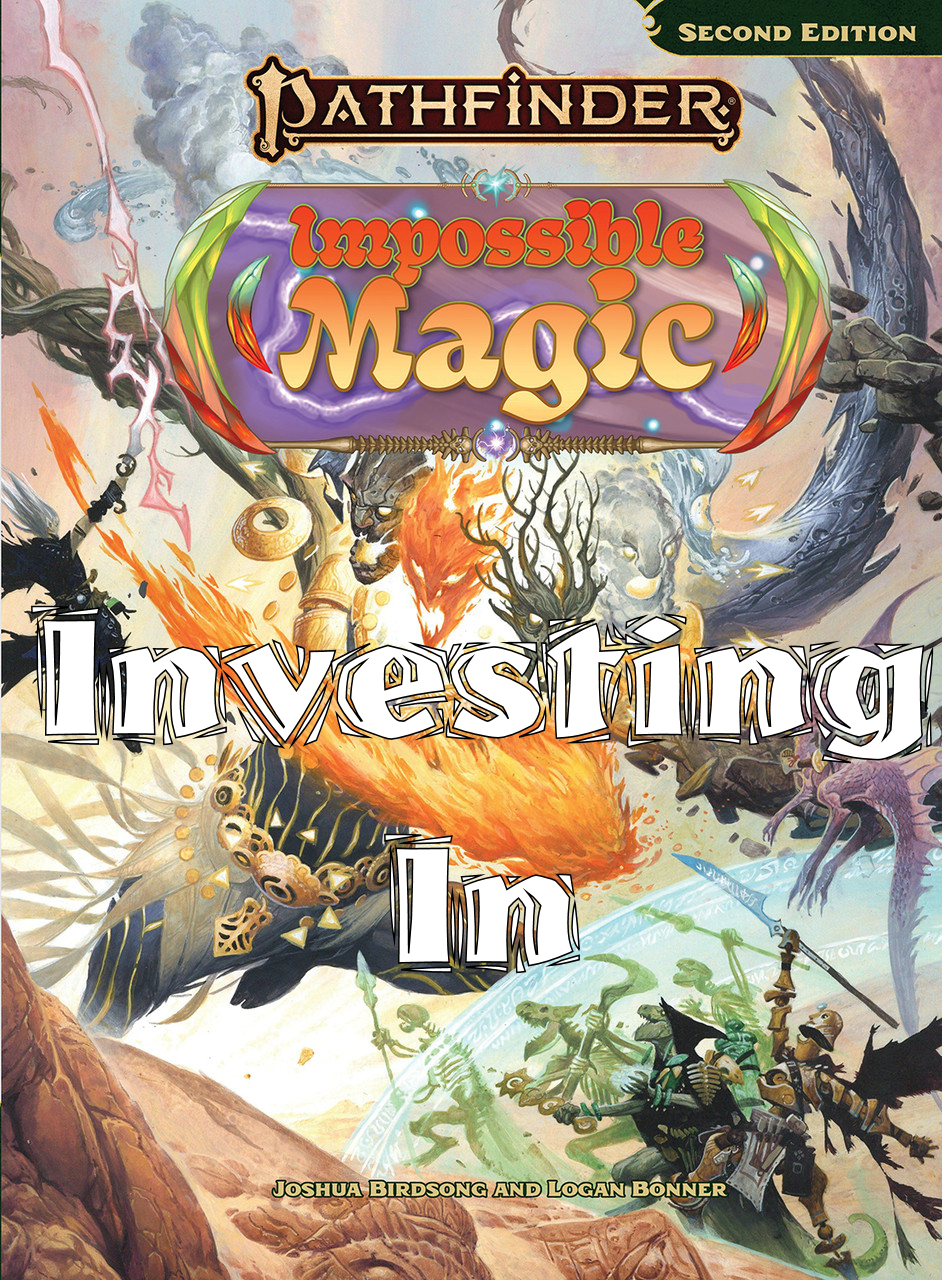

“The machinations of wizards always seem impossible, until they are not.”1
Well, that is one hell of a thesis statement. Also a Happy Gen Con to all attending!
Magic has always been essential to Pathfinder, but Impossible Magic wants us to remember that magic should also be strange and wondrous. It should occasionally make everyone at the table pause and ask if that’s even possible. I want to hear, “Wait, you did what?” on occasion, you know? This is a book where characters summon weapons from their souls, steal spells out of the air, wake the world beneath their feet, talk to magic itself, and under extraordinary (perhaps impossible) circumstances rewrite reality so fundamentally that their soul can never perform the same feat again! I’m thrilled to have the full book, and forgive me but this article is teaming to go along with it!
First to our authors Joshua Birdsong and Logan Bonner, thank you very much for a wonderful read! Thanks to those many other authors, designers, editors, and artists too! Make sure to check them out on page 2! Truly, it’s been a tremendous gift to preview the Necromancer, talk firsthand with Josh, and see the tremendous teases from Mollie Russell at WarGamer, let alone the incredible videos Mathfinder and ThrabenU have put out, heck are putting out! But reading through it all, especially to get ahead of my chat with Josh last week has been an undertaking. Updates for the Magus and Summoner, the new Necromancer and Runesmith… All could each carry an article on their own, and I’ve already had 2.5 for the Necromancer! I figured today we’d hype the whole book, moving through some amazing elements with a focus on that which comes after the classes like archetypes, spells, and more! There’s many options waiting to transform a good character idea into something wonderfully specific.
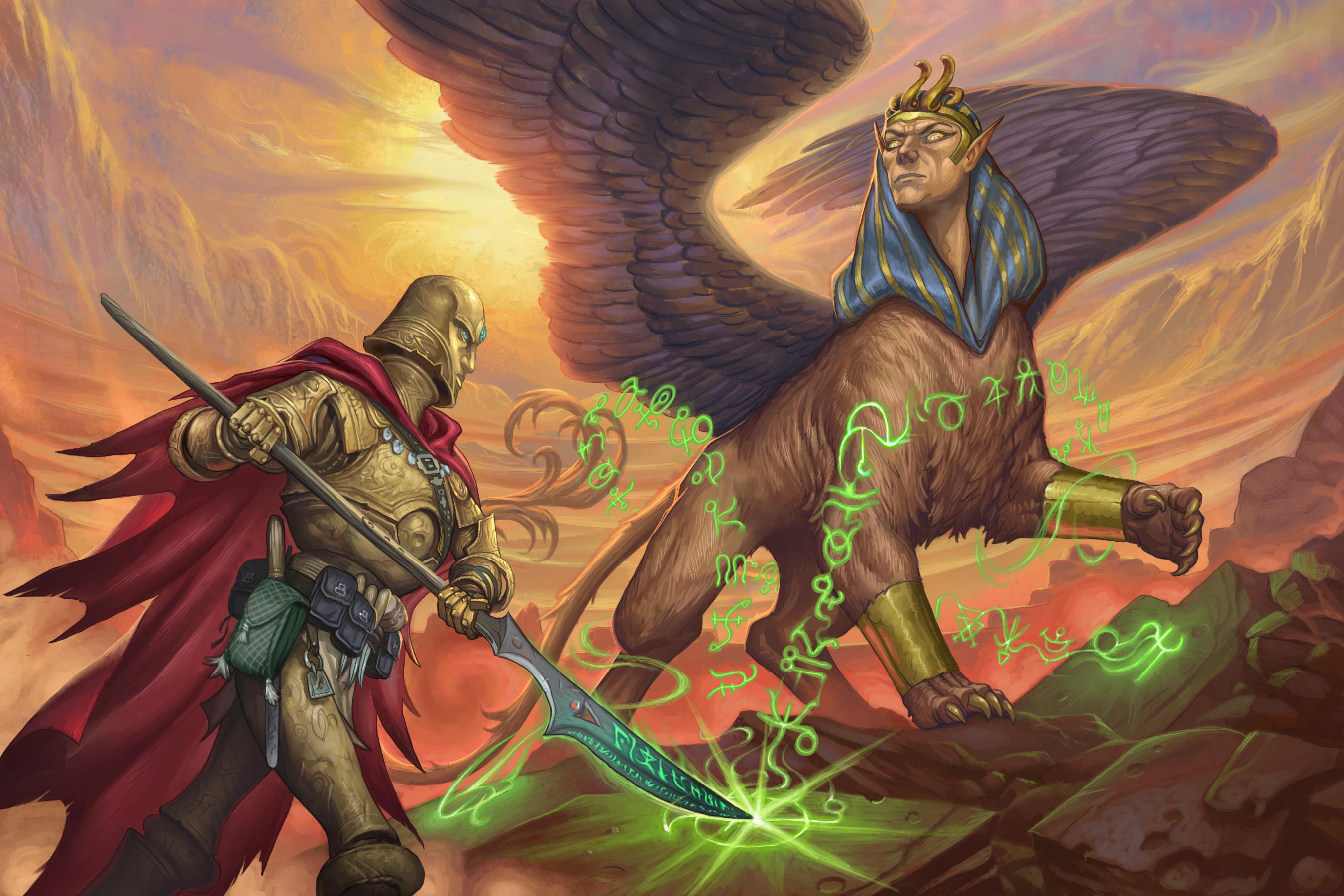
Unleashing Impossible Magic with Joshua Birdsong
Okay, secondly then, let’s discuss that chat with Josh. Ryan and I welcomed Impossible Magic design lead Joshua Birdsong back to Know Direction with eager celebration. There was an immediate difference between this conversation and our earlier PaizoCon discussion: the secrets were finally becoming a book people could hold as subscribers had already gotten ahold. It was great to hear Josh speak about the strange excitement of watching ideas that had existed in private documents for so long suddenly become public conversations and character concepts. That energy was infectious. It’s certainly one thing to finish a book; it is another to watch thousands of players begin finding their own favorite corner of it. LIke he said, it’s a long time coming and he knows things we still won’t hear about for a year!
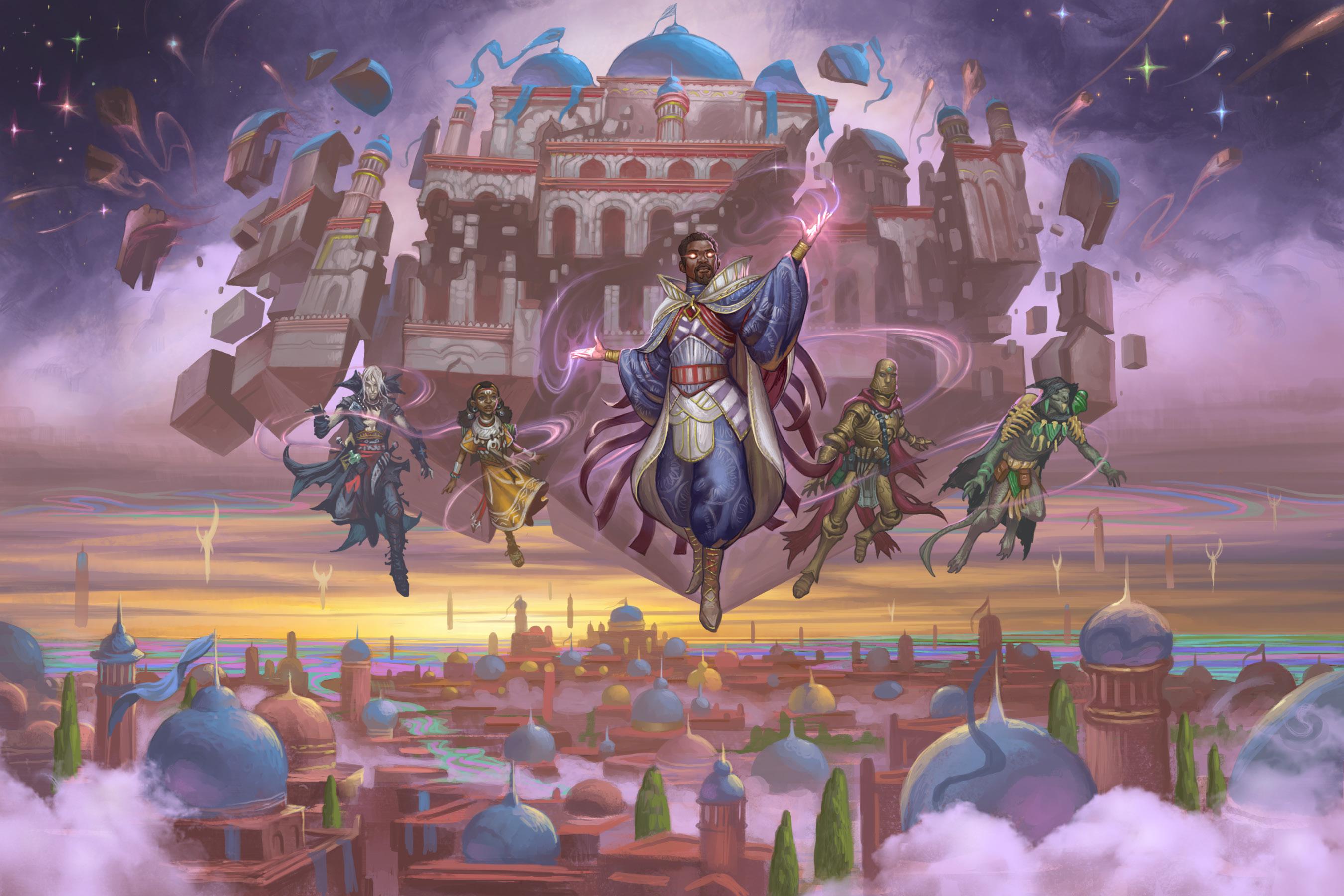
I appreciate Josh dug into the design philosophy. He emphasized how collaborative a book of this scale must be. A design lead is helping establish the foundation and structure, keeping the many contributors aligned, and making sure all those pieces eventually feel like they belong together. That might not be as flashy as a spell that rips an elemental plane into Golarion, but it helps explain why the book can move from major class revisions to rural hedge magic, Nexian political wizardry, before detailing magical tattoos and once per soul impossible spells without feeling like a random heap of options! Let alone there’s the Search for Nex narrative!
I wanted to spread the love between the classes, archetypes, spells, but it was difficult to do so. The increased spellcasting available to the Magus and Summoner is about flexibility and reducing the pain of spending one of a very small number of spell slots on something that might fail or prove too situational. Great insight from Josh there. More slots allow a player to choose a utility spell, experiment, and build around a character concept without feeling that every decision must pass an optimization exam before the session begins. And you know some Magus felt they had to min max and focus on cantrips. This is a far healthier design and good for a new player, while the experienced ones have plenty to master.
The Necromancer and Runesmith portions reinforced something I already loved about their final designs. Their signature mechanics are supposed to remain active parts of play rather than taxes paid before the fun begins. Necromancer thralls can move, contribute to positioning, and support the fantasy of a commander directing the dead. The Runesmith still feels like a crafter writing power into the world, but its action economy is built so the character can participate in the encounter rather than spending every turn preparing to participate later. Josh’s comments made it clear how much playtest feedback helped identify not only what was numerically weak, but what players were excited to do or how maybe the damage needed to curtail a bit for the Runesmith.
I go over archetypes below so let me skip on that for now other than to say I love we got certain updates while getting brand new magical options, even for martials. I will say, even though I go over some cool updates and new spells below, I really appreciated Josh’s enthusiasm for the spells. He highlighted Doom Mark (rank 6) and Speak with Magic (rank 3). You can find me talking on them and of course Impossible Spells below! But first, let me draw your attention to the…
Captivator: Your Personality Is Now a Combat Ability
I briefly highlighted it in our talk but it’s so good to see the Captivator updated. I believe many of us were hoping so for Secrets of Magic, but I’m guessing things were still in review. I like the Captivator because they truly have the power of personality. Yay, finally the dedication is fixed so you can take it at 2nd level, improving Deception or Diplomacy to expert. There’s still a focus on innate cantrips, illusionary or mental. There’s a strong focus on manipulating perception, emotion, and thought.
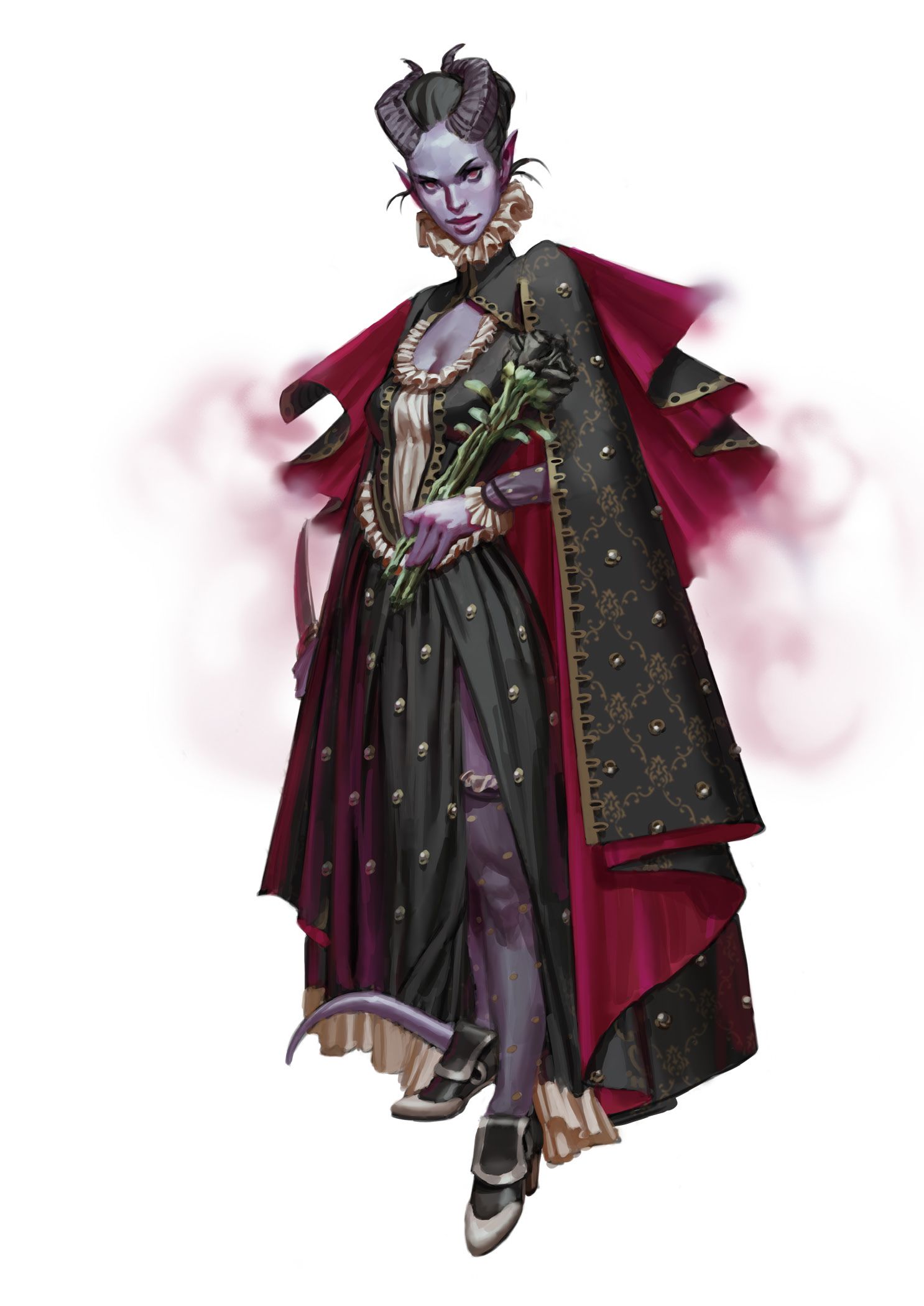
Beguiling Aura (feat 12, one action) is new. It lets you reposition enemies who fail saves against your captivator spells, turning social domination into battlefield control. It’s a 30’ aura and lasts for one minute, so great for combat. I immediately thought of Emma Frost (aka the White Queen) and her ultimate in Marvel Rivals. Come closer and don’t try to run away! My favorite remains Reactive Charm (feat 10, reaction) When targeted by an attack or spell, you can cast one of your 1st rank innate mental spells as a reaction before the triggering effect. If the attacker is affected, they can reconsider their choice. Your defense is not thicker armor or a harder shield. You just convinced someone that stabbing you was an embarrassing social mistake. I’m pleased Look Again (feat 18, one action spellshape) isn’t limited to once per day anymore. With it you can preserve a spell that failed to affect anyone and let you cast it again on your next turn.
Hedge Mage: Magic Belongs to Everyone
The Hedge Mage may be my favorite archetype in the book from a pure story perspective. It rejects the idea that magic belongs only to academies, temples, and wizardly towers. Hedge Mages learn through necessity, inherited practices, observation, experimentation, and whatever useful materials happen to be nearby. They protect crops, care for animals, resolve hauntings, and solve the problems that prestigious spellcasters might never notice.
The dedication lets you choose Intelligence or Wisdom and one magical skill, which determines whether your magic is arcane, divine, occult, or primal. This versatility is amazing. I truly feel this archetype is a story tool and less combat mechanics. Need to be an old wise woman of the woods drawing primal power? Done. Want to be a secret cult member? Done. Picked up a bit of the arcane from your sibling? Okay sure! Blessed by some distant divinity or maybe a god has always watch over your family? Done and done! I also like that your magic lives in a meaningful keepsake: a walking stick carved with reminders, a family binder of observations, a bracelet of charms, a collection of recipe cards, a coffin shaped planchette, and so on. I really like the idea of a family heirloom or a special gift. This does make it feel a little occult with sympathetic magic, but it’s all about how you play it.
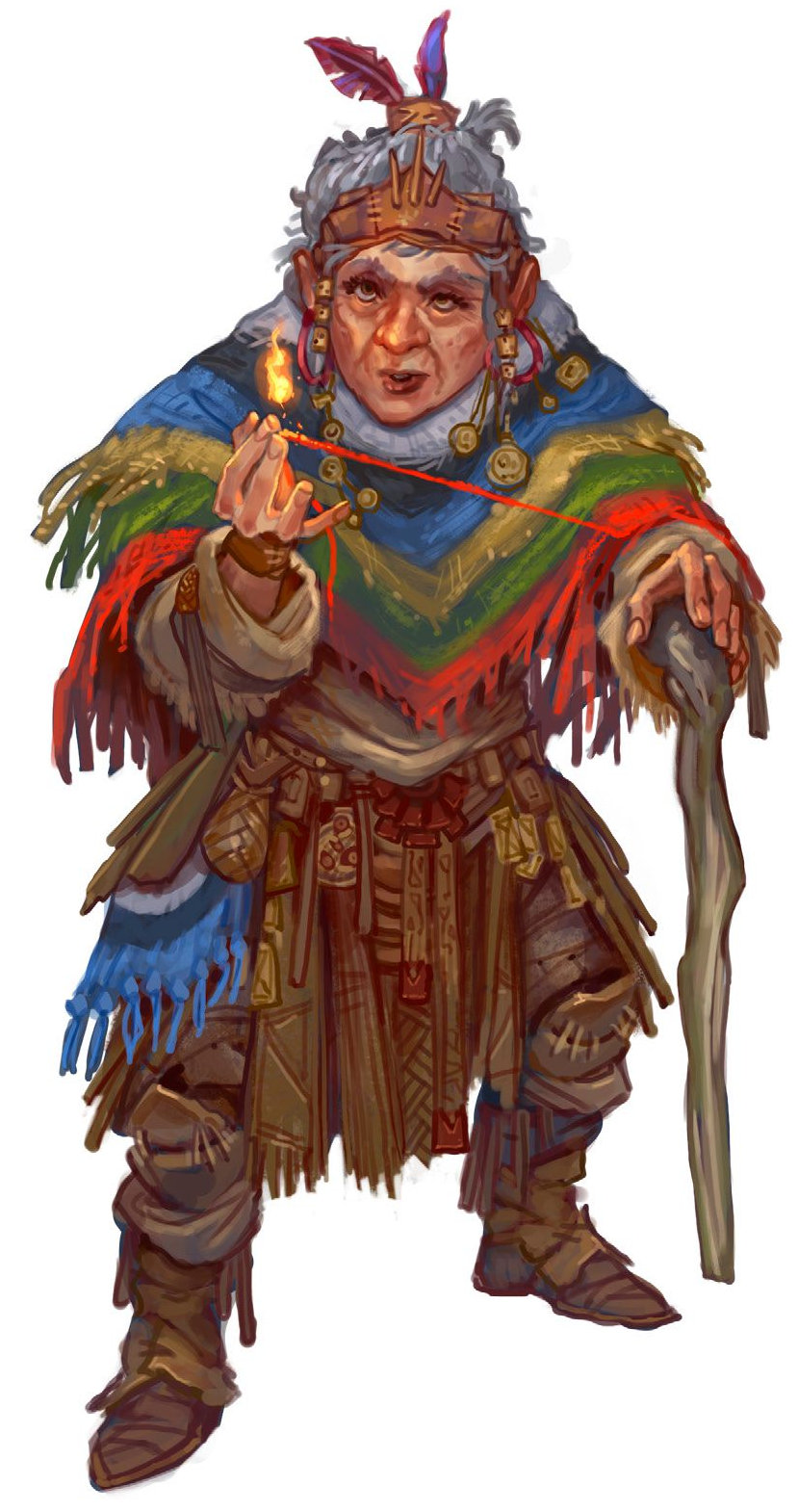
Like most dedications you begin with four cantrips and prepare two each day. But yo, that Cantrip Supremacy (feat 8) is astounding. 10 additional cantrips in your keepsake and you can prepare 10 more! Truly the master of minor magics! And the movie lover in me also really likes Practical Magic (feat 6) to make two temp spell catalysts during your daily prep. This really lends itself to the wise woman of the woods. I also like that you simply always know the formula to build your catalysts, partly because I think the intent is to have it be a bit of kitchen craft. You’re just pulling together whatever you have since they are temporary. The roleplaying aspects are great.
Now this won’t replace a full spellcasting class, but you can get Expert and Master spellcasting feats for it. I feel like it gives a martial or skill focused character enough magic to support a story. Josh’s small town Fighter example is exactly where my imagination goes: someone who learned a little practical magic because people around them needed help, and now carries those lessons into much larger dangers.
The Living Nexus: Just Breathe
The Living Nexus might be the archetype that most immediately made me want to start building characters so I had to really dig in. I mentioned during our conversation with Josh, it reminds me of spellfire from the Forgotten Realms: the fantasy of a person who doesn’t simply cast magic, but draws power into their body and unleashes it again. Usually those folks are big targets and I don’t think that’ll change for the Spellfire Nexus. You aren’t studying a spellbook, bargaining with an otherworldly patron, or receiving power from a god. Magic has warped itself around your body until you have become a living reservoir, and drawing in the energy surrounding you feels as natural as breathing. That is particularly fitting in the Mana Wastes, where centuries of magical warfare have left the land saturated with errant energy and strange radiation.
The archetype is also specifically built to bring that fantasy to a martial character. Its dedication requires training in martial weapons and one of the four magical skills, but it doesn’t require spellcasting. During the interview, Josh discussed the archetypes as a way to connect martial characters to the magical themes of Impossible Magic, and the Living Nexus may be the purest expression of that design goal. Your Fighter, Barbarian, Ranger, Swashbuckler, or another weapon user can stand beside the party’s casters, literally inhale the power released by nearby magic, and turn it into something violent, defensive, or restorative. You know I almost titled this “I Have the Power” and perhaps this killer art shows why:
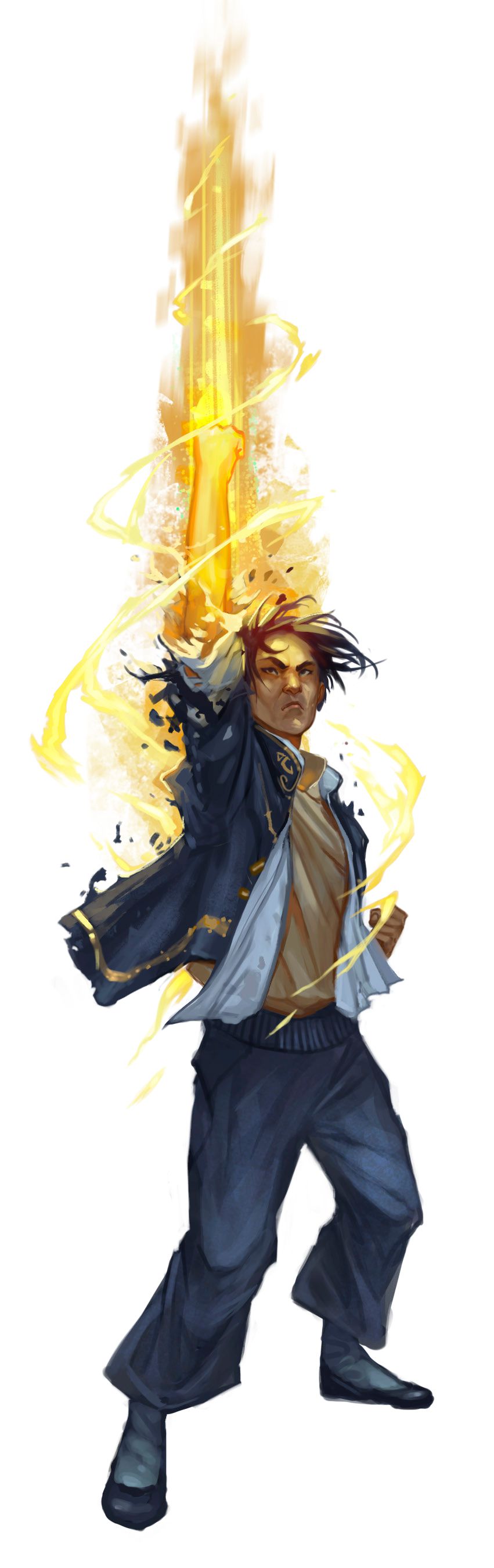
That begins with Absorb Magic (reaction), which you get as part of the dedication. It’s triggered whenever another creature within 30 feet uses a spell or another suitably magical ability. You breathe in a fraction of that power and become overflowing for up to 1 minute. The basic reaction doesn’t interrupt or weaken the triggering magic, so you aren’t stealing your Wizard’s spell or reducing your Cleric’s healing; you’re catching the magical equivalent of the heat rolling away from a flame. While overflowing, you gain a status bonus to saves against magical effects, giving you an immediate defensive benefit even before you discharge the energy. But the question is, how will you exhale?
Overflowing Blade (one action) also comes with the dedication. It conducts the stored power through a melee weapon or unarmed attack, adding force damage to the Strike. It is a simple ability, but the image does a tremendous amount of work: the Wizard casts a spell beside you, you breathe in the residual magic, and then your sword begins humming with raw power. Aether Blast (feat 4, one action) offers the ranged version, expelling the energy at a creature within 30 feet for scaling force damage. At higher levels, Surging Smash (feat 6, two actions) lets you make a melee Strike and then release a 30’ cone of magical energy from your target’s position. The cone happens regardless of whether the Strike connects, which makes it a reliable area attack rather than an ability completely dependent upon your weapon roll.
And then there is Aether Beam (feat 8, two actions), for when merely striking something with stolen magic does not feel dramatic enough. The nexus opens through your hand, eyes, or chest and releases a 60’ line of force that deals substantial scaling damage and pushes creatures backward. You can absolutely build a character who takes a deep breath as the air around them shimmers, then fires a torrent of raw magic from their body. That’s a heck of a visual to give a character who otherwise spends most of the adventure swinging an axe.
The energy doesn’t have to become an attack either, depending how you want to play and use it. Healing Nexus (feat 8, one action) metabolizes the stored magic and uses it to stitch your body back together, beginning with an impressive 30 Hit Points as a single action and scaling as you level. That flexibility is what really sells the archetype for me. One round, the magic you inhale becomes force wrapped around your blade. The next time, it becomes a blast from your chest. Later, it can become the power that closes your wounds. Flexible Nexus (feat 6) can even change the force damage from your archetype abilities into mental, spirit, vitality, or void damage, allowing the energy passing through you to take on very different magical expressions.
The Living Nexus archetype is strange and different for Golarion, and it’s really quite exciting for me. Yes, love it gives a martial hero a way to interact with magic in a direct and meaningful way. But the idea of inhaling a spell, charging yourself with its power, and then decide whether it leaves by weapon, blast of raw energy, or a surge of healing will lead to incredible moments at the table. How you use it for the story depends on you, but it feels very PC story to me and perfect for the magical focus of the Impossible Lands and other areas too.
Soulforger: Power through Convictions
The Soulforger binds armor, a shield, or a weapon to their spirit and manifests it with a single action. You might recall I framed my KPop Demon Hunter archetype from it. The armament waits in extradimensional storage when dismissed, cannot meaningfully be stolen, and changes appearance to reflect the state of the Soulforger’s soul. You can bind an existing item or manifest one directly from your own spiritual essence. Please name it. A weapon made from your soul deserves a name!
Every Soulforger chooses a soul path, an actionable cause that drives them into danger. Protecting a community, avenging a wrongful death, redeeming a disgraced legacy, opposing tyranny, or preserving forbidden knowledge could all work. This has implications beyond decorative flavor. Acting directly against it can inflict soulforged corruption, turning the flaw attached to your chosen essence power against you.
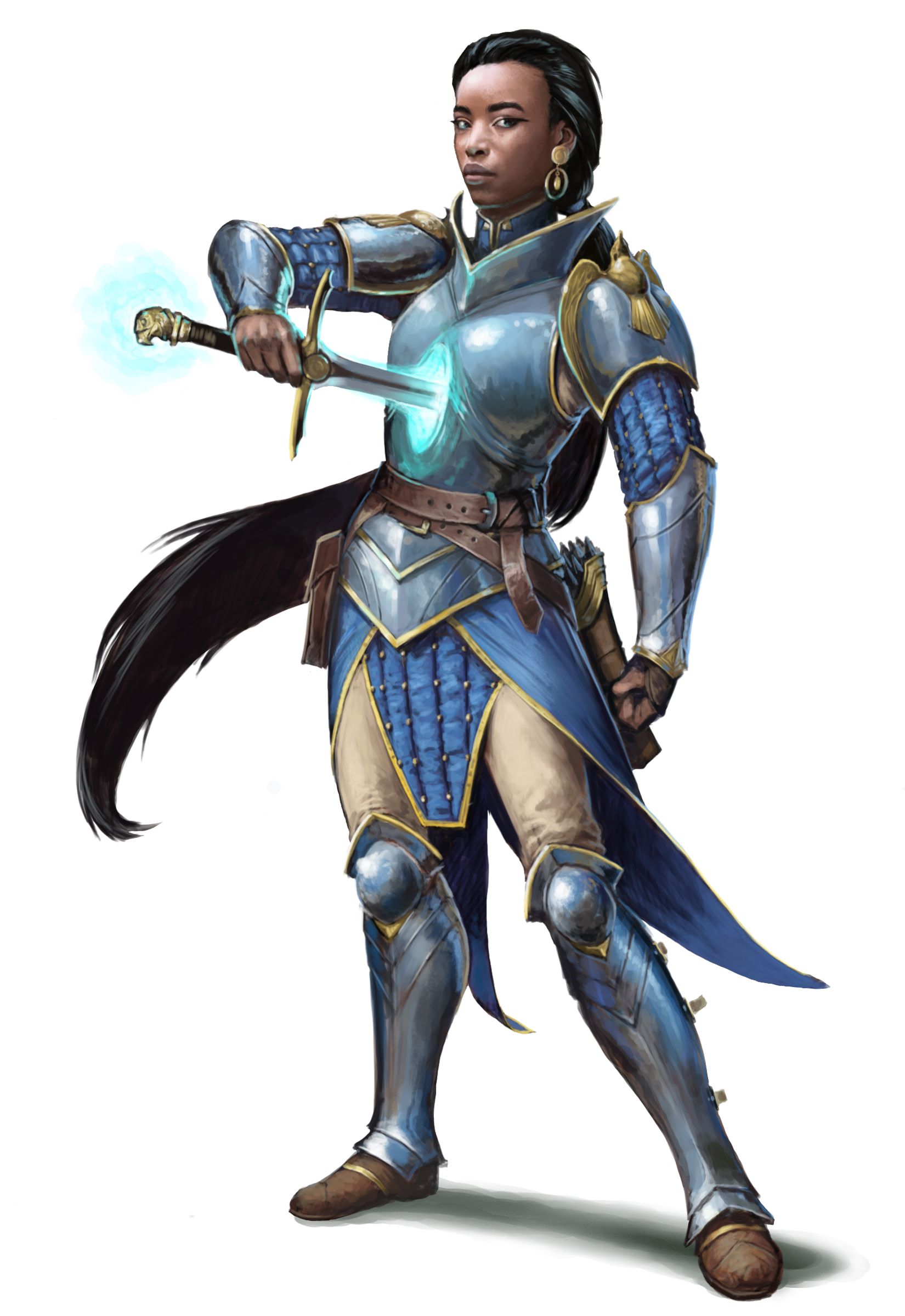
The essence powers are substantial so I’ll bold them, but know they aren’t feats but options you’re affixing to your armaments. Heroic Heart grants a status bonus to attacks, Perception, saves, and skills. Healing Grace provides fast healing and a casting of heal. Magical Resilience improves AC and saves against spells and eventually grants dispel magic. Planar Bond provides significant resistance to a chosen damage type, while Planar Pain changes a weapon’s damage and adds a status bonus.
There are mobility and control choices too. Adaptable Persona can provide a climb, swim, or eventually fly Speed. Pull of Stasis penalizes a target’s Speeds whenever the weapon hits and immobilizes on a critical hit. Reflecting Spirit can send projectiles back at attackers. Resolute Defiance strengthens a shield and grants Shield Block when needed.
Rapid Manifestation (feat 6) lets the armament appear when initiative is rolled. Soul Arsenal (feat 6) binds additional armaments, letting the character call forth a weapon, shield, and armor together. Devastating Manifestation (feat 14) is the highest level feat we’re given. It makes that transformation an attack in its own right, adding Strikes, spirit damage, or resistance depending on what appears. I love how this goes beyond a mechanical transformation sequence powered by the character’s ideals, and the story hooks support it. Maybe I should revisit KPop Demon Hunters…
Spellshifter: No Spell Is Safe Around You
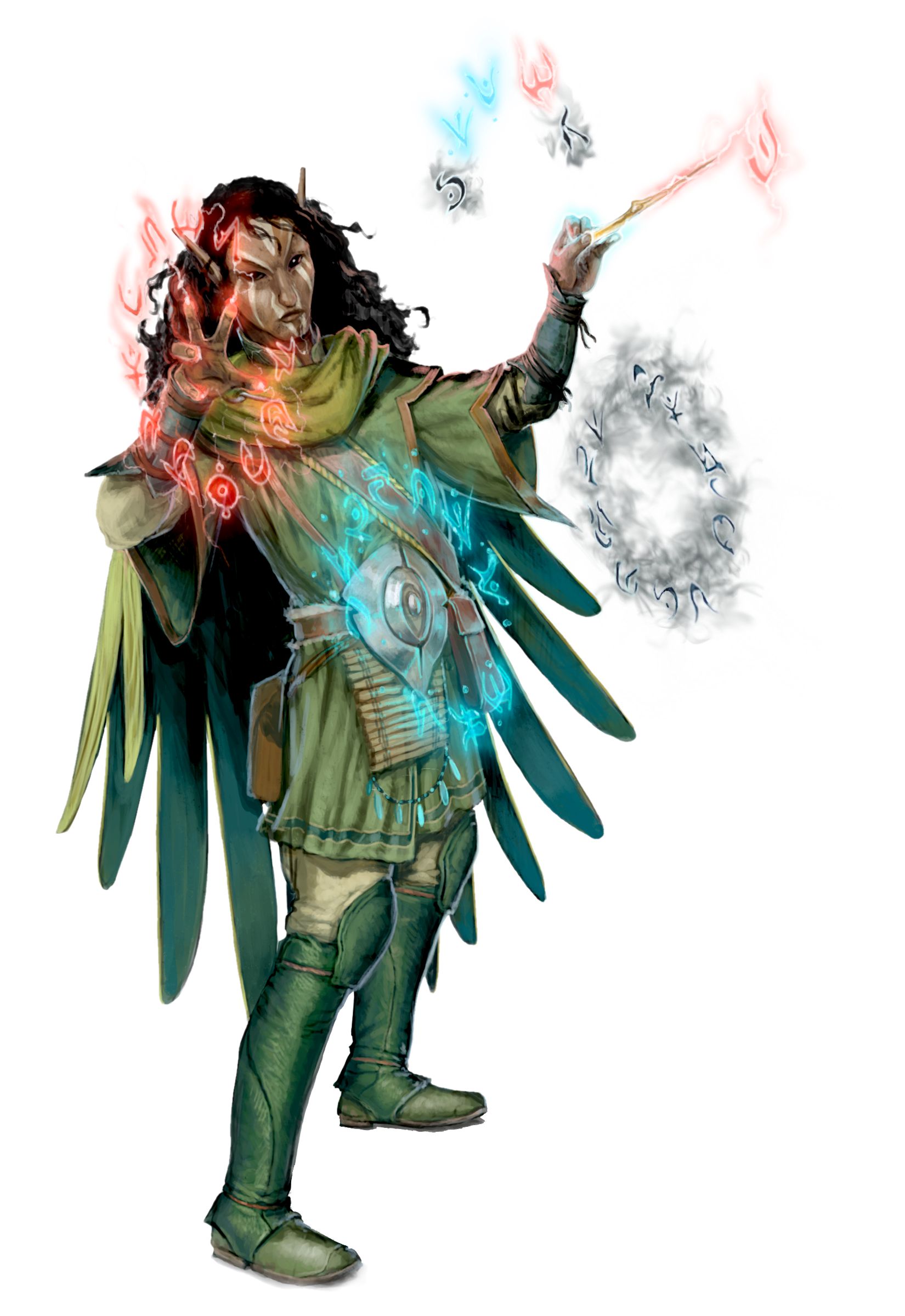
A Spellshifter might not cast spells at all, which is wild to me. They simply understand the vibrations and currents of magic well enough to interfere with what someone else has already created. I’m reminded of a metamagician, a blue mage, or the Incantatrix prestige class from D&D. Each carries a personal conduit: a tuning fork, wand, pendulum, crystal, playing card, musical instrument, or another object through which they manipulate nearby magic. I love how the art below shows them basically orchestrating the magic.
The dedication grants Shift Spell (one action) and the first spellshift, Share the Burden. When you are within an ongoing spell’s area or touching something under a spell’s effects, you can attempt to alter it. Share the Burden can let you Sustain another caster’s spell and, on a critical success, take over that responsibility for the rest of its duration. That can free an allied caster’s actions or force an enemy’s magic to rely on your Arcana.
Elemental Substitution (feat 4) is literally something my brother has been asking for, wondering where it is. Well it exists now! It changes acid, cold, electricity, fire, or sonic damage into another of those types. That can evade resistance, exploit weakness, or turn a dangerous effect into something the party prepared to withstand. Dismantle Spell (feat 6) can counteract an ongoing spell or suppress it for a round while Enhance Spell (feat 8, one action) lends an ally Conceal Spell, Nonlethal Spell, Reach Spell, or Widen Spell for their next casting.
Reactive Spellshift (feat 6, reaction) is where enemy casters start watching you. When someone within 30 feet begins casting, you can attempt to alter the spell before it resolves. The caster can cancel once they understand what you are doing, but still loses the actions and resource as though the spell were disrupted. The last archetype feat we get is 12th level, Redirect Spell can move a spell from its intended target to another viable creature within 30 feet. Enemies will really hate you.
Veil Dancer: The Space Between
Reality contains tiny gaps between its threads, and the Veil Dancer knows where to step. This is a magical stealth and teleportation archetype perfect for Rogues or Investigators, but really anyone who wants every fight to involve vanishing from the wrong place and reappearing in the right one. My friend Derek made a rogue once who could flit around like Nightcrawler. Well, here we are.
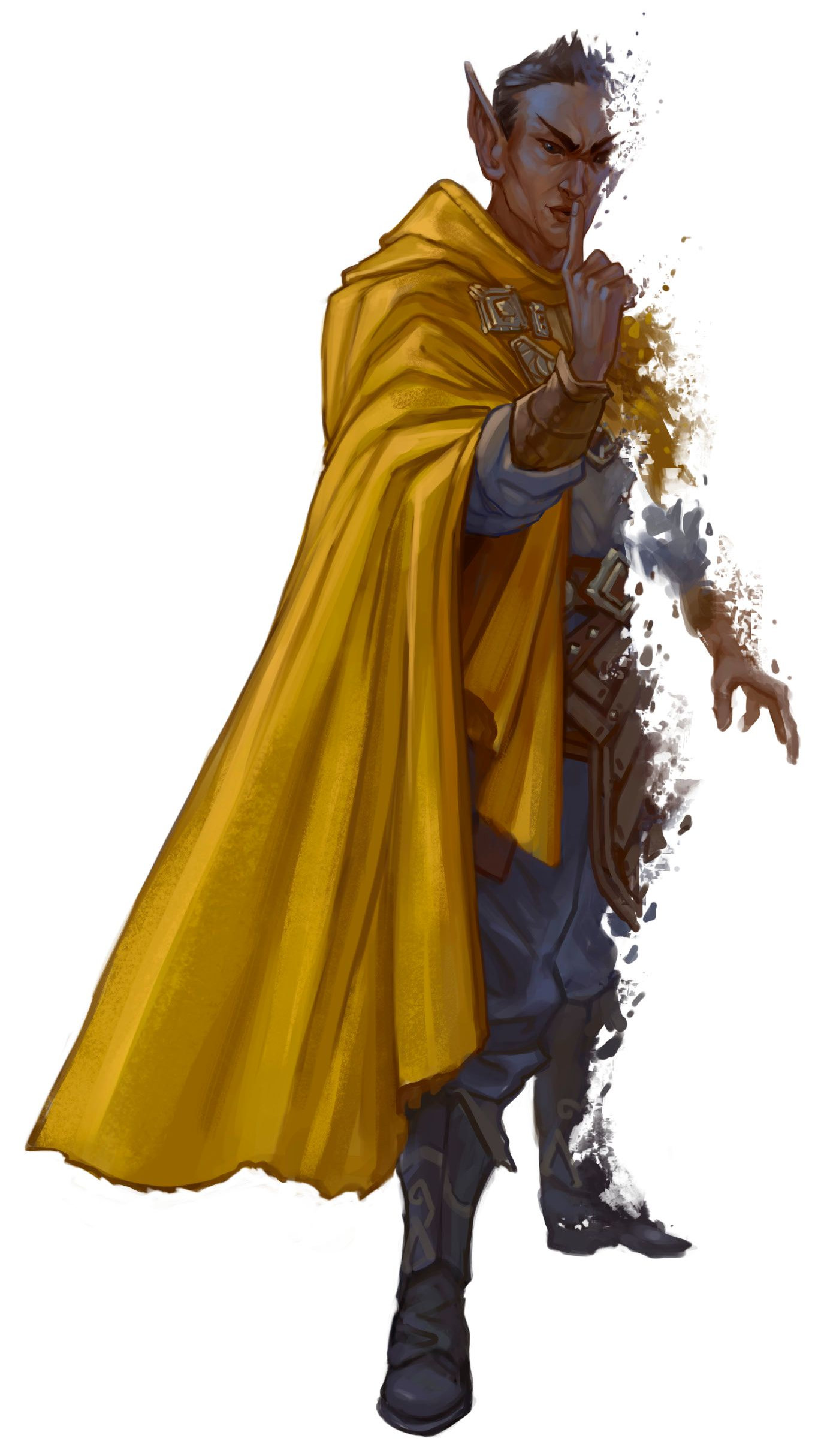
Part the Veil (two actions) is granted by the dedication. It requires you not to be observed by an enemy, after which you become concealed and can use that concealment to Hide or Sneak. A hostile action ends the effect afterward, creating a natural rhythm of disappearance, repositioning, and ambush. Gossamer Blade (feat 4, one action) allows a successful Strike against an off-guard target with persistent force damage equal to 1d6 per weapon damage die. Warp Path (feat 6, one action) teleports 30 feet and includes a melee Strike, while Dart Between (feat 8, two actions) teleports 60 feet and lets you Part the Veil for free on arrival.
Interstitial Escape (feat 10, reaction) reacts to an incoming Strike by teleporting you 30 feet and granting resistance to the triggering damage equal to your level plus 5. A tremendously great option for a melee combatant. It’s limited to once per hour, but extremely useful. Aerial Flash (feat 12, two actions) teleports you to an airborne creature, lets you Strike, and returns you to the starting point. Hush (feat 14, two actions) is the current capstone. You teleport 60 feet and Strike. It adds serious force damage (10d6) on a failed save, and silences the victim. Note the crit fail is only 15d6 but the silence lasts a minute instead of one round. This is an assassin archetype!
World Rouser: Wake Up, Golarion
The World Rouser knows that planets are not inert rocks carrying living things. They are ancient wonders capable of caging gods, surviving ages of darkness, and destroying civilizations. Most of the time they sleep. You know how to wake one thought, at least for a few moments.
Rouse the World (one action) is from the dedication and it creates a 10’ burst called your waking world. Allies inside gain bonuses to Athletics and Acrobatics, while you receive help Recalling Knowledge about creatures and hazards within the area. You can Sustain it once each round to expand the burst by another 10 feet. The battlefield literally wakes around your party. From there, the world chooses how to help. Nature’s Embrace (feat 4, one action) makes the area difficult terrain for enemies. The World Whispers (feat 4, one action) helps Seek and Point Out hidden creatures. A Hush Falls Over the World (feat 10, one action) interferes with hearing, auditory abilities, and sonic effects as sound is literally absorbed into the very earth.

Come In from the Wilderness (feat 10, two actions) might be my favorite though. The earth swallows a willing ally, helps them recover from persistent damage, protects them from new effects for a round, and returns them with 6d8 healing. It is emergency magical care performed by the planet. You could flavor this in numerous ways like a cocoon or plant taking them in as well. Then there is The World Devours (feat 12, two actions). The ground opens beneath a foe, damages them, and can grab them. On a critical failure, the earth closes overhead. The victim is slowed, untargetable, and repeatedly crushed (6d6 bludgeoning) until they Escape. At 14th level, the capstone is Awake with a Roar (free action) that lets the newly awakened world frighten and stun enemies across the area. It’s a Will DC and those who save are immune for 24 hours, but frightened 2 and stun 1 on a fail are great, especially for a free action!
This archetype does a lot between controlling terrain, protecting and healing, debuffing and finding enemies. The utility is quite strong and it has amazing table presence. Everything in this book has tremendous imagery and roleplaying potential, a credit to Josh Birdsong and the team he worked with.
Four Arcane Schools Born in Nex
Being home to one of the most powerful wizards who ever lived leaves Nex with a diverse and sometimes alarming collection of magical curricula. These schools feel like actual philosophies shaped by Quantium’s politics, espionage, infrastructure, and casual willingness to remodel reality. I had to give a quick break down of them as it’s great to see more regionally inspired, but otherwise usable by anyone, schools for wizards.
School of Breathtaking Influence
This is the school of politicians, courtiers, manipulators, and those trained to defend against them. Its curriculum includes command, fear, sleep, phantom crowd, confusion, dominate, puppet strings, and telepathic demand. In a campaign with social conflict, intelligent enemies, and political maneuvering the list is extremely potent. Mental immunity remains a meaningful weakness, but that is appropriate for such a focused school.
The initial school spell, Appeal to Authority, costs one action and gives the target a penalty against your emotion effects even on a successful save, though they can attempt to shake it off later. It is an excellent setup for the rest of the school’s magic. The advanced Hot Air burns the target when they speak, use an auditory action, or cast a non-subtle spell. Your enemy is full of hot air, so you make that medically accurate!
School of Keen Inquiry
Keen Inquiry is for spies, investigators, scholars, and anyone who believes the most dangerous possession in Quantium is accurate information. I’m sure a politician could fit in well here too. Its curriculum progresses through detect magic, see the unseen, locate, clairvoyance, detect scrying, mind probe, scrying, truesight, true target, pinpoint, and foresight.
Fact Check reacts when you or an ally attempts to Recall Knowledge. A tiny illusory avatar of your subconscious appears on your shoulder and checks the work. I’ve already seen this at work and it’s hilarious. On a success, it identifies incorrect information and supplies the correct answer. On a critical success, you also receive a truthful answer to one follow up question. This may be the most Wizard ability ever written. The advanced Unsettling Perspective damages a creature by showing them their insignificance within the universe. On a failure, you also learn their social status and one connection to a leader; on a critical failure, the target is stunned. Information gathering becomes a combat style.
School of Nexian Spaces
Nexian Spaces studies demiplanes, extradimensional architecture, teleportation, and the manipulation of distance. Its curriculum includes pet cache, vanish weapon, far reach, liminal doorway, space fold gate, proximal shift, interplanar teleport, planar palace, stars of another sky, quandary, and resplendent mansion.
Extradimensional Cover creates a 5’ space of semi-real debris that provides standard cover without blocking movement. Only you and your allies can end movement inside it. Reliable cover placed exactly where the party needs it can quietly decide an encounter. The advanced Unbounded Sphere loops a region of space back upon itself. Creatures attempting to enter or leave must save or find their movement ending at the boundary. The enemy is not held by chains, stone, or vines. They simply cannot solve the geometry.
School of Quantic Control
Quantic Control treats elemental forces, gravity, terrain, and creatures as pieces in a diorama waiting to be rearranged. Its curriculum includes unrelenting gravity, chosen gravity, inertia lock, living terrain, wall of stone, repulsion, wall of force, infinitesimal collapse field, earthbreaker stride, and implosion.
Circle of Weakness creates a burst that imposes weakness to acid, cold, electricity, fire, force, or sonic damage. Even a successful save produces weakness 1, while failure doubles it and a critical failure also immobilizes the creature. A coordinated party can turn that into an ugly amount of additional damage. The advanced Quantic Dampening creates an aura where you can react to a basic Reflex save against several energy types and improve the result by one degree. Turning a party wide series of failures into successes (or successes into critical successes) can erase much of an enemy’s signature blast.
Overall for raw battlefield control, Quantic Control may be the strongest. Keen Inquiry could become invaluable in a mystery or political campaign. Nexian Spaces has the most distinct magical identity, while Breathtaking Influence promises the most social chaos. These are meaningfully different Wizards rather than four new labels for the same play pattern. Reminds me why I loved running my all Wizards of High Sorcery campaign based in the world of Krynn, the campaign setting Dragonlance.
Wizard Feats: Meddling Is a Scholarly Discipline
The new nine Wizard feats reinforce the Nexian belief that casting the spell is only the beginning. We get them really quickly in the same section as the schools, but they’re quite fun. Here’s a quick break down:
Elemental Defense (feat 2, one action) gives resistance equal to twice a spell’s rank after you cast an elemental spell. Incriminating Spell (feat 4, one action) makes the target believe someone else attempted to alter their mind. I guarantee a player will use that to begin an international incident. Shrink Spell (feat 6) reduces an enemy spell’s area even when your Counterspell fails. Knockback Spell (feat 8, one action) adds forced movement to an instantaneous area spell, pushing creatures farther on a critical failure. Damage is useful but damage that also sends someone off a ledge or into another hazard is far more interesting.
Spellbinding Speech (feat 8, one action) uses Arcana against Will DC to shut down a creature’s reactions for a round. It does require you’re an expert in Performance so perhaps for those scholarly bard types. Shared Focus (feat 10, one action) grants an ally a temporary Focus Point even when their pool is already full. That can enable one more use of a character defining focus spell in the encounter where it matters most. Spatial Awareness (feat 10) detects nearby teleportation and can help identify where someone went. Redirect Teleportation (feat 12, reaction) reacts when a creature appears nearby, expends one of your prepared teleportation spells, and attempts to choose a different safe destination for them. Dizzying Spell (feat 14) adds stupefied 2 (stupefied 3 on crit fail) to a single target Will spell. Enemy casters are about to have a very bad round.
Automaton: The Future Is Being Assembled in Quantium
As Josh said in our interview, where better to call out some new Automaton options than Impossible Magic as we have our iconic Runesmith who is an automaton but also there’s new automatons coming from the lands of Nex! That’s right! The options begin with a major setting development: Nexian artificers and mages have learned how to create new Automatons. Their success came through the assistance of Hikanmian, an ancient Automaton originally captured for dissection who instead convinced the project’s leaders to accept their help. Quantium is now producing new Automatons at an increasing rate, while neighboring nations wonder exactly what Nex intends to do with them. Unfortunately, I think we all know.
The Defensive Automaton heritage increases ancestry Hit Points from 8 to 10 and grants Toughness. That is straightforward and strong. The Newly Minted Automaton heritage is the narrative treasure. Your body may follow ancient designs, but your consciousness is fresh. You gain Additional Lore and another language, fitting a new mind absorbing the world quickly.
Josh’s discussion focused on the opportunity for more customization and more ways for Automatons to look and behave. A newly minted character can truthfully say they were born five days ago and still enter play as a fully capable adult adventurer. What do they think of the people who made them? Of Hikanmian? Of the ancient Automatons dissected before the breakthrough? Of the possibility that their creators imagine an army where they see a people?
At 1st level, Expressive Face (feat 1) supports an Automaton designed to communicate emotion, while its enhancement grants Plaintive Plea (one action), allowing a once per day roll-twice diplomatic appeal. Messenger (feat 1) grants message and can eventually contact five creatures at once. Powerful Tail (feat 1) adds a 1d6 tail attack, later gaining a climb Speed and helping with Climb or Trip.
Hardened Chassis (feat 5) provides physical resistance and can eventually broaden or scale it. Infiltration Automaton (feat 5) improves Stealth against hearing and grants self-only silence. Inscribed Blast (feat 5, reaction) retaliates against an adjacent attacker with force damage. Resilient Chassis (feat 5, reaction) produces temporary Hit Points as a reaction to incoming damage.
Bodily Disintegration (feat 9, two actions) may be the most visually exciting. Your component atoms separate enough to pass through creatures and tiny cracks. Its enhancement eventually allows movement through solid walls and leaves you concealed while the body finishes reassembling. Overburn (feat 9) grants a daily self target haste that eventually becomes a 7th rank casting capable of including allies. Purge System (feat 13, 3 actions) reduces poison stages, while System Override (feat 17) gives a flat check each turn to ignore controlled for the round.
The mechanics offer durability, infiltration, communication, and resistance to outside control. The story offers a newly created people emerging from one of the most ambitious nations in the Inner Sea. I know which part will keep me thinking after the character sheet is finished. I keep thinking do I want to play Robo from Chrono Trigger or do I want a brand new Iron Giant, discovering the world?
Spells: Something Wonderful at Every Rank
There are far too many new spells to review them all, but these are some that immediately made me imagine a build, an encounter, or the look on another player’s face.
Cantrips
- Artistic Recollection lets you create an image of something with just a touch to a surface. It’s all pastel oils, lasting only a minute. Great way to show others what you’ve seen or know!
- Wash Your Luck got reprinted, but appears the same. It lets a small personal ritual cancel one misfortune effect on a check. I love that the spell does not dictate the ritual: straighten a holy symbol, adjust your chair, knock on wood, or repeat the strange phrase your grandmother insisted keeps fate from noticing you. Perfect cantrip for a hedge mage!
1st Rank
- Bone Shield is also new and excites me even if it’s not terribly strong. It conjures an expendable shield, which Raises as part of the casting, and grants Shield Block. It grants a +2 circumstance bonus to AC and has only 1 HP, but reforms already raised when you Sustain the spell, with increasing Hardness when heightened. The hardness starts at 3 and is improved by 2 also if the damage being dealt is piercing or slashing. Very useful for say a Necromancer getting into melee!
- Propelling Air Stream damages a target for 2d6 bludgeoning with a ranged spell attack versus AC. You can heightened for 2d6 per level. You even get a brief upward fly Speed of 15’ to cross a gap, reach a ledge, or make a dramatic entrance. What, just me?
2nd Rank
- Disorienting Flash can be 1 to 3 actions with a great range of 60’. It does sonic damage against Fortitude save but can dazzle, do greater damage, or even deafen with the three action version!
- Thunder Echo sends harmless electricity through a 120’ emanation and makes hidden chambers, objects, and creatures easier for everyone to locate—even through walls. That is a tremendous exploration spell for ruins, dungeons, and suspiciously symmetrical maps.
- Unrelenting Gravity can encumber a creature, knock it prone, and make a fall harder or even impossible to arrest. Heightened, it can target five creatures. Gravity remains undefeated.
3rd Rank
- Speak with Magic is a game changer as we mentioned it as one of Josh’s big call outs. It allows conversation and Diplomacy with spells and magic items. Their personalities are shaped by purpose, creator, and experience. This is a spell a GM can build whole mysteries around! This is sort of game changing to me. A spell or magic item remembers its creator, its purpose, and those who interacted with it, but it understands those experiences through a distinctly magical perspective. Suddenly the enchanted murder weapon, the old family staff, and the ward protecting a sealed door are all potential witnesses! And they can have very interesting perspective personalities, which’ll be fun to play out. I referenced a certain piece of grass from Critical Role campaign 2 that Jester spoke to. Adorable moment for that game.
- Time Jump costs one action and grants two actions that can be used only for movement. Time pauses during that movement, preventing reactions and making the result look like teleportation. Use it again too soon and you become stupefied 4, because even time travel has a hangover.
- Soul Cutter can be cast with one, two, or three actions, changing its reach, damage, and rider. The three action version deals half damage on a failed attack and can enfeeble unless you critically fail, giving divine and occult casters a flexible spirit blade.
4th Rank
- Tortoise and the Hare slows a foe and can quicken yourself or an ally. Even a successful enemy save leaves them slowed for a round; a failure creates a substantial action economy swing, while a critical failure can leave the effects running for minutes.
- Vital Seed embeds a seed in a target, drains nearby creatures with void damage, and converts the best damage result into healing for a living target—or vitality damage against an undead one. It is an unusual offensive heal with strong positioning possibilities.
- Winning Streak quickens a creature for a round, then spreads and extends whenever the party scores a critical success against a meaningful foe. Some groups will make this spell look outrageous, and they will have earned every second of it.
5th Rank
- Space Fold Gate connects two visible squares with portals that creatures, objects, and ranged attacks can pass through. The portals grow dramatically when heightened. Spells cannot pass through, but I am sure players will find enough other trouble.
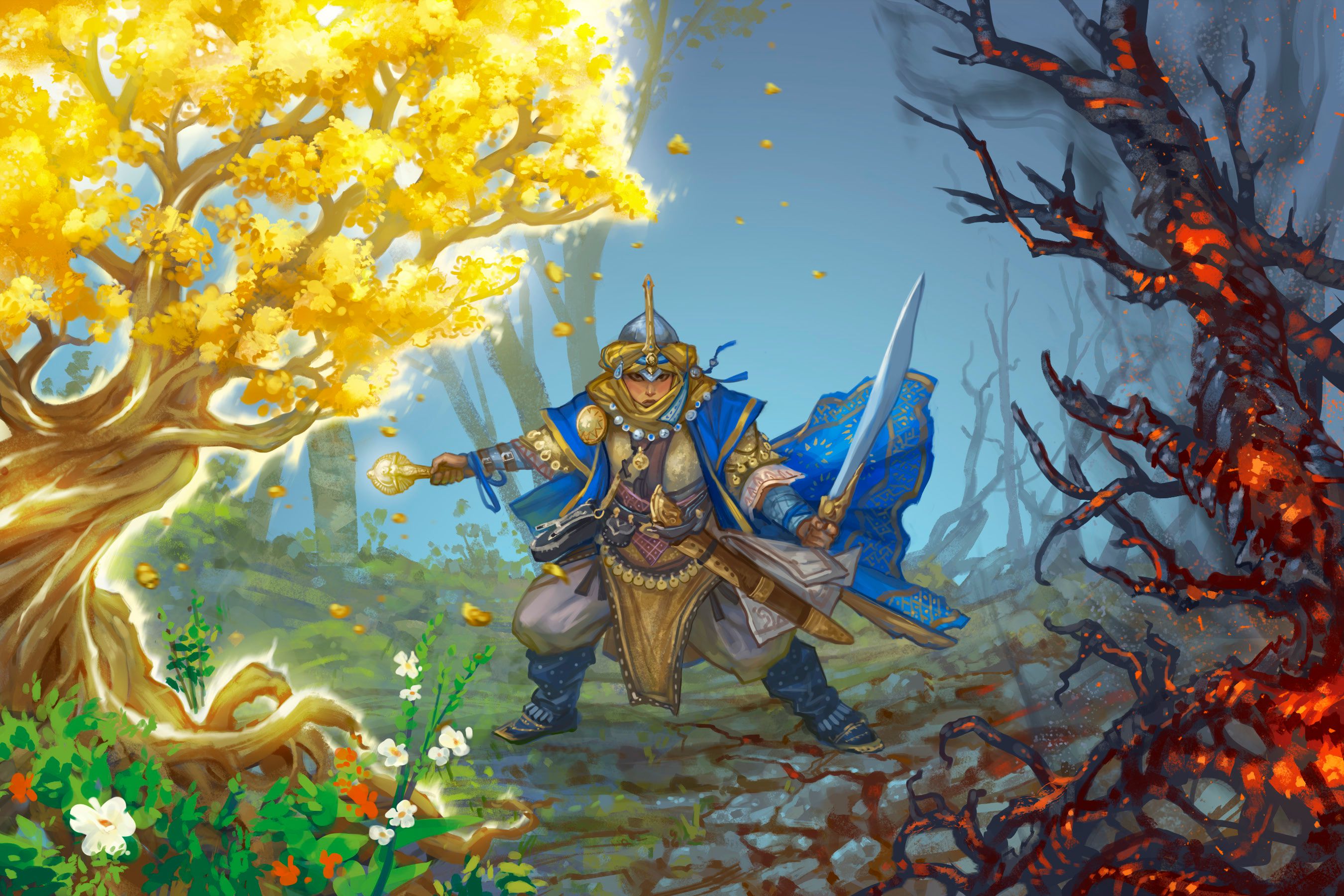
- Tree of Life and Death is something I can’t wait to use, especially for my Necromancer. It creates two linked trees. Check out the art depiction of it above! One heals living creatures entering its aura, while the other damages them with void energy. The spell places a pair of strategic objectives on the battlefield and asks both sides to fight over them.
6th Rank
- Doom Mark is another of Josh’s highlights. Each casting or Sustain makes another ranged spell attack, deals void damage, and marks the target. Marked creatures are enfeebled and stupefied, and when one drops to 0 Hit Points, every other marked creature becomes off-guard and clumsy for a round. I like the tactical mini game rather than simply asking which creature should receive the largest damage number. Spread the doom, then choose whose fall triggers the collapse.
- Proximal Shift teleports you while carrying unattended, nonliving, nonmagical matter in a 5’ emanation. Your departure leaves a crater, while your arrival explodes with debris and creates difficult terrain. You can teleport with part of the room.
- Cast into Time throws creatures through a violent flood of past and future, dealing mental and bludgeoning damage and temporarily removing them from the battlefield. A creature returns almost immediately from everyone else’s perspective, but may have experienced minutes or days of temporal chaos.
7th Rank
- Puppet Strings attaches ethereal threads to a creature, making it clumsy and potentially slowed. When you cast or Sustain, you can force it to Stride or Strike. A critical failure allows two forced actions and slowed 2. It has incapacitation, but it is horrifying when it works.
- Incarnate Tempest of Shades gets an update here as it summons a tornado of the vengeful dead. Its arrival can drain every enemy within 60 feet, and its departure unleashes a howl that frightens creatures across a 100’ emanation.
- Comet Charge launches you up to 120 feet without triggering reactions, then delivers a melee spell attack. Beginning above the target makes them off-guard. Sometimes the correct tactical answer is to become the meteor.
8th Rank
- Clone Companion creates a duplicate animal companion. Whenever you Command the original, both receive two actions and perform the same sequence, though they can move differently and choose different targets. It doubles the tactical expression of every Command.
- Burning Blossoms grows a towering, white flowered tree whose petals burn creatures beneath it while its beauty fascinates enemies and draws them closer. It is battlefield control as a beautiful disaster.
- Amalgamizing Leap teleports you and a target to another location while fusing your bodies. On a failed save, the target cannot act or be targeted, while you gain temporary Hit Points, its Speeds, senses, and additional reach. It is useful, upsetting, and absolutely at home in this book.
9th Rank
- Vampiric Revelry drains living enemies and converts the best damage dealt to one creature into temporary Hit Points. With more actions, it shares that protection with allies. The two round version expands the area, uses the full damage rather than half, teleports you, and grants the temporary Hit Points to allies around the new location.
- Pierce the Sky fires three arrow shaped thunderbolts, each dealing electricity and sonic damage and leaving a line of hazardous electricity between you and its target. The spell does not merely hit three enemies; it redraws the battlefield with lightning.
- Voracious Gestalt creates a hungry spiritual entity whose aura grows larger and more damaging whenever it consumes the soul of a meaningful foe slain during the spell. That is an encounter spell begging for the right Necromancer.
10th Rank
- Planar Collision rips a portion of an elemental plane into your own, dealing force and elemental damage in a 100’ burst, throwing creatures away from the center, and leaving hazardous terrain for a year and a day. You are not casting a fireball. You are creating a location future residents will name.
- Tear the Veil opens a void that pulls living creatures inward, repeatedly damages them, and increases drained within its deadly center. A creature beginning its turn there while drained 4 risks being reduced to ash and transformed into a wraith.
- Theogeny creates the beginnings of a divine realm around you. Allies fly, their Strikes gain spirit damage and sanctification, and enemies acquire an opposing sanctification and weakness. It does not summon a god’s domain. It starts making one.
Impossible Spells: Once in a Soul’s Existence
Impossible spells are the book’s boldest idea. They do not consume normal spell slots and are extraordinarily difficult to counteract, but a creature can cast only one impossible spell across the entire existence of their soul. An hour later, the lethologic mark begins: a lasting spiritual consequence that can be treated, but never erased from the soul’s memory. Getting the spell can be a quest, a whole campaign, and the lethologic marks make for excellent roleplaying let alone follow up quests to resolve.
You can also Fuel Impossible Spell (one action), accepting or increasing doomed to draw out additional effects. I had thought it a feat, but nope, it’s a little whisper the power of the spell is encouraging you to do. That creates a decision after the impossible act has already begun. How much more of yourself will you spend to make this reality true? Maybe can Speak with Magic and see what the spell thinks of this…
Call of the Quenching (rank 7, three actions) floods a mile around the caster with torrential water, conceals and protects allies from fire, and sends sea creatures swimming through the sky to attack enemies. Fueling it summons additional aquatic creatures and gives them flight.
The Everfull Moon (rank 2, one action) might only be 2nd rank but it transforms the caster into a mighty werewolf without transmitting the curse, and can be fueled for more temporary Hit Points. Its mark leaves a lasting weakness to silver on most nights until the caster becomes a true werewolf and is cured.
Pyroclastic Truth (rank 1, three actions) devastates a huge area with liquid fire and marks everything it burns. Fueling it turns those marks into persistent fire damage. Its lethologic mark teaches the caster fire’s desire to burn away their soul, making every future exposure to flame terrifying and potentially fatal.
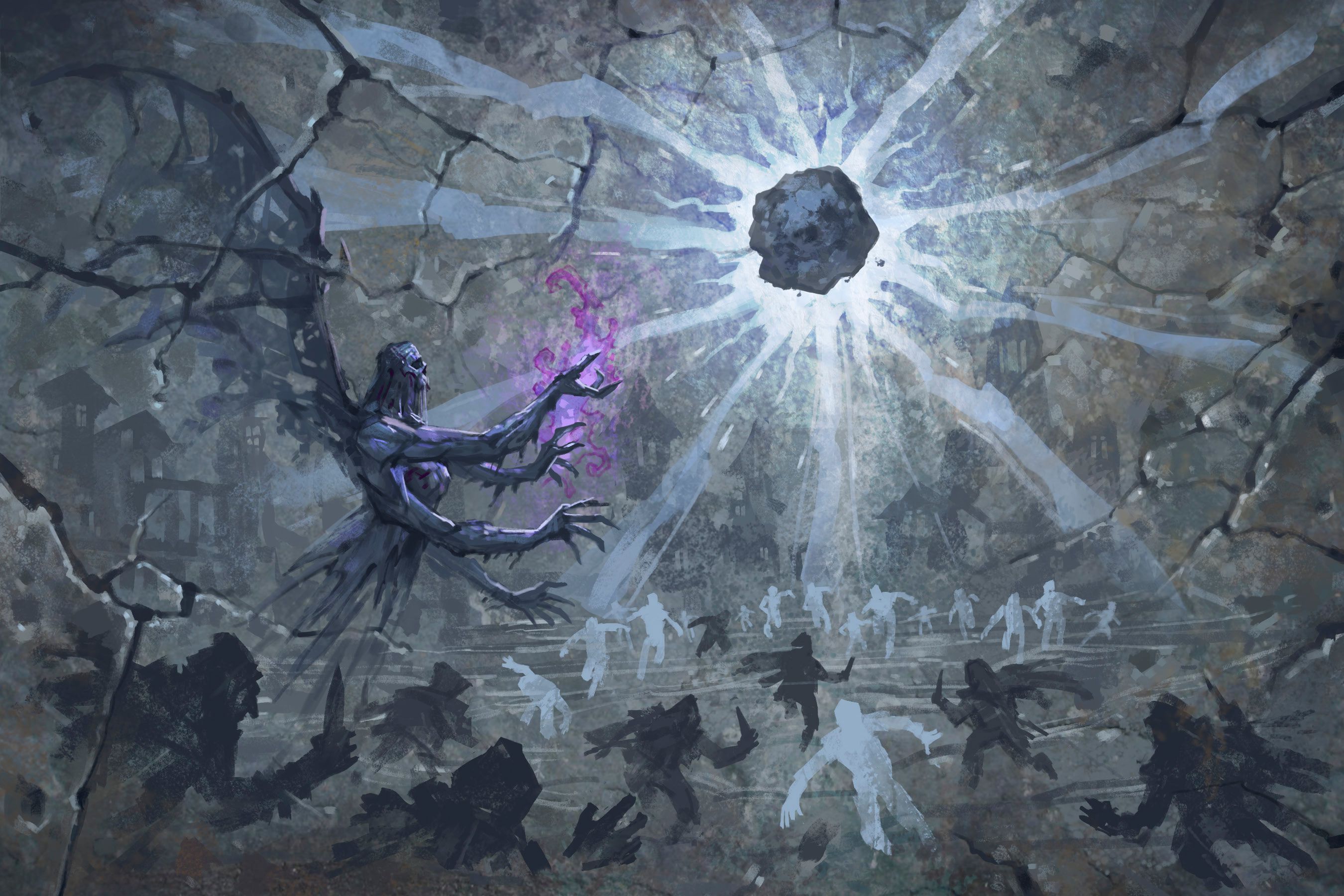
Under Sunless Skies (rank 9, three actions) has simply breathtaking art as seen above. It darkens the sun across a mile, gives allies extraordinary darkvision and resilience, and manipulates the battlefield on a scale ordinary adventuring magic rarely approaches. We should truly beware any undead (like say a Whispering Tyrant) willing to use this.
Josh described Impossible Spells less as combat buttons and more as adventure shaping magic. The guidance behind creating one was essentially: make it awesome, let it feel more powerful than ordinary mortal magic, and allow it to break some familiar design rules. I had to ask because to fine tune for a specific campaign or need, you’ll need to design. Of all things, Josh said avoid avoid reducing it to “I deal ten million damage and automatically win.” The casting should be the payoff to research, gathering impossible components, and surviving the consequences. You can make a whole campaign out of the impossible now. It’ll be exciting to see a party reach a moment when they decide this is the crisis worthy of permanently scarring someone’s soul.
Items: Put Some Magic on It
A few call outs on magic items I thought I’d make. The Cantrip Deck (item 1) returns! As with some of the archetypes, this deck makes cantrips available even to non-spellcasters. Each card is consumed when used, and packs can contain repeated copies of one cantrip or a broad collection. These are inexpensive enough to become genuine adventuring supplies. Give everyone stabilize. Give the Fighter light. Carefully consider whether your most impulsive friend should receive ignition.
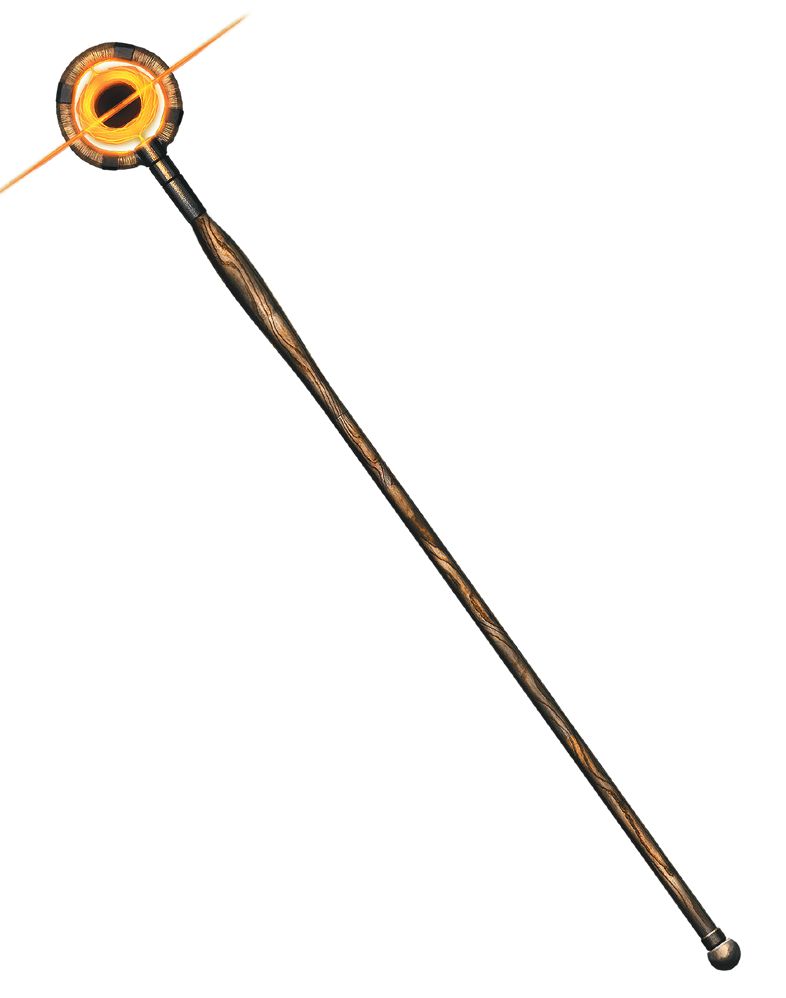
The Thousand-Blade Thesis (item 9) is a scholarly military text that doubles as an extradimensional armory. Once per day, it unfurls and suspends its stored weapons in the air, allowing the bearer to draw them as free actions for a minute. It is useful for damage types and special materials, but more importantly it looks incredible. The Continuum Staff (item 16) collects time, gravity, and teleportation magic such as synchronize, unrelenting gravity, inertia lock, time jump, space fold gate, and cast into time. Once per day, it can rewind a failed attack, save, or skill check and let you take the better result. This has got to be one of the most focused thematic staves Pathfinder has produced.
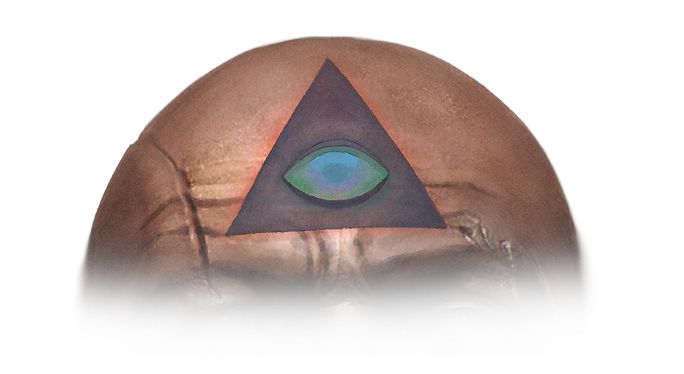
Magical tattoos receive enough support to create an entire visual identity. The Arclord Eye (item 7) makes concealed targets easier to affect with magic and can grant a 30’ magic sense that identifies magical effects and their traits. Meanwhile Calamity’s Bane Tattoo (item 6) warns you when a curse or misfortune effect is influencing you and can improve a secret or misfortune afflicted check. The tattoo prickles, the GM smiles, and the entire table becomes suspicious!
At the highest levels, the Rebounding Breastplate (item 20) stores damage prevented by its resistances and releases that energy in a massive force pulse. The Robe of Beneficence (item 17) supports diplomacy and can stun hostile creatures with compelled nonviolence. Like so much of this book, they make a character look and behave differently when the magic matters. And there’s so much more than that!
Impossible Things Are Happening Every Day
Impossible Magic is enormous. It contains four classes, substantial archetypes, Wizard schools and feats, Automaton options, hundreds of spells, impossible spells, rituals, catalysts, grimoires, spellhearts, staves, tattoos, weapons, armor, and enough other magical oddities to keep characters experimenting for years. More importantly, much of it feels new at the table. The book repeatedly asks how magic changes combat and exploration alike. We learn of Golarion’s changed society and the setting at large. And of course the very nature of a caster’s soul could change even as someone incapable of magic finds they can wield its power as simply as breathing! Impossible Magic’s design took that word impossible to heart… and laughed! Josh and team have embraced the weird and risky to make something intensely thematic. These are the options that inspire characters instead of merely completing builds!
I already want a Hedge Mage with an absurdly personal keepsake, a Veil Dancer who fights by falling through reality, a newly minted Automaton trying to understand organic life, and a World Rouser who keeps insisting that the planet is not angry just cranky after being woken up.
Nex Time
Nex (yes, that’s on purpose) time I want to talk some Lost Omens Lore and we’ll of course call out any major news from Gen Con. In fact, for everyone heading to Gen Con, travel safely and remember to drink some water. I hope you have a fantastic convention and enjoy finally getting Impossible Magic into your hands. Be sure to stop by the Paizo booth while you are there, and please say hello to Josh Birdsong! He has been wonderfully generous in helping us unleash the impossible, and I suspect a lot of new Pathfinder characters are about to exist because of his work.
Until then, please remember to support one another and, of course, much love to all!
Investing In:
I wasn’t quite sure what to name my article series when I first started but the idea of showcasing or discussing things that make me excited, that I find new and interesting, or maybe I’m otherwise passionate about seemed to fit with the idea of Investing In something like the Pathfinder 2E mechanic. To use some magic items you have to give that little bit of yourself, which helps make these things even better. I like the metaphor of the community growing and being strengthened in the same way!
I also want to hear what you’re Investing In! Leave me a comment below about what games, modules, systems, products, people, live streams, etc you enjoy! You can also hit me up on social media as silentinfinity. I want to hear what excites you and what you’re passionate about. There’s so much wonderful content, people, groups (I could go on) in this community of ours that the more we invest in and share, the better it becomes!
Sources
Banner – Cover art with minor edit for title, Impossible Magic, Paizo, art by Wayne Reynolds
- The Search for Next, Part 1 excerpt, Impossible Magic, Paizo
- Runesmith vs Sphinx, Impossible Magic, Paizo, art by Firat Solhan
- Captivator, Archetypes, Impossible Magic, Paizo
- Hedge Mage, Archetypes, Impossible Magic, Paizo
- Living Nexus, Archetypes, Impossible Magic, Paizo
- Soulforger, Archetypes, Impossible Magic, Paizo
- Spellshifter, Archetypes, Impossible Magic, Paizo
- Veil Dancer, Archetypes, Impossible Magic, Paizo
- World Rouser, Archetypes, Impossible Magic, Paizo
- Tree of Life and Death, Spells, Impossible Magic, Paizo
- Under Sunless Skies, Spell, Impossible Magic, Paizo
- Continuum Staff, Items, Impossible Magic, Paizo
- Arclord Eye, Items, Impossible Magic, Paizo
- The Search for Nex, Part 6 banner, Impossible Magic, Paizo