
“Most realities had their own Absalom Station, and there had to be one he could draw on for help, ideally where the resident Zemir had some sense of where he was going.”1
Well Zemir, what about an Absalom city, and not so much its future station version?
When we were Investing In Nex’s return and the pile of news out of Gen Con 2026, one announcement in particular got me thinking. Pathfinder Adventure Path: Invaders from the Dark won’t come out until next year, specifically June 2027. It’ll take characters into Numeria for an alien invasion while also showing off the compatibility between Pathfinder Second Edition and Starfinder Second Edition. There’s even going to be a robust Player’s Guide with guidance for using material between the two games. I was already excited to get back to Numeria because Pathfinder mixing swords and sorcery, crashed spaceships and strange aliens, let alone technology nobody understands has always been a good time. Now Paizo has a fully compatible science fantasy game sitting right next to Pathfinder to help do it.
That compatibility has been part of the plan for Starfinder Second Edition from the beginning. Paizo built Starfinder 2E using Pathfinder’s remastered rules as its baseline, specifically so creatures, spells, feats, and other elements could move between the games much more easily with the very important caveat that the GM still decides what belongs in a particular campaign. Paizo even calls out that while many Starfinder spells and feats work fine in Pathfinder, you might run into something expecting you to be holding a comm unit! That got me thinking beyond what weapons, monsters, or technological items might appear in Invaders from the Dark. What about the Starfinder classes?
How could I take one of them, change absolutely none of its mechanics, and instead change the way I describe it so the character feels like they were born on Golarion rather than stepping off a starship? Naturally, I went right for the Witchwarper first. I’m going to approach this as maybe you’re a Pathfinder player not so familiar with Starfinder too. Oh and note that I’ll bold the class features to make them easier to find!
We’re Not Changing Anything!
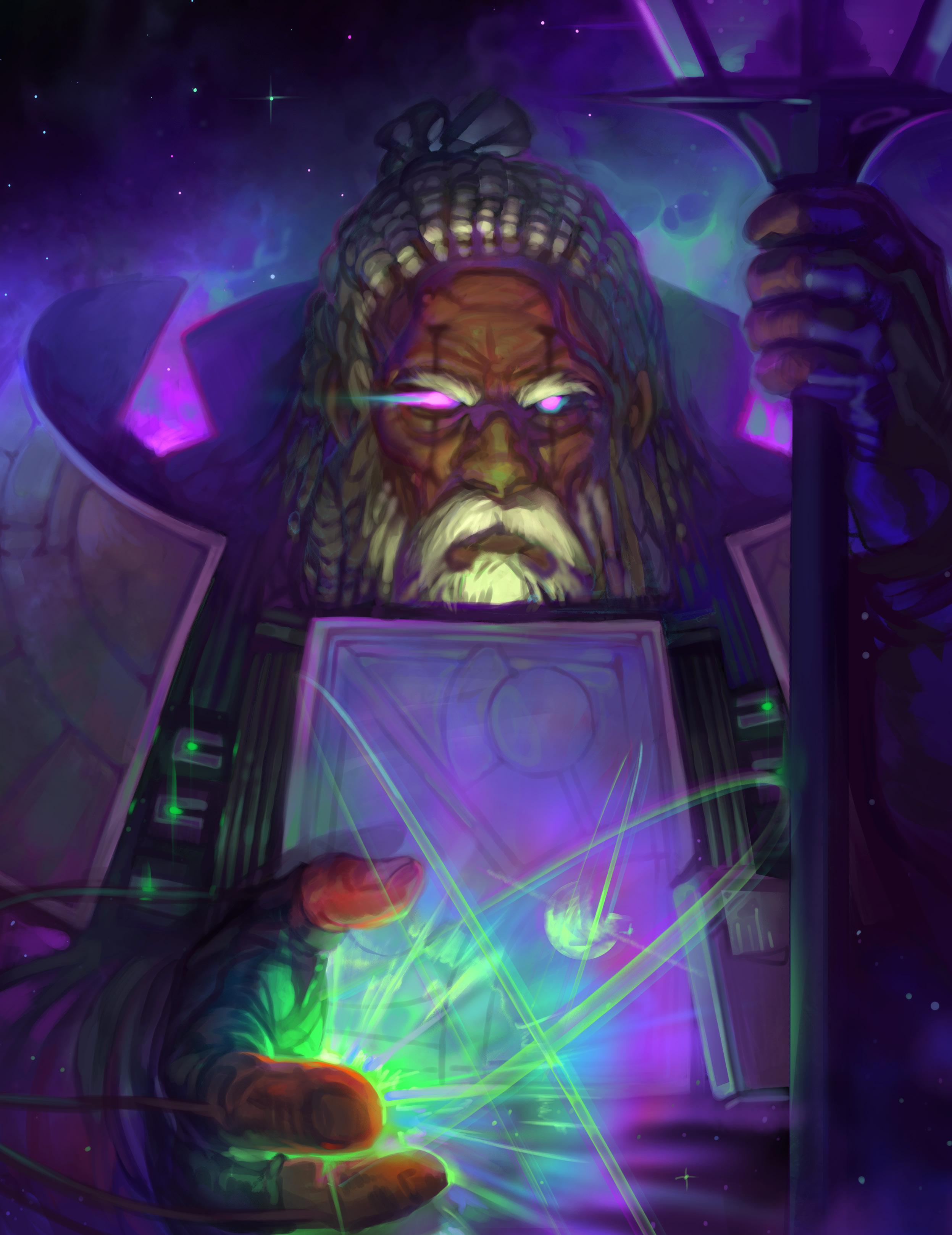
First I want to establish one rule for everything we’re doing today: we aren’t changing the mechanics. I’m not converting the Witchwarper into a new class like replacing Starfinder skills or changing traits. We won’t swap damage types or decide that something affecting technology now affects magic because that would be more convenient. If an ability says it works a particular way then that’s how it works. We’re changing what the character believes is happening, what the rest of the party sees when it happens, and perhaps most importantly the story explaining why this person can do any of it.
There are a few places where that distinction really matters. For example the Analyst option for the Paradox feature trains you in Computers, while the Precog trains you in Piloting. Those are Starfinder skills, and describing your Analyst as an arcane mathematician does not suddenly turn Computers into Arcana. In Numeria especially, I suspect there will be plenty of opportunities for those skills to matter. Of course a GM might allow some magical/technology transparency. Reminds me of the magic/psionics stuff for D&D, which thankfully Occult rectified even if I do agree I want to see the Psychic get a bit more oomf now. Anyway, in a more traditional Pathfinder campaign bringing in a Starfinder class is something you and your GM should discuss because parts of that class may assume elements are present. That’s compatibility rather than conversion, and I think preserving that distinction makes the character much more interesting anyway.
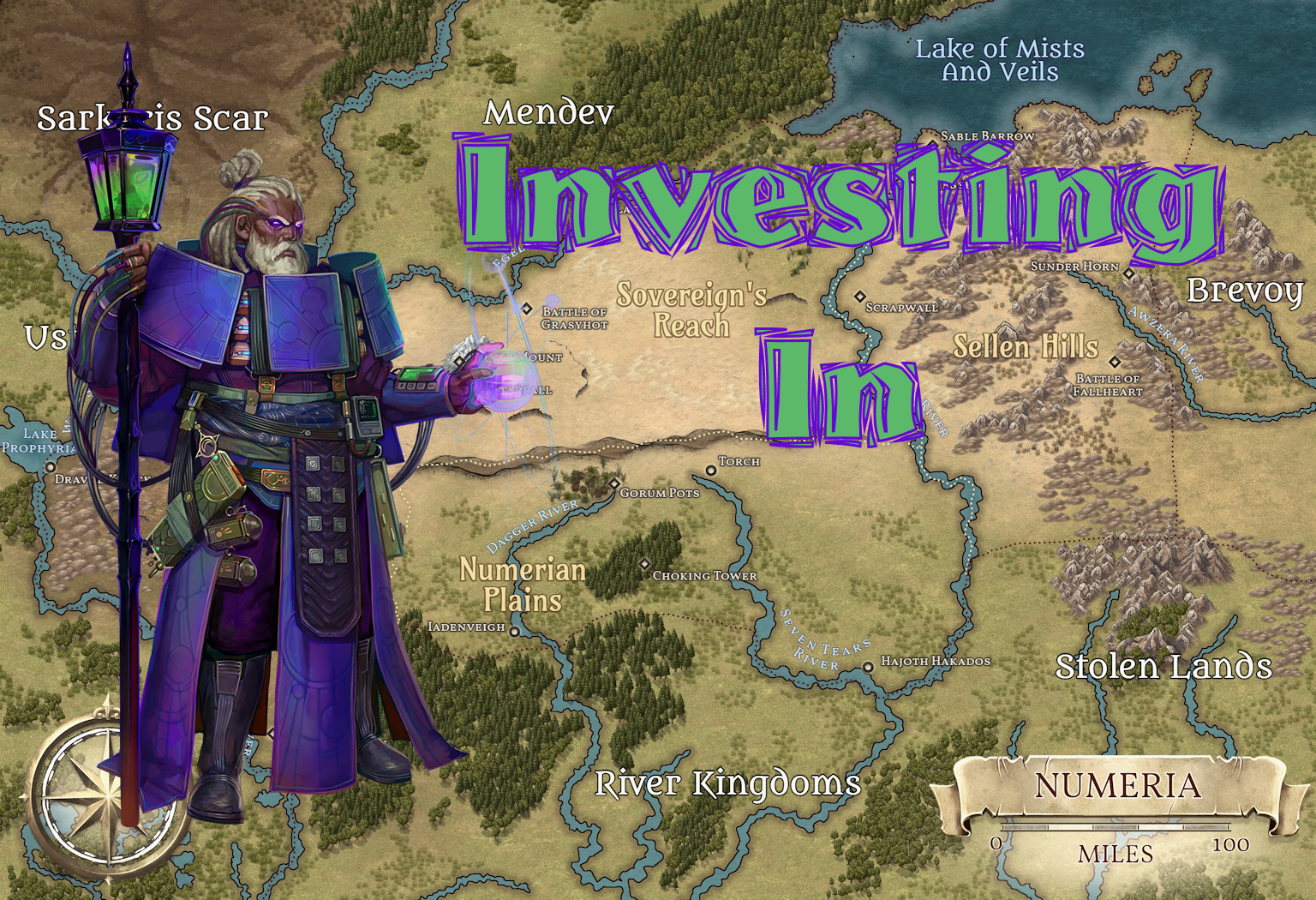
The actual core of the Witchwarper doesn’t require any work at all. A paradoxical event changed you forever. You can see or manipulate alternate realities, create fields that subvert space and time, and wield powerful magic. Then there’s the Anchor you cling to that helps remind you which reality is actually yours. Even the Starfinder rules suggest those fields might manifest as alternate realities shimmering through the air or walls of glowing magical equations. I’ll note: none of that requires a spaceship though in Numeria you might actually get one!
So What Is a Golarion Witchwarper?
Forget the word quantum for a moment and think about how many places on Golarion could produce someone whose relationship with reality has gone horribly (wonderfully?) wrong. A Varisian fortune teller performs a Harrow reading and discovers they aren’t merely seeing possible futures anymore; sometimes they can reach into one and make part of it happen. A Nexian wizard becomes obsessed with the idea that reality is only the currently accepted solution to an impossibly complicated magical equation. Someone wanders through a First World crossing for three hours and returns twenty years older with memories of an entire life nobody else believes they lived. An occult scholar visits the Dimension of Time and comes back slightly out of order.
Then there are the Mana Wastes, where magical devastation continues doing impossible things to people, and Numeria itself, where alien technology has been lying around complicating Golarion’s definition of “fantasy” for quite some time already. You could be someone that survived a magical catastrophe, touched an artifact they absolutely should not have touched, stepped through the wrong portal, crossed paths with the wrong fey, or simply learned something about reality that a mortal mind wasn’t supposed to understand. The Witchwarper is already a wonderfully Pathfinder coded concept. What we really need to decide is what happened to yours?
Conveniently, the class gives us the perfect place to start answering that question.
Living With a Paradox
Every Witchwarper chooses a Paradox, the event or force that permanently altered their existence. Mechanically, this determines the tradition of their spellcasting, a trained skill, bonus spells, their warp focus spells, and the special effect generated by their Quantum Field. The four options in Starfinder Player Core are Analyst, Anomaly, Gap Influenced, and Precog. All four can work on Golarion with surprisingly little effort.
Analyst: The Geometer
The Analyst believes there is a hidden code underlying the universe and learns to see the equations behind it. They use arcane magic, train in Computers, and their Quantum Field improves their ability to Seek and Recall Knowledge about things caught within it. Starfinder can absolutely frame that through computation and quantum theory, but Golarion has more than enough magical academics willing to decide that creation is fundamentally an equation waiting for someone clever enough to solve it.
Maybe your Analyst studied Nexian theories of space and planar geometry until they realized all of existence was built from the same underlying magical language. They could be an Arcanamirium scholar, a rune researcher fascinated by ancient Thassilonian magical principles, or someone obsessed with Axis and the cosmic laws represented by aeons. When their Quantum Field manifests, glowing geometric diagrams form across the battlefield, invisible ley lines become visible, and arcane formulae constantly recalculate themselves as creatures move. When the Analyst uses Recall Knowledge, they aren’t simply remembering something they learned in a book; they’re finding the right variables and solving for it.
I particularly like a Nexian Analyst right now. Impossible Magic gave us the School of Nexian Spaces where students study the archmage’s manipulation of demiplanes and spatial boundaries. We also saw the School of Quantic Control manipulating elemental forces and physical reality. If somebody coming out of that magical culture announced they had discovered the equations behind reality, I’m not convinced anyone in Quantium would even consider that the strangest thesis defended that week. Nex might even be impressed…
Anomaly: The One Who Came Back Wrong
The Anomaly might be my favorite Paradox for pure character story. Their existence somehow contradicts their current reality; Starfinder suggests they may have experienced something that disrupted their core existence or crossed over from an alternate reality or twisted timeline. Their arcane Quantum Field reflects that, making alternate iterations of enemies flicker around them and potentially disrupting actions with the concentrate trait.
That is fantasy horror begging for us to use it. Maybe you walked through a First World crossing. Maybe you survived a failed teleportation ritual. A hag cursed your parents before you were born. Your entire village vanished for a single night and returned with everyone exactly the same except you. Perhaps you once stared into a magical mirror and saw another version of yourself looking back. You touched the glass. The mirror shattered. Now you’re no longer completely sure which one of you walked away.
When this Witchwarper creates their Quantum Field, the surroundings can momentarily become another version of themselves. Dead trees are suddenly alive. A ruined manor stands restored around you. An empty battlefield is littered with the weapons and bodies from a war that never happened here. Your enemy catches sight of themselves standing twenty feet away wearing clothes they’ve never owned, while another version is already dead on the ground. Nothing about those visuals changes the mechanical effect of the Anomaly’s field, but suddenly that flat check to perform a concentrate action tells a wonderfully creepy story: it’s difficult to maintain your train of thought when several other versions of you are doing something completely different in the corner of your eye.
Gap Influenced: The Missing Chapter
Gap Influenced presents the most obvious challenge because the Gap is a specific and extremely important part of Starfinder’s setting. Mechanically, this occult Paradox trains Society and creates supernatural static within the Quantum Field that conceals the Witchwarper from creatures inside it. Its spell selection also leans heavily into memory, perception, and altering minds. Rather than trying to import the entire Gap into modern Golarion, I’d make that missing history something intensely personal.
A fey stole ten years of your memories. Your hometown disappeared and nobody else remembers there ever being a settlement there. You remember fighting in a war that no historian says occurred. You keep discovering references to yourself in documents written centuries before you were born. Maybe there was once another member of your adventuring party. You remember their face, their terrible jokes, the time they saved your life, and exactly where they slept around the campfire. Nobody else has any idea who you’re talking about.
This Witchwarper knows there are holes in reality, and somehow they can reach into those absences. Their Quantum Field might manifest as pale fog and whispered voices. Writing fades from walls. Faces seem momentarily unfamiliar. Names disappear from gravestones. The Witchwarper becomes concealed not because they’re turning invisible, but because reality itself appears to be having difficulty remembering that they are supposed to be there. You keep every mechanical detail of Gap Influenced while turning it into a character carrying around one of the best mysteries a GM could possibly ask you to hand them.
Precog: The Prophet Out of Time
Precog is the easiest conversion of the lot. Something has unstuck this Witchwarper from time, allowing them to see and manipulate temporal possibilities. They use occult magic and are trained Pilots. Their Quantum Field slows enemies while speeding the Witchwarper and their allies as they manipulate the flow of time around them. That’s already a fantasy character. We barely have to do anything! Heck, the obvious is maybe you came from the future!
Maybe you’re a prophet whose visions stopped being limited to one possible future. Maybe you’re a Harrow reader who now sees every result the cards could have shown. Perhaps you were touched by Shyka the Many or survived an encounter with the Dimension of Time. You sometimes answer questions before they’re asked. You recognize people you’ve never met because you remember meeting them in a future that no longer exists. You’ve mourned friends who are still alive because somewhere in your memory they already died.
When the Quantum Field manifests, creatures develop translucent afterimages as their possible movements overlap. Footprints appear before feet touch the ground. A candle relights right as someone snuffs it out. You and your allies move faster because you know exactly where they need to be, while enemies hesitate as several competing moments fight to become the one that actually happened. There is no need to change that movement status penalty. We’re simply giving it a story.
What Keeps You Real?
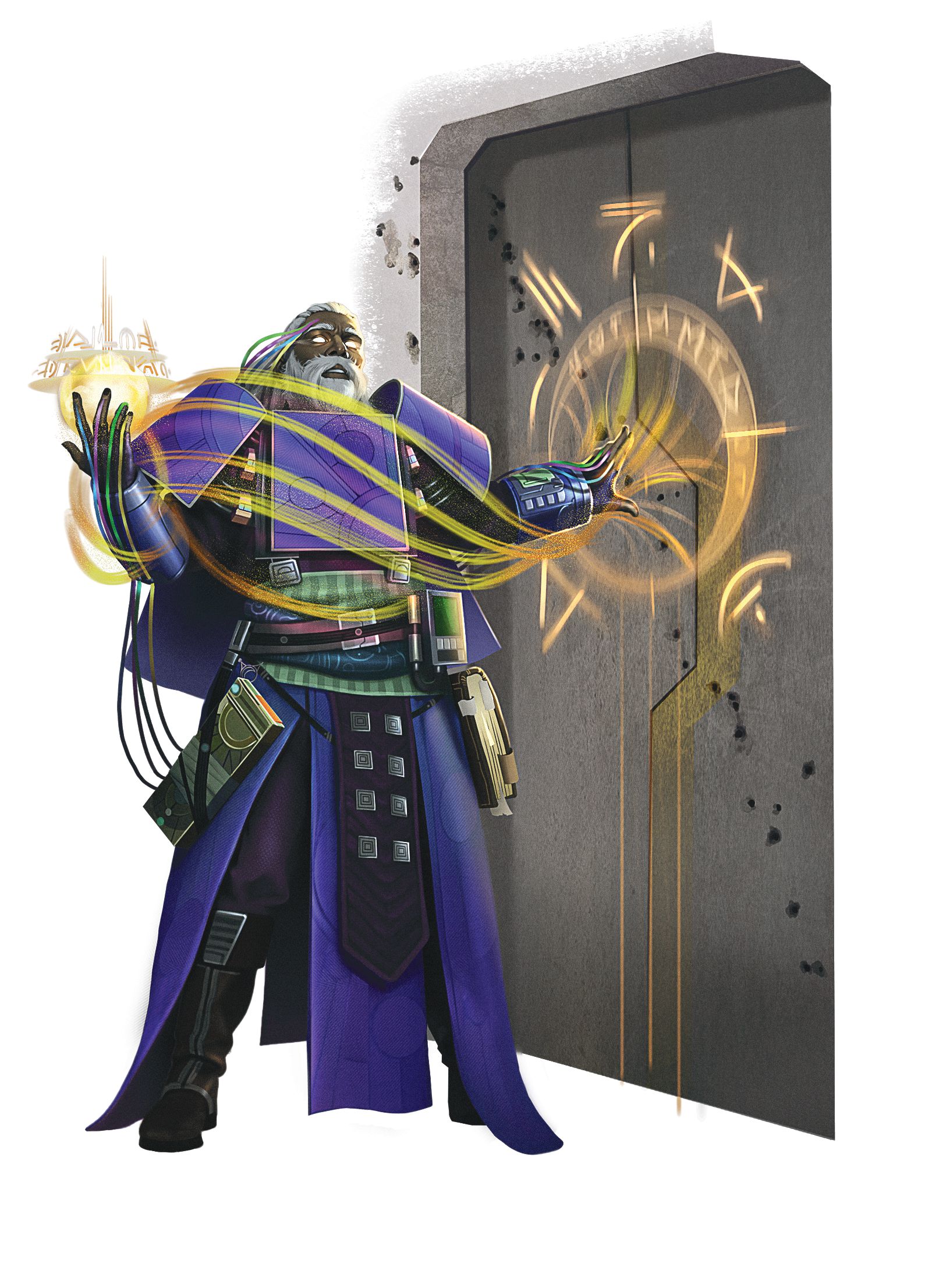
Paradox might tell us what happened to the Witchwarper, but I think Anchor tells us who they are. Whatever altered their relationship with reality, something still keeps them centered. Every Witchwarper chooses Core Memories, Focal Point, or Tangible Object, each providing both a persistent benefit and an anchoring effect while sustaining the Quantum Field. Mechanically they’re useful but narratively, I love them as they help drive the roleplaying.
Core Memories represent the experiences your Witchwarper can rely upon when everything else becomes uncertain. The rules allow those memories to reinforce your skills and help reduce stupefied, but think about what that actually looks like for the character. Maybe they remember their mother singing while making breakfast, the smell of their childhood home, their first kiss, their mentor handing them their first spellbook, or the moment their adventuring companions stopped being a collection of strangers and became family. Your Witchwarper can see a hundred possible worlds overlapping around them, including worlds where those moments never happened. So they deliberately return to the memories they know belong to this version of themselves. This happened. These people mattered. This is my life. And thus you remember: this is real.
Focal Point goes in another direction. The Witchwarper concentrates so intensely on one subject that other things (even contradictory realities) fade into the background. The rules reward that focus by protecting concentration and helping the character push through certain impairments. On Golarion, that Focal Point could be a field of magical research, a religious mystery, an unfinished prophecy, the genealogy of dragons, the structure of one particular rune, or an incredibly obsessive hobby. Reality is fracturing, the walls are showing you three different buildings, and your dead grandfather is apparently standing next to the goblin trying to stab you? Fine. Sure. No problem. We’re thinking about ancient Osiriani funerary architecture now. Everything else can wait.
Then there’s Tangible Object, which might be my favorite because it begs you to put something meaningful on the character sheet. The rules make that object a literal grounding force, helping against illusions and holograms while also strengthening the Witchwarper against fear. Make it a locket or a holy symbol, one battered Harrow card to borrow from that example above. Perhaps you have a sibling’s broken sword hilt or a river stone they gave you before they got swept away by a flood. I like the idea of a fragment of skymetal or a tiny wooden horse your father carved when you were a child. When alternate worlds start bleeding together and you no longer trust your own senses, you wrap your fingers around the one thing whose weight and texture you know better than anything else. It exists. Therefore this world and you exist!
Put Another Golarion on Top of This One
The Witchwarper’s Quantum Field is the mechanical and visual centerpiece of the class. Warp Reality creates the field, Quantum Pulse can establish it as combat begins, your Paradox determines its initial effect, and a huge number of Witchwarper abilities interact with it as you advance. The rules intentionally leave its appearance open: it might be a haze filled with glimpses of alternate realities, glowing magical equations, or essentially anything else appropriate to your Witchwarper.
Your Golarion Witchwarper doesn’t even need to call it a Quantum Field. The Analyst might call it the Equation. The Anomaly calls it Elsewhere. The Gap Influenced Witchwarper refers to the Missing Place. A Varisian Precog calls it the Spread, because every possible future appears around them like cards dealt across the battlefield. Can you tell I love the harrow idea? Someone else might call it the Veil, the Second Story, the Unwritten World, or simply the Other Side. In a setting where different magical traditions already disagree about how and why magic works, I’m perfectly comfortable with two Witchwarpers having entirely contradictory explanations for the exact same class feature. I really encourage you to find what your character would refer to things rather than always naming them as per the class rules. My Necromancer refers to themselves as a warlock in that Impossible Lands game I’m planning.
This is also where you get to go wild visually while respecting the rules. Be creative, let loose! If your field overlays the battlefield with a version where the forest burned down a century ago, that doesn’t mean creatures suddenly take fire damage. If you show your Precog seeing attacks moments before they happen, they don’t automatically avoid those attacks. The game already tells us what each Quantum Field does. We’re describing why it looks that way, and hopefully GMs can understand this isn’t an attempt to sneak in abilities.
That restriction actually makes the flavor more fun. When you eventually take something like Danger Zone, which makes the field itself hazardous, perhaps now that burned reality really can scorch people passing through it because you have a mechanic supporting the story. Before it was only a glimpse at one point. Now you’ve learned how to pull enough of that other world across the boundary to make it dangerous.
Spells From Worlds That Never Were
Witchwarper spellcasting needs even less adjustment. Your Paradox determines whether you’re an arcane or occult caster, provides additional spells, and grants specialized focus spells called warp spells. These are your focus powers. The class itself describes Witchwarpers casting while speaking revelations about alternate realities as arcane equations or occult symbols appear around them. Warp spells can only be used while the Quantum Field is active and also Sustain the field when cast. That already sounds like something I’d expect to see happening in the streets of Quantium.
The fantasy Witchwarper might understand those warp spells as the realities they’ve learned to reach most easily. The Analyst adjusts the equation. The Anomaly loosens the boundary. Gap Influenced finds the missing piece. Precog chooses a different moment. Even Refocusing can become characterful: the Analyst recalculates their formulae, the Precog performs another Harrow reading, the Anomaly stares into a mirror until their reflection starts behaving properly again, while the Gap Influenced character writes down everything they are still certain they remember.
I also like taking that idea into the Witchwarper’s regular spell repertoire. Perhaps they don’t believe they actually learn every spell. Instead, they remember the spell from another version of themselves who did. When a new spell enters your repertoire, you wake from a dream with memories of studying under a teacher you’ve never met. You know exactly where their classroom was. You remember what they wore. You remember the smell of the ink in their spellbook. None of those things have ever existed in your world, but you can cast the spell anyway. Signature Spells are simply possibilities you’ve become so familiar with that you can reach them at whatever intensity you need.
At 3rd level, Isolated Spell Matrix lets the Witchwarper cast spells directly into the Quantum Field. If I’m flavoring that for fantasy, I want the spell to disappear into an arcane glyph beside the Witchwarper and emerge from another hanging in the field. Maybe the Precog casts a spell that appears to miss, only for everyone to watch the same spell emerge from the position they were standing in several seconds in the future. The Anomaly might not appear to cast at all: another version of them flickers into view somewhere inside the field, performs the spell, and vanishes.
Growing Into the Impossible
Not every later Witchwarper class feature needs its own elaborate explanation. Expert Spellcaster is still Expert Spellcaster, and Weapon Expertise isn’t secretly proof that another version of you spent thirty years studying the blade. Unless, of course, you want it to be. There is still room to make even the standard proficiency increases reinforce the character’s changing relationship with reality. In fact I encourage it for all your characters! These are your tools for fun, and I always love the creative roleplay and storytelling.
Reflex Expertise can reflect increasingly recognizing the futures where you didn’t get out of the way. Magical Fortitude might represent your body becoming difficult to alter after exposure to so many competing versions of itself, while Perception Expertise can come from continually catching tiny glimpses of what is about to happen. When Quantum Defenses improves your armor proficiency, perhaps attacks seem to pass through places you almost occupied. At 17th level, Quantum Will raises your Will proficiency to master and turns successful Will saves into critical successes. By that point I like the idea that your identity has become so thoroughly anchored across possibilities that an enemy trying to rewrite your mind isn’t merely contending with one version of you anymore.
The biggest changes come at 19th level. Quantum Thesis grants the Witchwarper access to 10th rank magic, while Warped Infinities expands the Quantum Field to a 100’ radius and gives you precise control over which spaces it affects. Our Golarion Analyst doesn’t have to write a scientific thesis; this can be their grand work, the completed proof of a magical theory that has consumed their entire career. The Anomaly finally understands what went wrong. The Precog learns not merely to witness alternate futures but to select among them. The Gap Influenced Witchwarper discovers what was missing!
Initially you learned how to crack open reality enough to glimpse what might have been. At high levels you’re choosing which pieces of possibility are allowed into the world. I don’t need to make that more fantasy!
Feats Get Weird
The Witchwarper’s feats give us even more opportunity to push the flavor. Otherworldly Spell deliberately makes your spell appear strange or alien enough to make it harder for others to recognize. That’s practically an invitation. An ordinary fire spell might bloom into black roses before erupting into flame. Your magical gestures happen backward. The verbal components come from three slightly different versions of your voice. Perhaps your spell looks almost normal except any wizard watching realizes you’re forming a common sigil in a geometrically impossible direction. The important thing is that we’re still using the feat’s actual effects; we’re simply making the reason it’s difficult to recognize much more memorable.
With Debris Zone your Quantum Field fills with troublesome terrain. In Starfinder, wreckage and technological debris might immediately come to mind. On Golarion, roots from another version of the forest could tear through the soil. The broken stones of a castle that never existed scatter across the road. Shelves from an impossible library overlap the battlefield, forcing everyone to scramble around books written in languages nobody has ever spoken. Quantum Recycle is another one I love. Mechanically you’re preserving magical energy and reclaiming an expended lower rank spell slot after casting a more powerful spell. Flavor it as realizing that this version of you used the magic, but another one didn’t. For one instant the two possibilities touch, and you’re taking a little of that unused potential back.
Later zone feats get even better. Danger Zone I mentioned above. It explicitly allows your field to merge with a more hazardous reality, so this is where all those cosmetic alternate worlds can finally become threatening. Your field overlaps with a frozen wasteland or a forest choked in supernatural thorns. I might use a storm of razor sharp crystal if from a mountain area or the charred remains of a city destroyed in another timeline. So many paths opened up strange temporal activities. Whatever visual you choose should still respect the actual damage types and effects the feat allows, but now your Witchwarper is doing more than showing people another reality. Now you’re letting a dangerous piece of it through!
We get In Another Life at 12th level, which might be the single feat that convinced me this entire article needed to exist. During daily preparations, you choose an ancestry feat for your ancestry that you qualify for and don’t already possess, gaining it until your next daily preparations. The fiction is right there: while resting, you experience different versions of yourself in other realities. You wake up knowing something another version of you learned. This is spectacular in a Pathfinder campaign because ancestry feats already represent cultural, physical, and supernatural parts of who your character is. Today you remember growing up somewhere else. You remember your sister teaching you how to do this. You remember exactly what she looked like and yet maybe you don’t have a sister…
At higher levels, options such as Multiverse Magic and Infinite Magic take the same idea further by broadening the magic your Witchwarper can reach or allowing them to keep producing magic beyond their normal limitations. I stopped asking myself how to make Witchwarper feats sound like Pathfinder and realized I was mostly describing high level Pathfinder magic with a particular explanation for why it’s so weird.
Witchwarpers I’d Play
All of this gets much easier to picture once we put the pieces together. My Varisian Precog (perhaps my favorite) is a Harrow reader who became trapped inside one of their own readings, experiencing years of possible futures before waking only seconds later. Their Tangible Object is one Harrow card that appeared in every future they witnessed. Their Quantum Field manifests as translucent cards rotating through the air while little pieces of several possible moments play out around everyone inside.
The Nexian Analyst is an arcane mathematician who believes all reality is ultimately a magical equation. Their Focal Point is the theorem they’ve spent their career trying to prove, while the Quantum Field fills the area with glowing sigils, planar coordinates, elemental equations, and geometric lines connecting everything nearby. Every combat encounter is also research, which feels particularly appropriate for someone raised in the magical culture of modern Nex.
My First World Anomaly disappeared through a fey crossing for three days and returned thirty years older. They remember a spouse, their children, numerous friends and rivals, and an entire life nobody else can find evidence ever existed! Those people are their Core Memories. When the Quantum Field manifests, pieces of that lost home appear around them—a familiar cottage, a particular tree, toys scattered across the grass, perhaps even fleeting images of people they loved. I don’t know whether that world was another timeline, a First World trick, or something even stranger, and I wouldn’t want to decide without the GM.
Finally, for a darker idea I’d use an Ustalavic Gap Influenced occultist, a historian who has spent years obsessively trying to prove a particular village once existed. They’ve found contradictory references in old journals, a few records nobody else considers significant, and one damaged map where the ink looks deliberately scratched away. They finally realize why they have been so desperate to find the place. They grew up there. That’s the sort of character mystery I’d love to get as a GM or see what another might do with it!
Starfinder Spells, Golarion Flavor
Classes aren’t the only options worth looking at. Starfinder has plenty of spells we don’t currently see in Pathfinder, and many of them can cross the tonal gap just as easily. Paizo’s own compatibility guidance notes that many Starfinder spells can function in Pathfinder as written, while warning that particular options may still assume Starfinder equipment or circumstances. The same rule we’ve used throughout applies: we’re changing presentation not mechanics.
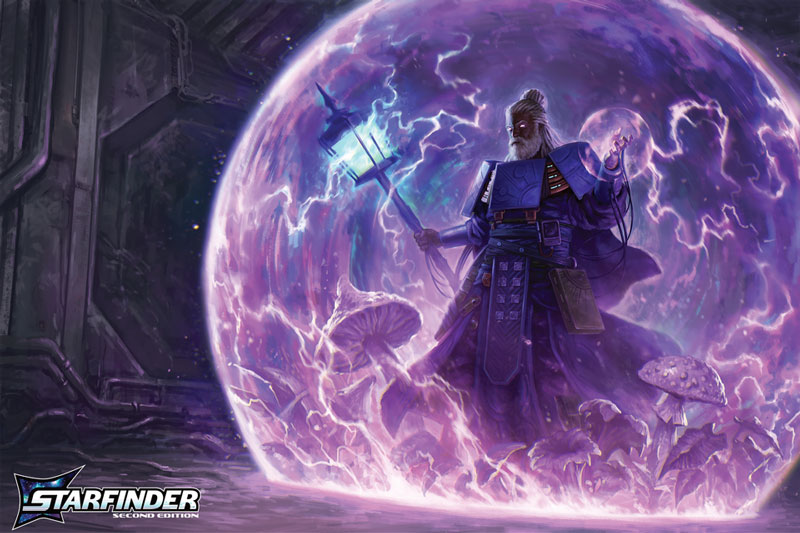
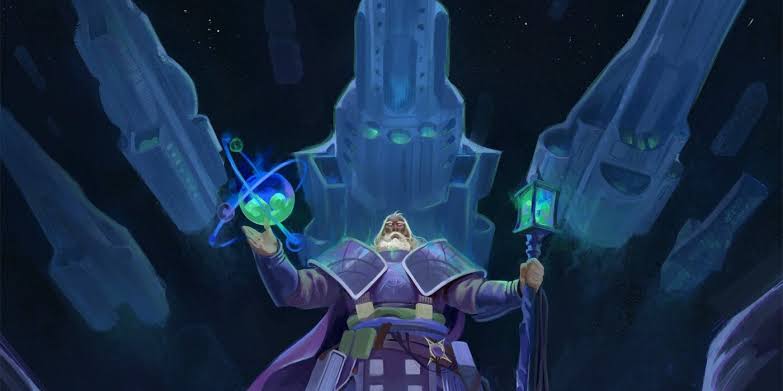
Carcinization is magic that pushes a creature toward becoming crablike. There are undoubtedly very explanations for that. On Golarion? Sea witch. Alright, maybe it’s an ancient Azlanti transmutation based upon convergent forms of life, a druid experimenting with evolutionary magic, or a spell created by some First World creature that has decided everything would be improved by eventually becoming a crab. The strangest part isn’t trying to explain this spell in Pathfinder. It’s pretending Golarion hasn’t already produced six independent magical traditions for doing it. With Phantasmal Fleet (seen above) those ships don’t have to be starships, though of course they could look like the crashed starships of Numeria! The damage done is 10d8 mental so there’s no lasers to truly explain. The apparent manifestation needs to be a fleet of ships 1000’ overhead. You could do an array of ships fantastic and scifi after all!
Other spells only sound technological because of the language surrounding them. A spell that produces a holographic image or memory can appear as ghost light, smoke over reflected water. You could say it’s part of an enchanted mirror or a spectral scene hanging above a spread of Harrow cards. I might be hung up on the harrow idea… Pocket Vacuum doesn’t have to look like somebody vented a starship compartment. The caster tears open a tiny connection to a breathless planar void. Something involving plasma can be described as condensed starfire or impossibly hot elemental radiance without changing a single point of damage. For the Precog’s Temporal Bullets, I don’t particularly care whether the beneficiary is firing a gun, firing an arrow, or making another appropriate attack. The spell is about manipulating time. Perhaps the Witchwarper watches an ally’s attack miss, sees the timeline where it hit instead, and briefly makes the injury from that possibility real here. The Precog receives Temporal Bullets directly among its Paradox spells, reinforcing how comfortably Starfinder’s supposedly futuristic magic can slide into temporal fantasy.
There is a limit, and it’s worth repeating it because I think honoring that limit makes this exercise better. If a spell specifically targets technology, requires a particular item, or interacts with some Starfinder rule that doesn’t normally exist in Pathfinder, calling the effect runes doesn’t erase those requirements. Sometimes your fantasy flavored Witchwarper really does need to understand alien machinery, carry Starfinder equipment, or be adventuring somewhere those things exist. Fortunately, Paizo is taking us to Numeria next year. I have a feeling we may find a few opportunities!
The Stars Aren’t That Far Away
I started down this particular reality warping path because of Invaders from the Dark. Next June we’re heading into Numeria for a Pathfinder alien invasion, and Paizo is deliberately putting the compatibility between Pathfinder and Starfinder into an Adventure Path rather than leaving it as something the rulebooks tell us we can theoretically do. I’m excited to see exactly where Paizo draws those lines and what guidance we get for characters who start reaching across them.
What surprised me while writing this was how little work the Witchwarper needed. I expected to spend my time figuring out how to hide the sci-fi elements beneath a fantasy coat of paint. Instead once you get past words like quantum, the class is already easy to niche into a fantasy trope. One is a reality witch, another a prophet. The idea of an occultist or a planar scholar is quite easy with certain Paradoxes. The arcane researcher who learned something about creation that mortals probably weren’t meant to know is also a classic trope. Golarion has places like the First World, Dimension of Time, Mana Wastes, Nex, and Numeria for ease of background ties. There’s lots of explanations possible! Now it’s a matter of finding the right campaign or maybe adventure paths…
Witchwarper is only one class. What does a Pathfinder coded Solarian look like if we treat them as a mystical knight balancing creation and destruction? How does an Operative work as a fantasy monster hunter? Can the Soldier become a magical siege warrior carrying the sort of absurd weaponry only Numeria could make possible? Those are questions for another time! Suffice to say I’ll be Investing In some pathfinder considerations for each of the Starfinder classes, including the Luminary from playtest. Invaders from the Dark has me thinking about all of them. And of course, Numeria being north of my players in our Kingmaker game might have something to do with it too.
Until next time, please remember to support one another and, of course, much love to all!
Investing In:
I wasn’t quite sure what to name my article series when I first started but the idea of showcasing or discussing things that make me excited, that I find new and interesting, or maybe I’m otherwise passionate about seemed to fit with the idea of Investing In something like the Pathfinder 2E mechanic. To use some magic items you have to give that little bit of yourself, which helps make these things even better. I like the metaphor of the community growing and being strengthened in the same way!
I also want to hear what you’re Investing In! Leave me a comment below about what games, modules, systems, products, people, live streams, etc you enjoy! You can also hit me up on social media as silentinfinity. I want to hear what excites you and what you’re passionate about. There’s so much wonderful content, people, groups (I could go on) in this community of ours that the more we invest in and share, the better it becomes!
Sources
Banner – Modified image of Zemir, iconic Witchwarper from Starfinder Player Core from Paizo and a custom map of Numeria from Civil_ad8390, Creative Commons attribution
- Iconic Encounter: Lost and Found, Paizo Blog, Paizo, authored by Erin Roberts
- Iconic Witchwarper banner image, Starfinder Playe Core, Paizo
- Zemir using Arcana, Starfinder Player Core, Paizo
- Zemir warping reality, Starfinder Player Core, Paizo
- Phantasmal Fleet spell, Starfinder Player Core, Paizo
- Pathfinder – Full Withdraw, yuikami-da, Creative Commons Attribution