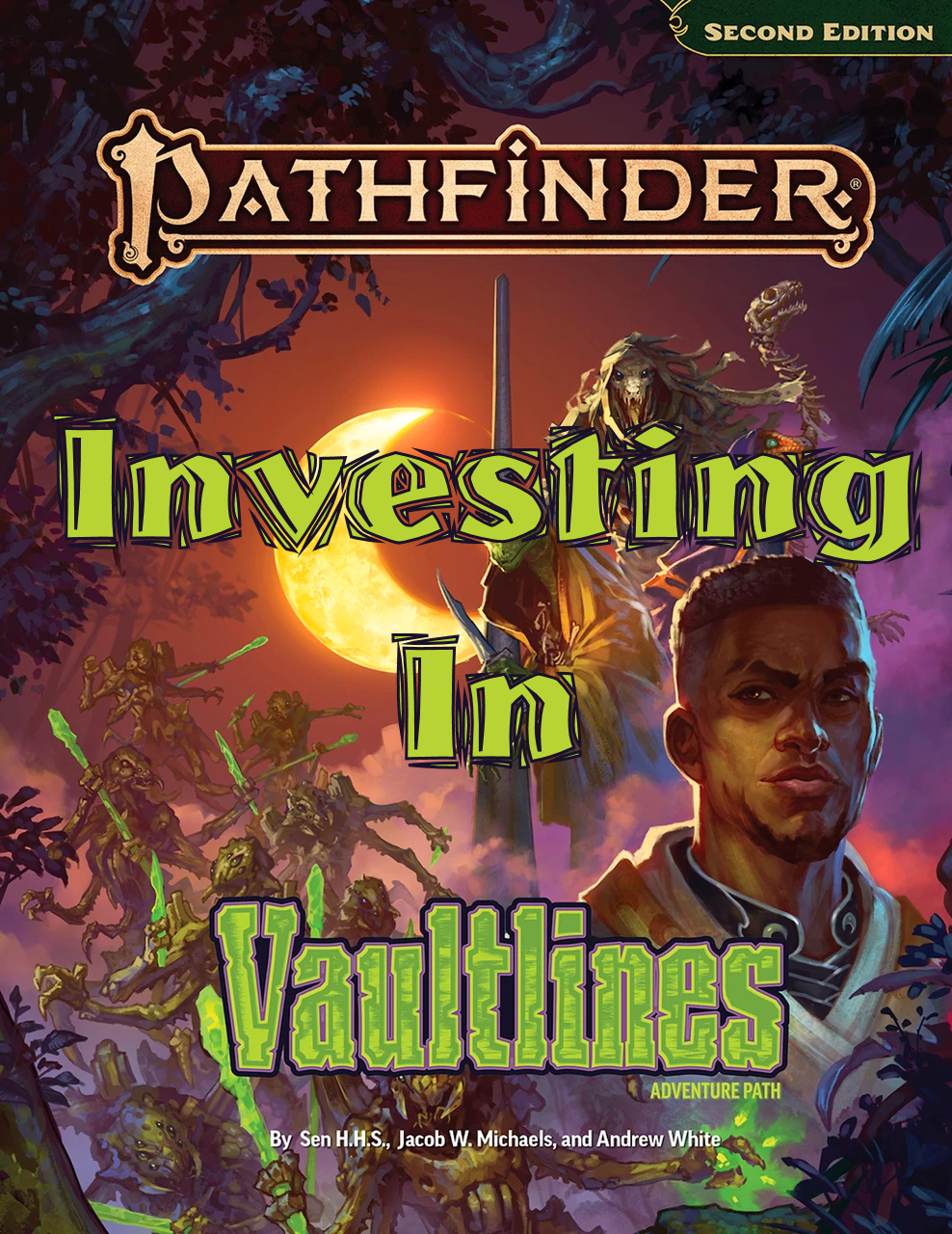

“Join our heroes on a thrilling journey through the farthest reaches of their lightless world, from the twisting caverns of Nar-Voth to the deepest vaults of Orv.”1
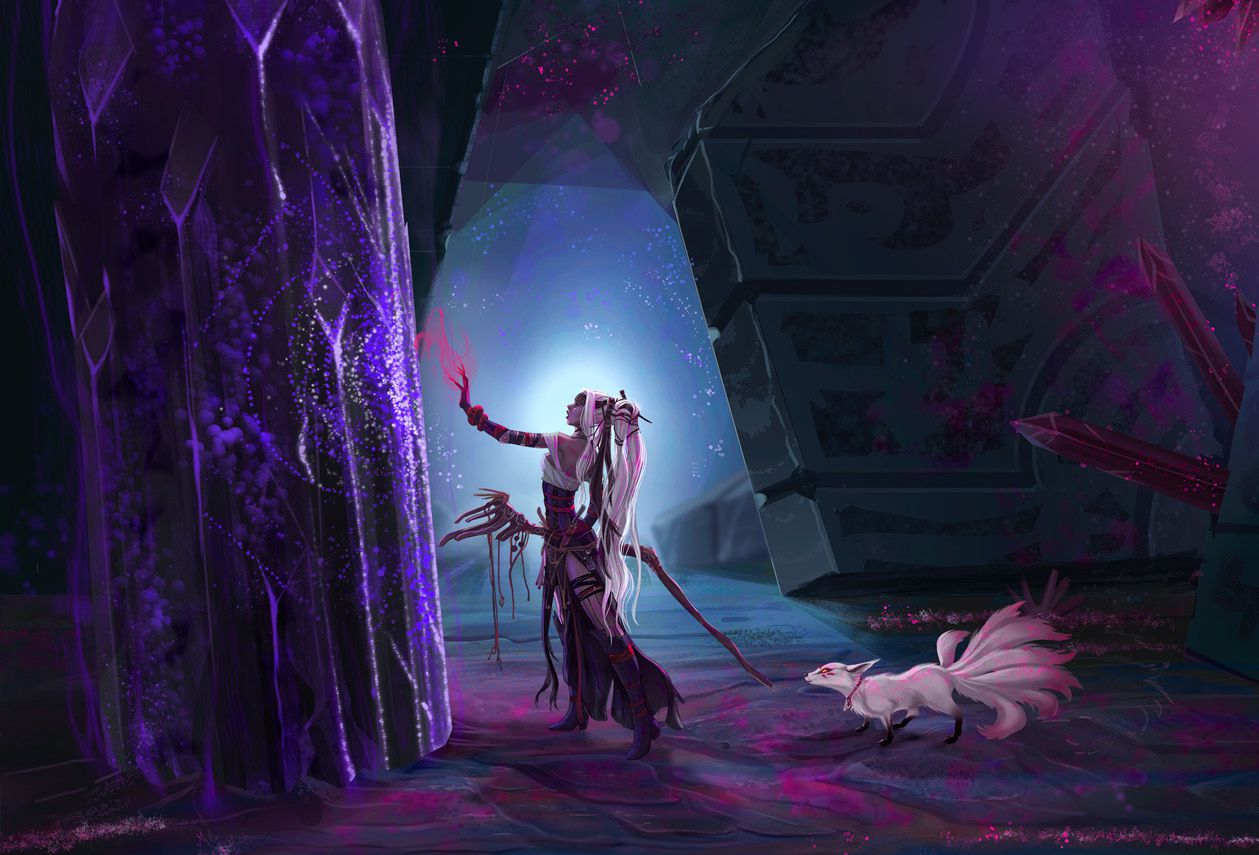
I don’t know about all of you, but I’m feeling a bit more willing to explore darker areas with the light I’m seeing in our society recently. It’s a blue light mind you (part of the reason the image with Feiya and Daji below called to me), but as we all know the work always needs doing. I think that’s a journey worth taking, bringing light to dark places. We’ve visited portions of the Darklands before, but Vaultlines gives us an entire adventure path to explore its different layers, communities, and wonderfully strange inhabitants. Naturally, I want to investigate the crunchy goodness we can bring to our own tables!
SPOILER NOTE
We’re discussing the campaign’s opening premise, environmental dangers, equipment, and bestiary. The larger story revelations and ending will remain waiting for you underground so very light spoilers ahead.
An Adventure Beneath the World
Vaultlines takes us into those Darklands, but thankfully not at 1st level characters. You start at 11 and are 20th by the end, so truly some momentous battles and challenges to be found below. In case you really want to avoid even mild spoilers, read only this paragraph if you want. The adventure begins with the party imprisoned in Lattiskar, a settlement in Nar-Voth. Their captivity changes dramatically when a vaultline (a powerful and uncontrolled ley line) strikes the city. Escaping the immediate danger draws them into investigating the magical catastrophes threatening settlements throughout the Darklands. Your adventurers face substantial threats immediately, while their circumstances make cooperation rather important. Granted, I find that to be most adventures but it’s very well represented here in chapter 1.
If you’re up for more detail (maybe you’re a GM considering?), let’s dig deeper otherwise I’d suggest jumping down to Darklands Dangers. The opening deserves a little extra attention because Vaultlines wastes very little time putting the group in trouble as I was inferring! The party arrives in Lattiskar aboard a prison scow, shackled and awaiting delivery to the Shiv, a notorious penitentiary carved into an enormous stalagmite. Outside, the harbor is crowded with boats and spectators celebrating what’s called Coronation Day (you’ll find out why!). Then a vaultline tears through the cavern, disturbing a massive cave worm beneath the harbor and overturning the party’s vessel. Suffice to say there’s an awesome image I’d put right here but don’t want to spoil Go check it out on page 8!
Suddenly, escaping captivity also means escaping a sinking boat. Good luck recovering equipment and navigating a waterfront full of terrified people. I particularly like that the adventure gives the heroes opportunities to help people while saving themselves. Rescuing citizens can earn public support, giving the party a chance to establish who they are through their actions, regardless of whatever brought them to Lattiskar in chains.
People and the city are reeling by this point. There’s a promise of a pardon that gives the party a very personal reason to investigate the circumstances surrounding the disaster. That investigation takes them into the Shiv and eventually toward the fungus farm that supplies much of Lattiskar’s food. Unfortunately, the vaultline’s destruction has closed the usual route, forcing a detour through the ominously named Palace of Screaming Flesh. I won’t get into details of what that is, you’ll have to play, but suffice to say you learn the consequences of the city’s crueler past, and getting through it means confronting what remains…
There are people beyond it who need help, too, which keeps the journey connected to the community the party has just encountered and allows the more heroic to be true and good savior folks if they wish to. These opening chapters really build outward from an immediate struggle for survival into an investigation with increasingly troubling implications. Before the adventure sends us much farther into the Darklands, it gives us a city, its inhabitants, and some compelling reasons to care about what these magical catastrophes might do next. You’re learning about the area but also its people all while in some very tense, fun situations possibly with some horror elements!
The journey continues exploring into Nar-Voth, Sekamina, and eventually Orv, with a brief excursion to the surface along the way. Every area is well represented with different environments and societies, giving the party opportunities to investigate as they explore, and negotiate with the present culture while discovering what previous civilizations left behind. It’s a nice tour for us as players or as a GM. I like the breadth and depth (ha, get it?) here because I think few groups actually get into the Darklands. I’ve presented the opportunity to my Kingmaker folks, though I don’t think they’re especially interested. I think it’s the idea of just exploring caves but when y ou have areas like you see in Vaultlines, your perspective is far broadened. There are people living here, routes connecting communities, and reasons someone might need help. The adventure’s support material gives those possibilities some excellent mechanical expression so I wanted to showcase such!
Darklands Dangers
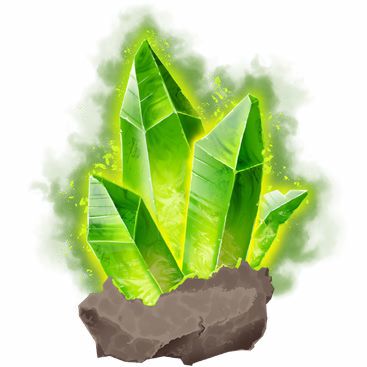
For our Environmental Dangers we’ll start radioactive! Blightburn makes a memorable introduction to the region’s environmental threats. These green crystals deal 2d6 fire damage each round of contact, while beginning a turn within 60′ exposes a creature to blightburn sickness, typically a level 15 disease whose details are presented. Its drained and sickened conditions require magic to recover from, making exposure consequential beyond the immediate encounter. Some crystals also attempt to counteract detection, revelation, teleportation, and scrying effects within 100′. Even experienced spellcasters need to consider their route carefully.
Lazurite offers another reason to examine that interesting mineral deposit from a distance. Its void energy damages living creatures beginning their turns within 30′, scaling with the hazard’s level, while benefiting undead. Carbauxine Gas (hazard 8) presents a different problem: this nearly undetectable gas explodes when exposed to open flame, including suitable magical fire. It deals 4d10+22 fire damage with a basic Reflex save. Quickdeath gas instead gathers in low places and exposes anyone inhaling it to poison that can also leave them stupefied. Choose your lighting carefully!
Ghost Mold (hazard 11) is particularly unpleasant because a living creature approaching it or a vitality effect reaching it can trigger its spores. It inflicts void damage and frightened, with persistent damage on a failed save and confusion on a critical failure. A death while suffering its persistent damage produces more mold, with the possibility of an undead spirit as well. I can already imagine the moment someone realizes that their helpful burst of healing has activated another threat.
The accompanying Darklands Encounters demonstrate how these mechanics work together. Forgotten Forge (severe 6) combines awakening wights with gas valves the party can manipulate, while Radlight River (moderate 8) mixes a current with fungi whose changing colors demand different behavior. Moldy Ghost (moderate 10) gives the party a chance to help an uneasy spirit. Rocky Rescue (moderate 7) is especially appealing: extracting a stranded thash (creature 9 we detail below) involves calming it, understanding its anatomy, and coordinating the work. Caphorite Falls (moderate 12) similarly rewards negotiating passage through a family dispute, with peaceful success earning the encounter’s full reward.
Radiation Route (trivial 15) asks experienced characters to navigate blightburn through group skill checks, with critical successes helping companions and magical interference complicating shortcuts. Shrouded Statue (low 15) brings together a monofilamental and a guardian that can attack either side, creating opportunities to exploit their competing priorities. These encounters have a good range for moderate to high level campaign use, and their maps make them useful beyond this particular campaign too. You could easily adapt them to certain flip mats if you have them. I like weaving in the occasional true random encounter with the journey so you have periodic opportunity for observation and cooperation. Of course, sometimes I plan to use them specific rather than roll randomly. Having some pre-made in this adventure is a really nice touch!
Tools In the Dark
Nar-Voth Equipment
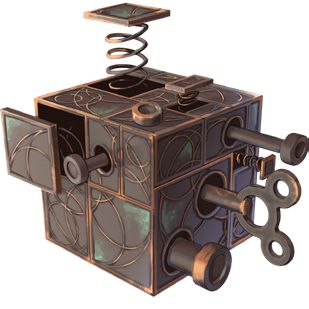
Along those journeys there’s a lot you can find both from an item and bestiary perspective. The new equipment begins with some wonderfully practical inventions. A clatterbox (item 4, seen below) spends a minute shaking itself apart, disrupting hearing and tremorsense in a 20′ emanation. Precise versions become imprecise, while imprecise versions are lost within the area. The clockwork sundial (item 1) tracks time without sunlight, and expanded breath (item 1) adds five rounds to how long you can hold your breath, alongside a temporary bonus against olfactory effects. Small purchases matter when the environment has opinions about your survival.
The suspiratory chain (item 6) provides a more substantial answer to dangerous (hostile?) air. This magical chain mail extends your breath holding and grants a bonus against inhaled threats; its daily reaction supplies safe breathing for up to ten minutes under its listed conditions. Desiccant powder (item 5) punishes contact from fungi, oozes, plants, and creatures or hazards with the water trait, inflicting persistent bleed damage or acid against bleed immunity. The fungicidal hatchet (item 5) adds poison damage, increasing that bonus to 1d6 against fungi. Clearly someone has had enough of the local mushrooms.
For armor the rockslide plate (item 10+) lets you spend an action moving 10′ toward the surface while buried. Its daily Rockwave costs two actions and carries you up to 50′, damaging creatures you pass adjacent to; the greater version improves both frequency and damage. The twisting whip (item 13+) instead attacks someone’s sense of direction. After its activation, a successful qualifying hit prompts a Will save, potentially making all squares difficult terrain or also imposing slowed 1. A critical hit worsens the save’s outcome. Even the weapon makes you feel lost underground!
Grafts
The grafts expand the existing framework from Howl of the Wild. Caligni eyes (item 5) release a flash when you gain dying or are killed, potentially dazzling or blinding nearby creatures. Cave worm axons (item 13) grant quickened movement when you begin a turn slowed or with a valued stunned condition, under the entry’s restrictions. They don’t simply remove those conditions. A secondary mouth (item 7) offers a very different efficiency: with something edible or drinkable in each hand, one action consumes both. You still need both items ready, but an alchemist could appreciate that!
Slime ducts (item 5+) are another new graft, with versions providing corrosive contact, sticky defenses, or interference with creatures teleporting nearby. Tentacle tresses (item 9) can react to a disrupted manipulate action, giving you a DC 15 flat check to complete it anyway. Meanwhile, urdefhan flesh (item 9) makes your skin transparent and grants a +2 circumstance bonus to Medicine checks affecting you. These last two are new options as well, and they turn unsettling appearances into useful benefits. Your healer may appreciate the improved view, though the conversation at the next inn could be interesting.
Treasures of Sverenagati
The metabolism booster (item 4+) converts an enthusiastic appetite into magical resilience. For one minute, it grants resistance to magical damage and extra force damage on hits with spell attacks. Stronger versions also retaliate against certain melee attacks. The drawback deserves attention: clumsy 1, enfeebled 1, and fatigued remain until you eat a full meal, requiring at least ten minutes. Just make certain dinner is available!
Two level 20 staves offer very different expressions of authority. The staff of imperious echoes improves Recall Knowledge and Aid through Anamnesis, alongside a spell selection concerned with minds, memories, and insight. The staff of Sverenagati provides social benefits when dealing with serpentfolk and those loyal to their empire, plus a daily attack against three creatures within 60′ that deals spirit and persistent poison damage. Their spell lists reach 10th rank, making these substantial treasures for characters nearing the campaign’s highest levels.
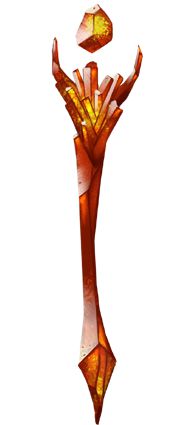
The rod of transdimensional disruption (item 17) works through three separable sections, with a stronger counteract modifier when assembled. It can interfere with planar travel and suppress portals, potentially destroying one on a critical success. Two other new tools support communication: the veil of silence (item 17) grants telepathy within 60′ and can project imagery across a language barrier, while whispering crystal rods (item 9, seen above) connect their paired bearers anywhere on the same planet. Their illusory images let willing participants converse, but cannot deliver spells. I’m already considering which distant allies would deserve the other rod.
Yiggite Items
The dream cradle of the Dark Tapestry (vehicle 14) expands from an egg into a magical balloon capable of carrying a pilot and seven passengers. It operates for up to an hour before needing an eight hour recharge, and travels faster vertically. Its destruction releases a dangerous psychic burst, but also casts fly on its occupants. That is a reassuring provision in a vehicle intended for enormous underground chasms! The Gaze of Eternity (item 13) takes a more personal approach, combining spirit sense, status, and relic gifts associated with beasts and time.
The Venom of Memories (item 15) creates wine that can assist recall past life, although the ritual’s casters risk recurring nightmares afterward. Its separate Share Memory activation grants a Recall Knowledge bonus that scales with the donor’s proficiency. The Yiggite preacher snakeskin (item 14) is a new specialized robe built on existing cloister robe mechanics, adding a daily humanoid form lasting up to eight hours. Established systems become distinctive treasures through a culture’s practices.
Orvian Wonders
The artifex telluria (item 9+) particularly appeals to the part of me running a kingdom. When working on suitable objects made from earth, stone, or crystal, it halves crafting time and grants a Crafting bonus. It can also reshape a 10′ cube of earth or stone. Stronger versions expand its applications, culminating in an artifact capable of creating elemental earth creatures or providing vessels for recently deceased willing ones, subject to substantial checks and costs. That is quite a progression from improving the workshop!
The hardlight buckler (item 6+) projects a shield without occupying a hand, provided you have sufficient light and aren’t holding another shield. It supplies a +1 circumstance bonus to AC and allows Shield Block against damage from attacks, spells, or magical effects, with Sustaining required to keep it raised. Its recovery rules require attention: the basic barrier repairs itself while broken, rather than automatically returning to full health after every encounter. Stronger versions improve its durability and ability to return after destruction. Busy hands might appreciate that.
The monolith mantle (item 17+) lets you become a Large construct battle form resembling a vault lifter. Its rotor enables flight and threatens nearby creatures, while its special provisions allow speech, manipulation, and spellcasting with a flat check for manipulate spells. A separate activation can issue magical commands even to mindless constructs. I’m imagining someone surveying an impossible chamber, adjusting their cloak, and deciding they have the right equipment after all.
The Beasts From Below
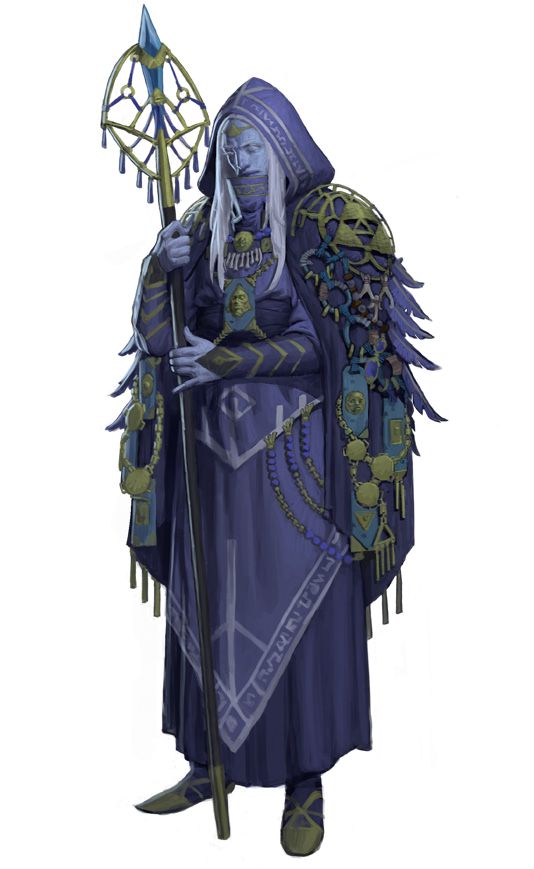
Ayindilar
Ayindilar are a new presentation of underground elves, with James Jacobs explicitly explaining that Paizo is developing something distinct from simply renaming drow. I appreciate that convo, so check it out on the forums. Anyway, their new wanderer, warden, and occultist (seen above) stat blocks appear at levels 4, 9, and 12. Gloomwalker provides concealment in dim light even against darkvision, while the occultist can redirect an enemy’s melee Strike after a failed concealment flat check. That gives these elves a recognizable mechanical identity built around perception and misdirection. Seeing underground still leaves room for surprises.
Corundumite
The corundumite (creature 18) is a flying gemstone elemental with cold and fire rays, significant resistances, and equally significant weaknesses to bludgeoning, force, and sonic damage. Raking Shot combines a ray with flight perpendicular to it, sweeping the effect across additional spaces. I appreciate how clearly that changes the positioning puzzle. A narrow line becomes dangerous across a much larger portion of the battlefield, rewarding characters who understand how the creature moves.
Dragonfire Fly
The dragonfire fly (creature 19) responds to several incoming damage types by changing its wing color, resistance, eye beam damage, and surrounding effects. Cold can slow nearby movement, electricity imposes clumsy, and void makes it concealed while removing its light aura. With a 100′ fly Speed and the ability to carry a grabbed creature, it also presents a substantial mobility problem. Players influence what comes next through their attacks, which should make coordinating damage types especially interesting.
Facetal
Facetals introduce gemstone elementals whose visible bodies are hardlight projections. The node (creature 16) can dazzle, blind, and potentially teleport enemies with Blinking Strobe. The branch (creature 18) adds temporal telepathy with its past self and Temporal Skip, which can briefly remove a creature from existence. Destroying the projected body leaves an inactive gemstone that can still communicate telepathically. Defeating someone could leave the party with an unusual conversation afterward.
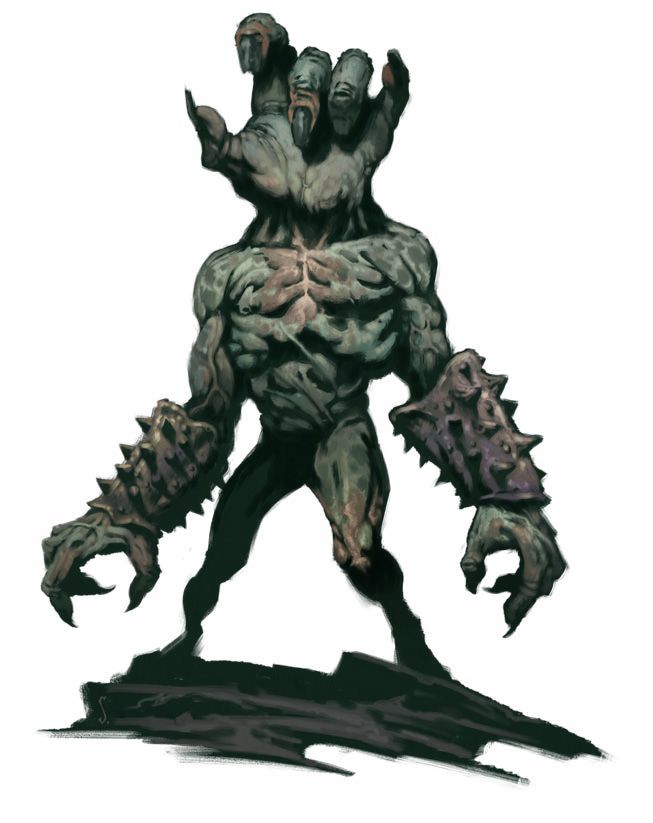
Fleshwarp
Fleshwarps are established Pathfinder creatures, but the shivver (creature 12) and knucklehead (creature 14, seen above) are new additions to that family. I really wonder how the knuckleheads got that name… Shivvers combine long tentacles, climbing, compression through narrow openings, and optional alternate attacks. Knuckleheads can move rapidly on all fours, then stand to use their enormous hands, eventually transferring a captive into the toothy hand replacing their head. Devouring Squeeze can break armor before feeding on the wearer. Their mechanics are frightening, while their origins remind us that someone inflicted these transformations upon them.
Monofilamental
The monofilamental (creature 15) turns crystalline spiderwebs into an intelligent construct. Its strands bypass Hardness, contact can injure attackers, and Expansion threatens an entire surrounding area, including when it dies. Its mental defenses are interesting too: Self-Control can turn a failed save against a mental effect into a success, but costs it 40 unavoidable mental damage. That gives mental abilities a meaningful interaction with a creature that might initially look like a floating bundle of blades.
Radlight Cap
The radlight cap (creature 6) might be my favorite invitation to pay attention. Red punishes detectable attacks, movement, or manipulation; yellow expects creatures to end their turns prone; green demands movement; blue reacts to noise above a whisper. Its spores change damage and additional effects accordingly. Nearby caps synchronize, and radiation turns them black and inactive. Local inhabitants use them as warning devices, connecting mechanics to daily life.
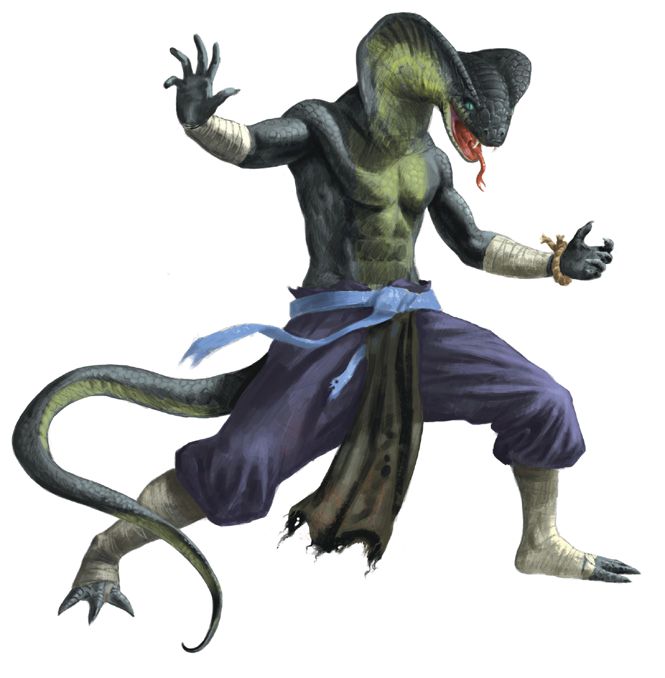
Serpentfolk
The aapoph sovereign guard (creature 12) and zyss assassin (creature 10, seen above) are specialists within the established serpentfolk family, using its current Remaster presentation. The guard protects nearby allies with Halberd Block and combines reactive attacks with Trip attempts, then punishes prone targets. The assassin brings grappling, venom, and corrosive spit capable of dissolving a corpse, followed by an acid burst upon death. They offer distinct encounter roles, and those roles become especially effective when the creatures work together.
Sicklight Wisp
The sicklight wisp (creature 13) feeds on illness, increasing sickened through its touch and radioactive glow. Reaching sickened 4 prevents ordinary reduction until the effect is counteracted. Its defenses also threaten reconnaissance: successfully counteracting nearby magical detection or scrying subjects the caster to never mind. Its spell immunity has specific exceptions, including vitality spells. Identifying those exceptions could be essential, and the radlight caps used to warn of its presence make an excellent connection between bestiary entries.
Strangleroot
The strangleroot (creature 7) makes looking up a sensible precaution. Its roots grab victims, haul them upward, and drain their blood, becoming engorged before releasing a poisonous spray. It can withdraw into the ceiling when it has no captive, protecting itself until it emerges elsewhere nearby. That creates a rescue problem as much as a damage race, particularly when an ally is suspended out of convenient reach and the creature is drawing strength from them.
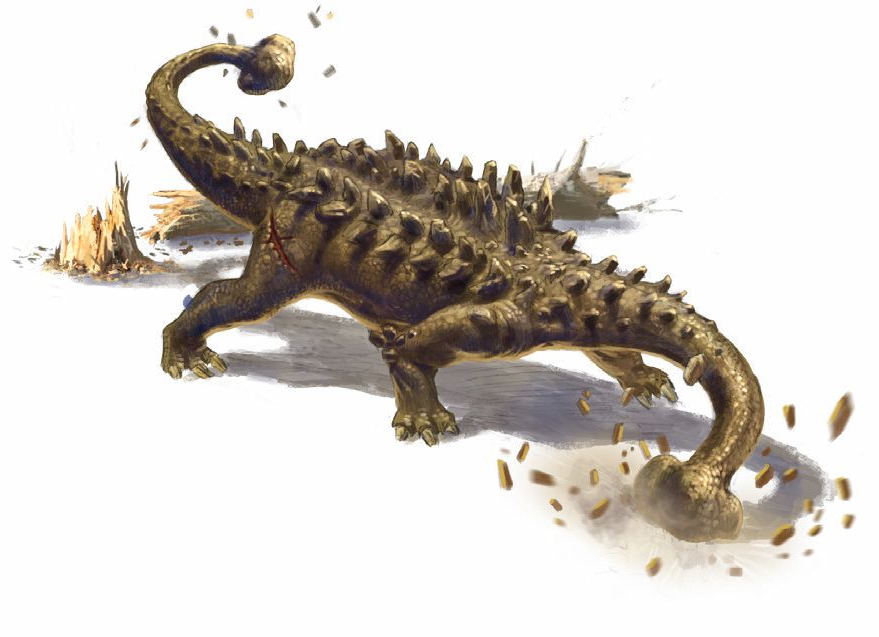
Thash
The thash (creature 9, seen above) resembles an armored dinosaur with a tail at either end and experiences the world through tremorsense. It follows footsteps, cannot attack directly above itself, and struggles to stand after being overturned. Its underside is vulnerable, while its upper shell is particularly tough. Those details explain both its combat behavior and how locals manage it as a beast of burden. Rocky Rescue becomes more satisfying once players realize that learning about the creature can be more useful than overpowering it.
Vault Lifter
The vault lifter (creature 16) is a flying construction machine with a dangerously versatile rotor. Activating it supplies flight and a damaging aura, while grabbing and repositioning let the construct pull someone close. Overdrive enables a rapid straight flight, although it risks shutting the rotor down. I also appreciate the lore about abandoned lifters continuing ancient instructions. A machine determined to maintain an empty chamber can create a very different encounter from one defending an occupied fortress.
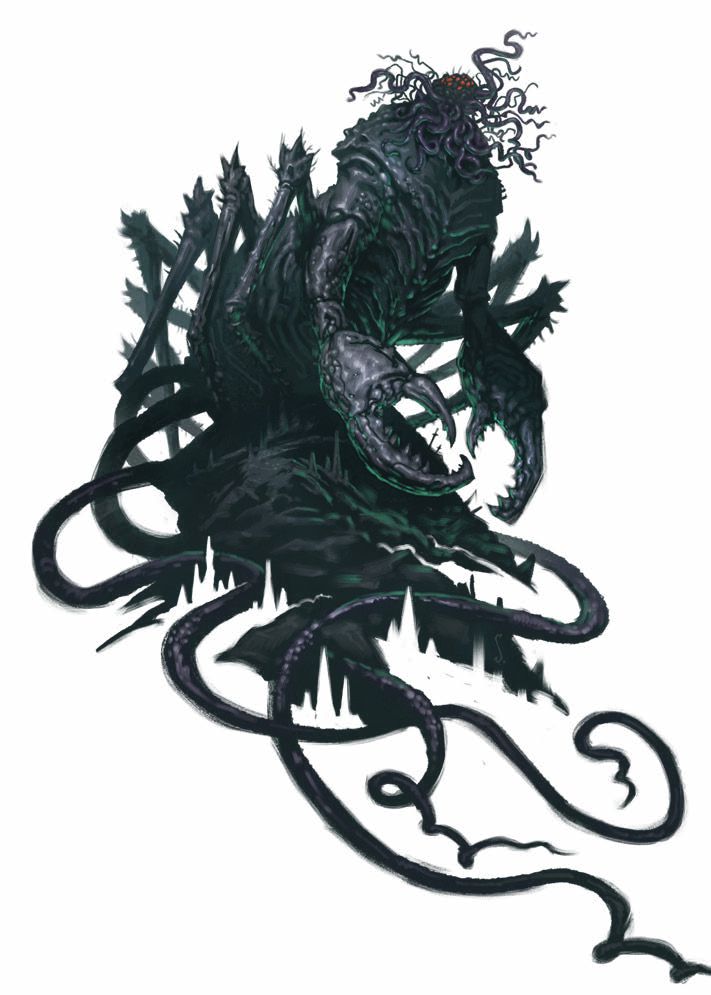
Vemerak
The vemerak (creature 14, seen above) is back from Pathfinder1E, which is always nice to see things freshened up and receiving a new PF2e treatment. Note it’s huge but I brought the picture size down in the article because of how tall it is! Its dispelling spores can counteract ongoing spells entering a 30′ aura, while its bile threatens a 90′ line. Earthquake is especially satisfying design: it prepares the effect, then unleashes it on its next turn if it remains able to act and hasn’t been moved or knocked prone. Players receive an opportunity to recognize the threat and interrupt it.
Xiomorn Trooper
Xiomorns already have an established place in Pathfinder, while the trooper (creature 16) adds a military specialization. Its crystal attacks leave markers that help all xiomorn troopers find, track, and attack the victim, and those crystals can subsequently be detonated. Removing them costs an Interact action. Fighting Formation also lets nearby troopers reposition in concert. These are mechanics that encourage the GM to think about a coordinated unit, while giving players practical ways to interfere with that coordination.
Yig
Yig (creature 23) likewise returns from earlier with a new mythic PF2e stat block. His defenses include immunity to non-mythic Strikes, mythic resilience, and mythic resistance. Three Mythic Points can fuel rerolls, condition removal, spell recovery, or Undying Myth, which keeps him standing and restores 250 Hit Points. His curse compounds the danger of poison, and even destroying his body doesn’t end his existence. This is a Great Old One whose mechanics make lasting consequences feel entirely appropriate.
What Are You Bringing Back?
It’s really nice to get into an area we don’t usually see or explore. I know I’ve said that a few times, but it’s great to invest in the truly new and different with curiosity and respect. I’m really excited for the Arcadia announcements for that reason. Yeah I’m finishing the article here on a Tuesday, a little close to live. It’s been a week y’all. Anyway, Vaultlines let’s us see how this area developed, with its own people and history. The mechanics reflect that. Someone developed breathing equipment because the air was dangerous. Communities learned how to handle thashes and read fungal warning signs. Ancient constructs continue carrying out instructions long after anyone remembers giving them; always fun to run into. Those details help the Darklands feel inhabited, and give players reasons to ask questions before reaching for another attack.
There’s plenty here you can borrow for your own games and I’ll leverage for mine (especially if they venture underground) from an awkward rescue to a treasure that changes how the party communicates. Thanks to authors Sen H.H.S., Jacob W. Michaels, and Andrew White , developer Bill Fischer, and the many contributors who brought this expedition together. If by chance you know of Bill’s social he’d liked linked, please let me know. The authors actually did an AMA on reddit too, so go check it out! And let me know which danger, creature, or item caught your attention, and what you’d like to discover beneath Golarion. Until next time, please remember to support one another, and much love to all!
Investing In:
I wasn’t quite sure what to name my article series when I first started but the idea of showcasing or discussing things that make me excited, that I find new and interesting, or maybe I’m otherwise passionate about seemed to fit with the idea of Investing In something like the Pathfinder 2E mechanic. To use some magic items you have to give that little bit of yourself, which helps make these things even better. I like the metaphor of the community growing and being strengthened in the same way!
I also want to hear what you’re Investing In! Leave me a comment below about what games, modules, systems, products, people, live streams, etc you enjoy! You can also hit me up on social media as silentinfinity. I want to hear what excites you and what you’re passionate about. There’s so much wonderful content, people, groups (I could go on) in this community of ours that the more we invest in and share, the better it becomes!
Sources
Banner – Vaultlines cover modified, Paizo, art by Rodrigo Gonzalez Toledo
- Lightning Caught in Stone excerpt, Vaultlines, Paizo
- Echoes in the Earth banner, Vaultlines, Paizo
- Blightburn Crystals, Vaultlines, Paizo
- Clatterbox, Vaultlines, Paizo
- Whispering Crystal Rod, Vaultlines, Paizo
- Ayindilar Occultist, Vaultlines, Paizo
- Knuckledhead, Vaultlines, Paizo
- Zyss Assassin, Vaultlines, Paizo
- Thash, Vaultlines, Paizo
- Vemerak, Vaultlines, Paizo
- Builder Reborn banner, Vaultlines, Paizo