
“A toast! To the teeming and tumbling host of the fey! A toast to the world as it was! And a toast, at last, to our mortal guests. Living in the echo of our world, and burdened by death. May they survive tonight’s festivities!”1
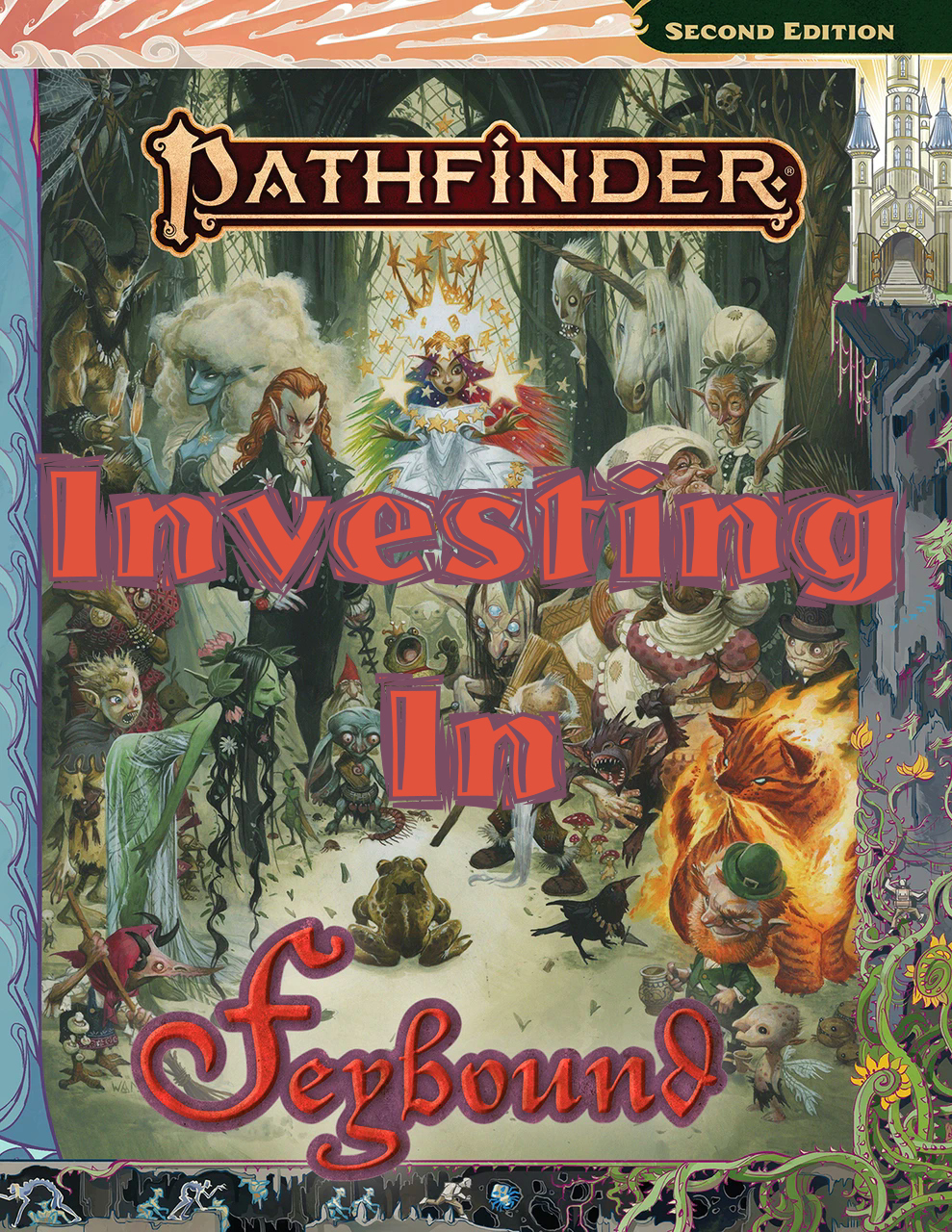
Last time we were Investing In Feybound, I spent quite a while enjoying its ancestries, archetypes, and other bits of the toolbox for getting ourselves into fey trouble. I also promised to return to the lore, and thus here we are exploring the First World! There’s a whole lot happening beyond those character options: from ancient grief shaping entire realms to developments that could reach Golarion. Naturally, I want to explore all of it, particularly with a Kingmaker campaign giving me plenty of reasons to consider what our neighbors in the First World are doing. Also, as you gaze through the lovely art pieces I’ve included herein and you know (or are!) the artist, please let me know as I’d love to credit their work in the references below. I appreciate these fantastic inspirations brought to colorful life!
SPOILER WARNING
We’re discussing First World secrets, the stories woven through Feybound, and material concerning the Stolen Lands / Kingmaker. If your GM would prefer you discover these things through play then this is your opportunity to slip away from the party. If you’re in my Kingmaker game, yes that means tarry off now.
But for everyone continuing, I hope you remembered which door brought you here! That might become important unless you don’t ever plan to leave…
The World the Gods Left Behind
As you may know the First World was where the gods experimented with existence before creating the Universe. The whole Universe, mind you. Its mountains and forests represent ideas tried during creation, and its proximity to Creation’s Forge keeps it overflowing with possibility. When the gods moved on, their original work remained, along with the people already living there. The fey call this the Great Abandonment, which tells us something about how they experienced that decision. Imagine learning that the divine powers responsible for your home had turned their attention elsewhere while your surroundings became increasingly unstable!
That history informs fey relationships with divinity, permanence, and death. The Eldest provide divine patronage and stable realms, with personal service and bargains offering ways for fey to seek their favor. Fey who die in the First World generally reform, potentially with different bodies or abilities. Beyond it, their deaths place them within Pharasma’s judgment. That makes a visit to Golarion a consequential choice, and it helps explain why a fey might approach danger very differently depending on where they stand. It also gives their relationships with mortals an uncomfortable imbalance. Something a fey considers a temporary inconvenience could cost their mortal companion’s life.
Our Neighbors Have Been Busy
Golarion has plenty of places where those relationships already matter. Grungir Forest in the Lands of the Linnorm Kings contains Forestheart’s permanent rift into the First World, though reaching it means navigating a forest also home to Fafnheir. Quite the travel advisory. In Fangwood, Gendowyn again rules the Accressiel Court after being freed from Arlantia’s imprisonment, and she supports mortals opposing the Whispering Tyrant. I appreciate seeing these connections maintained as the setting moves forward. A fey queen’s restored authority can influence a struggle well beyond her court, which is great for adventure!
Arcadia’s Primal League offers an even larger example. The Kariivas Accords established a sanctuary for fey and created a planar convergence, with extraordinary changes to local plants and animals. Disagreements still arise and the region’s energies can make them devastating. Meanwhile, Feyfrost’s fey retain the freedoms granted for their assistance in Baba Yaga’s conquest despite Irrisen’s changed rulership. These arrangements affect who can live where, what grows there, and whose authority matters. I do enjoy considering such ramifications when my players are building a kingdom; the philosophical in-character debates can be very cool to listen to.
Seven Circles, Plenty of Opinions
The Yestereve Revels give those varied perspectives somewhere to meet and we readers a way to gain perspective in a narrative frame. Its seven circles reflect interests and philosophies, and even their founders needn’t remain members forever. The Starlit Crown preserves beauty and memory through courtly traditions, while the Peers of the Bloom devote themselves to the natural world. The Peers’ history even describes learning the limits of their involvement in everyone else’s disputes. Their own responsibilities suffered while they tried to resolve every conflict. There’s a lesson for adventurers there!
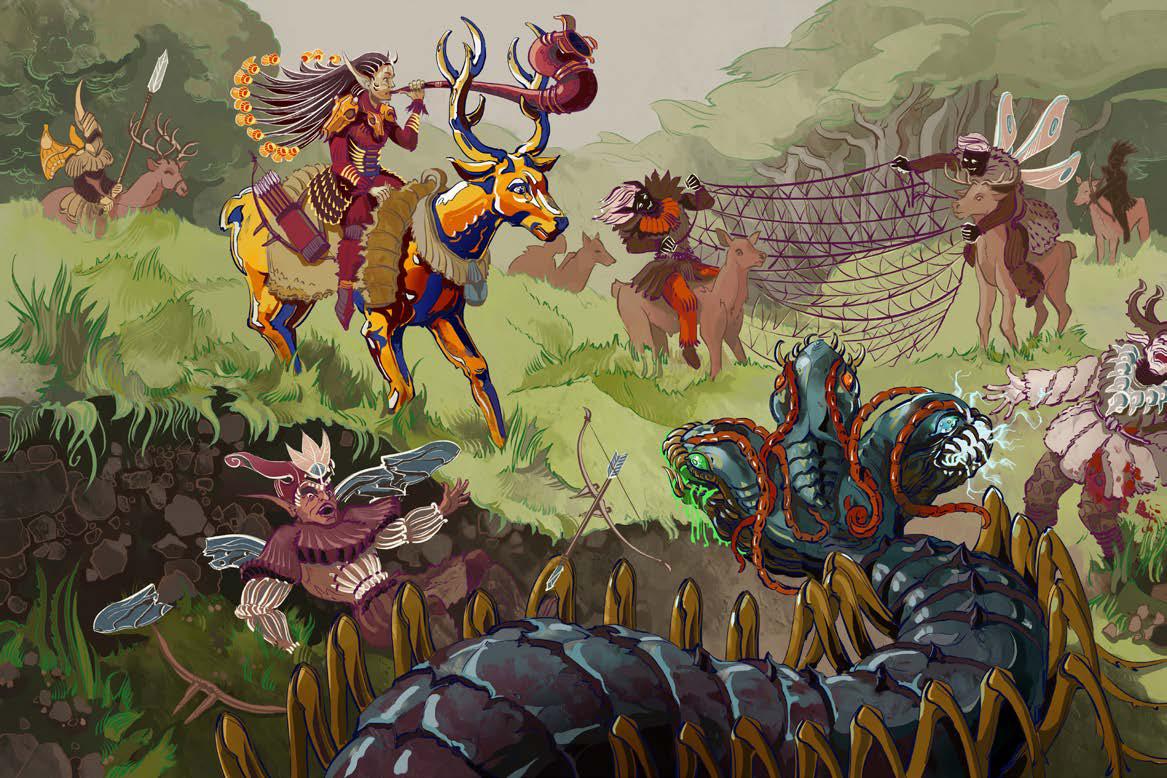
The Talons True approach their obligations through prowess, pride, and keeping their word. Their founding story gives the succession of grand hunters a cautionary significance, rooted in what happened when their founder challenged the Horned King. The Pack of Knaves offers another kind of reckoning. Its tale of Thomas the Fool starts with sympathy for someone repeatedly humiliated, then takes that reversal somewhere terrible. Fey justice can appeal to our sense that someone deserves comeuppance while leaving us horrified by its extent.
The Hoddydoddies make disagreement part of the entertainment. Glimm and Glumm’s story distinguishes mischievous kindness from cruelty, then the performers themselves debate which approach leaves the greater impression. They share a circle without agreeing on what makes a good prank. I like that reminder when portraying fey. Knowing someone’s affiliations gives us a starting point, but we still have to learn what this particular person values and how far they’ll go.
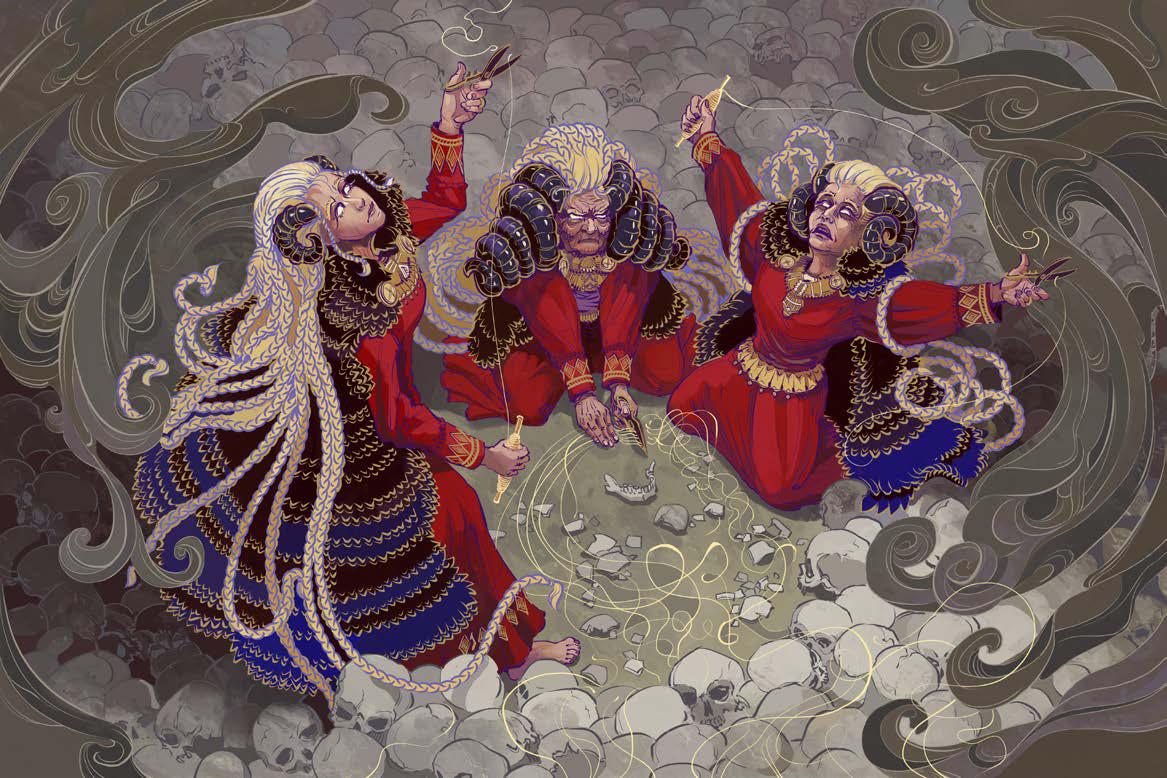
The Blood Moon Ascendancy wonders whether mortality gives brief lives a brilliance immortality struggles to achieve. Its members disagree about how to study death, including whether Vestige’s elaborate performances illuminate mortal experience or demean it. The Hearth Tenders find meaning in care, with their story of the Lost Prince showing the value of tending to someone through sorrow. Put those perspectives together and there’s an entire society to explore, with competing ideas about what makes existence worthwhile. Also provides some idea of where these circles might want to engage a PC, what that engagement looks like though might not be to that PC’s enjoyment.
A Song Worth Recovering
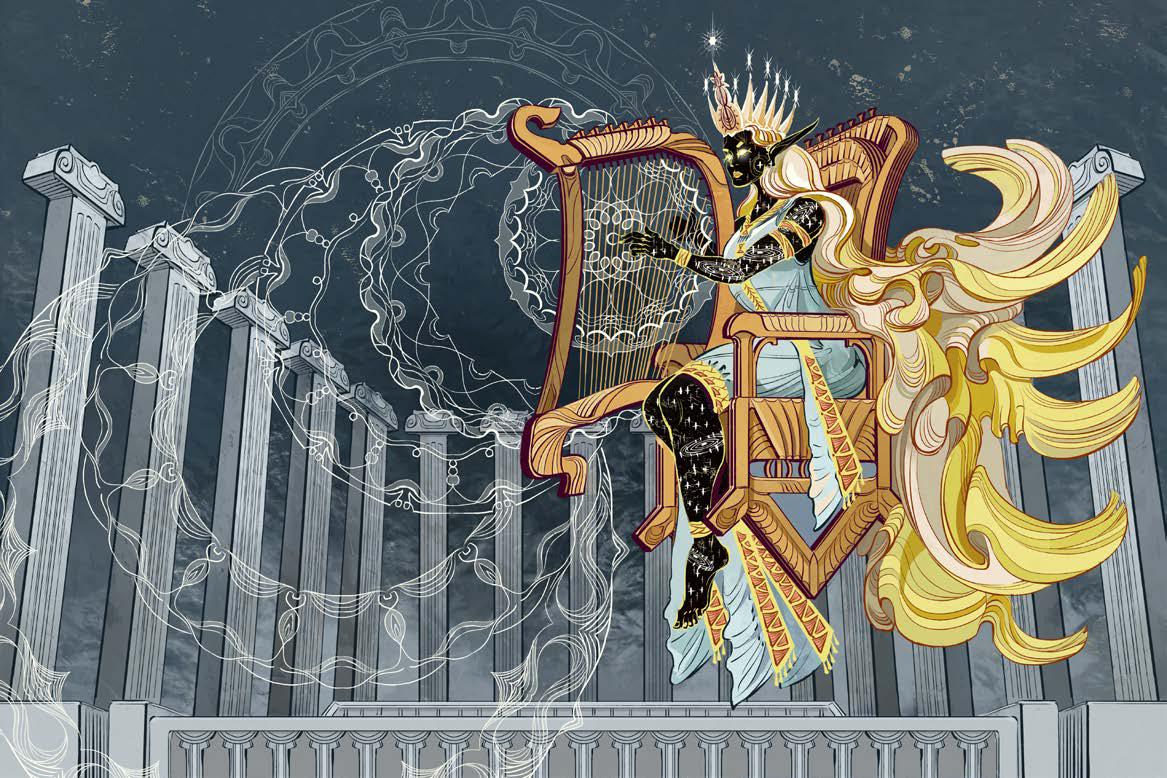
Lady Verana’s story particularly caught my attention. In the Starlit Crown’s account, the hesperid queen gathered her people’s hopes, dreams, and memories into the harp Memory’s Strings, then performed a song that brought stability to their realm. Her achievement created places of refuge after the Great Abandonment, but it also exhausted her. While she slept, Tuoc Redhand stole the harp. It was later shattered during a struggle over its possession, scattering the pieces of something that had helped hold a civilization together.
The consequences linger in the Land of Summer’s Twilight. Verana’s sorrow hangs over the realm with the seasons remaining stalled. The standing of different horas (a form of Nymph creature 6 found in the bestiary) is affected by which season can actually arrive. Recovering a missing harp string suddenly carries quite a bit of significance! The book supplies a way for adventurers to help, while its later account of Verana’s lonely throne makes the loss feel personal. I’d be very interested in seeing how restoring the instrument might change the queen, her people, and the land they inhabit. Quite perfect for an adventure!
Through the Wrong Door
Reaching the First World doesn’t always require a carefully planned expedition. Thin boundaries and places of transition allow accidental crossings, and faerie circles commonly bring travelers into the Evergrove. Some visitors never venture beyond it and assume they’ve seen the whole plane. The Dreaming Cliffs introduce another perspective through Zoldan Tulle’s dream journeys, while the Plain of Doors offers portals the gnome Door Wardens struggle to catalog. An entrance can vanish before they’ve even learned where it goes. I admire their commitment to that particular research project.
The scale grows considerably once we remember that Golarion is only one world connected to this plane. A friend map useful near Golarion could be useless when entering from Akiton. Travel between regions associated with different planets is possible, though considerably more demanding. That opens up possibilities for visitors with unfamiliar histories, creatures from elsewhere in the Universe, and destinations whose importance nobody back home understands. I’d absolutely want the party to consider how they intend to return before chasing every interesting doorway.
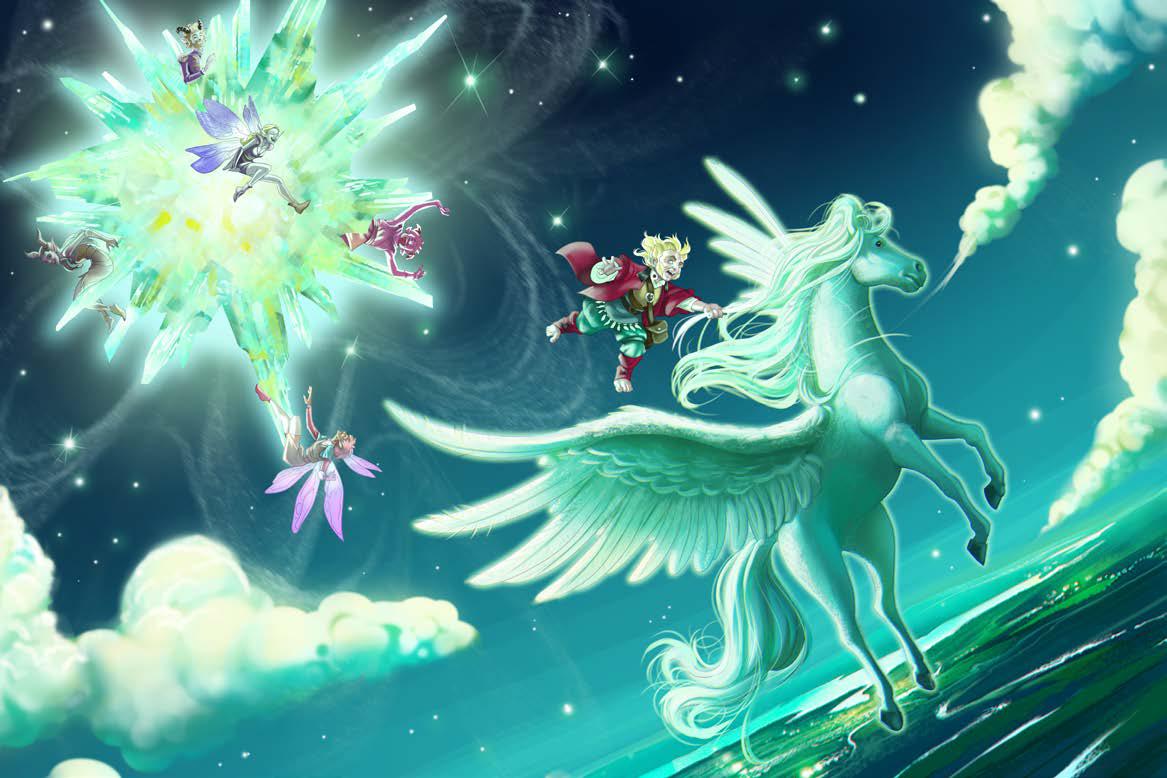
Getting There Is Only the Beginning
Friend maps are a wonderfully appropriate solution to a place where distances refuse to stay fixed. They describe relative relationships between realms, giving travelers useful expectations about what lies near what. The name reflects a tendency for nearby realms to be less hostile toward one another, though that connection has plenty of exceptions. The book also raises the possibility that widespread belief in these arrangements helps create them. Maps might participate in maintaining the geography they describe. Of course, false friend maps exist too if you remember my warning last article. Someone was always going to find that funny.
Travelers need to keep their destination in mind. Losing focus can lead somewhere unexpected, and confidence about the route has real significance in a place responsive to belief and intent. Knowing the usual relationship between destinations helps, but wandering without an objective is dangerous. I can see a party appointing someone to navigate, then having to take seriously every interruption that distracts them. A persuasive stranger offering a fascinating detour could be considerably more troublesome than they first appear.
There is enough stability to make living here possible. Visitors from the Universe typically steady the area within 100′ of themselves without consciously trying, while established rulers maintain their domains on a much greater scale. Beyond those influences, surroundings can change dramatically. Within a ruler’s territory, the changes may be deliberate. A route away from a palace could lead straight to its guards if the monarch prefers you stay. Court etiquette becomes a practical survival concern when your host can rearrange the journey home.
That power also makes the condition of a realm an expression of its ruler’s priorities. Adventurers can learn to shape territory or contest another ruler’s control, although challenging an Eldest requires comparable divine power. Baba Yaga’s Thrice-Tenth Kingdom offers a striking example of someone outside their number imposing her will upon the plane. I’m intrigued by what adventurers might choose to build if given that opportunity. A refuge, a memorial, a home for someone who has lost theirs? Perhaps they’re seeking to help an NPC fey who could become a great leader. There’s considerable character development in deciding what the landscape should become or how they influence the First World.
Time deserves its own conversation before anyone crosses over. At the Thane’s Elsewhere Feast, a decade of festivities corresponds to a day in the Universe, and leaving early is rude. That is an exhausting invitation but at least your life in the real world doesn’t slip by. Elsewhere, travelers might return to discover far more time has passed at home than they expected. Feybound rightly encourages GMs to make this danger clear to players. Meeting the descendants of old friends could be an extraordinary story, but it needs the group’s willingness to explore that loss. In Kingmaker, the kingdom’s future makes that conversation especially consequential.
Magic generally functions as expected, which is useful reassurance amid all this uncertainty. Particular locations can alter its behavior, and those changes should have signs characters can perceive. Divine casters may feel distant from their patrons, with prayer and preparation taking longer in some places, but the book doesn’t establish that their gods are powerless here. I appreciate that balance. We can explore the Great Abandonment’s lingering influence while still giving characters opportunities to understand their surroundings and make informed decisions. There’s plenty to see after all.
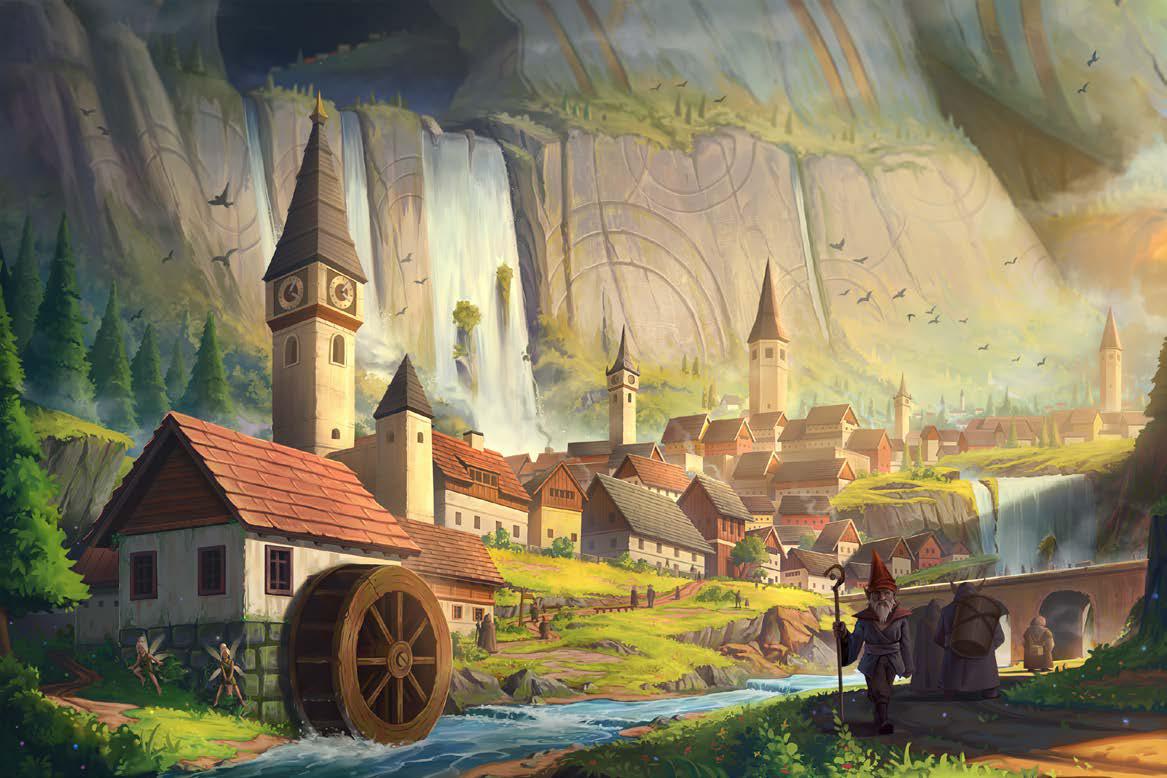
A Few Stops Along the Way
Let’s start with Godsarm, where the remains of a colossal deity have become a source of wealth and inspiration! Its body has calcified into deposits of rare gems and minerals, while the river called the Wound filled its early gnome settlers with gusto. I immediately thought of the giant dead celestial’s head Knowhere from Guardians of the Galaxy! There’s even a cavern district Lunghall inside the body itself. The Godsbody Explorers Lodge offers an obvious starting point for adventure, and the Heartstone may still lie somewhere within the dead god’s chest. Naturally, I want to know who this deity was, what killed them, and what finding that stone might mean. In the wake of Godsrain maybe there’s a secret or two you could learn to aid those feeling the blessings (curse?) of that power. A mining expedition into divine remains sounds like an excellent way to uncover something everyone involved is thoroughly unprepared for!
Of course I’d have to visit the Witchmarket that I mentioned last time! It really inspired Hellboy vibes for me. Its merchants trade memories, lost things, and even artistic opportunity. I like the idea of finding assistance someone might not yet realize they need. Zoldan encounters both unsettling bargains and unexpected kindness there. I’m particularly interested in what a character would seek from the Memory Market. A glimpse of history might satisfy a scholar, but reliving a conversation with someone they’ve lost could inspire a very different negotiation. That purchase could tell us a great deal about the person making it.
Emergence and Stasi offer fascinating questions about how societies function here. Emergence welcomes constructs, robots, axiomites, and other inorganic intelligences, with a strong commitment to freedom and a broad understanding of sentience. Its laws against enslavement extend to beings visitors might take for granted, including horses and familiars. Stasi, meanwhile, makes its resistance to change the foundation of banking and secure storage. Reliable vaults have considerable value when the world outside them keeps transforming! Each place gives a visiting party customs to understand and assumptions to reconsider.
For scholarship, there’s Cobyslarni, whose enormous headmaster carries the academy on his own back to preserve its independence. We first invested in this school back in 2025’s Rival Academies. His connections with academics on Golarion make the exchange of knowledge feel wonderfully tangible. Then there’s Bathyscope, where Zoldan spends a month inside a transparent wurm while a magical storm rages outside. The storm also nourishes the surrounding environment, which supports the inhabitants. I love details like that. Something spectacularly strange becomes part of how people shelter, eat, and live together, and suddenly I want to spend time getting to know them.
What Might Follow Us Home?
Joheane the Erlking provides one of the book’s most suggestive developments. His attack on Emergence became a source of shame, and its inhabitants helped change his thinking. He now considers his former efforts in the deathless First World insufficient, and the Wild Garden is being vacated as his faction turns toward the mortal Universe. His precise next target remains unrevealed. That leaves plenty to consider about where his revised convictions might take him and who could be affected. I’m quite interested in what happens when someone powerful changes their mind without necessarily becoming less dangerous. Wonder where we might see Joheane pop up…
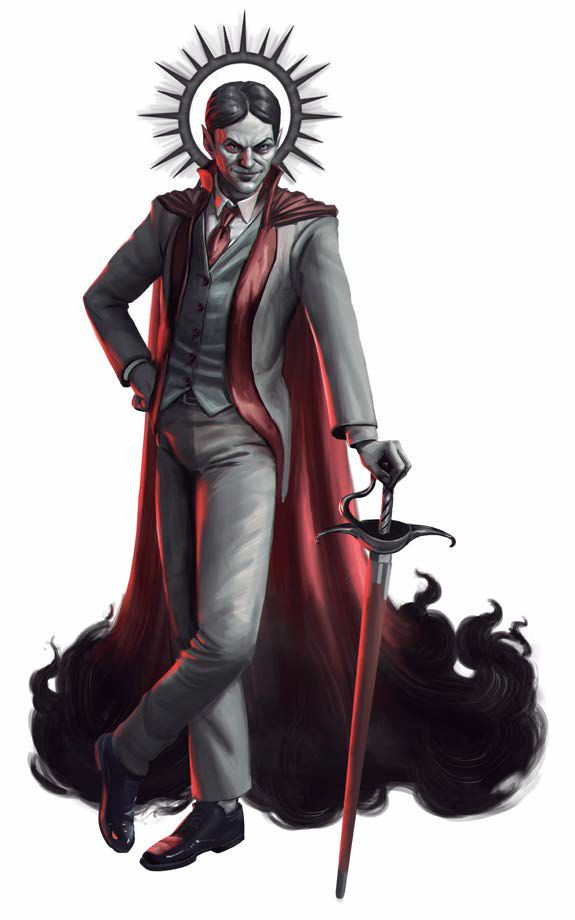
Count Ranalc also keeps my attention firmly on Golarion. His disappearance remains unresolved, with suspicion surrounding Nex and their history of rivalry, cooperation, and hostility. After our earlier discussion of Nex’s return, that is a connection I am watching carefully, especially with my playing in an Impossible Lands game! Feybound leaves the nature of any involvement uncertain. The Lantern King’s recent moments of patience and mercy likewise invite questions without explaining the change. Neither development gives us a confirmed next event, but both could become consequential for people dealing with these powers.
The mysteries get stranger still around Imbrex and Ng. The Dreamshapers are building an unusual vessel from dream instructions, while other dreamers envision its arrival at an inverted city. Ng’s Palace of Seasons contains alternatives far beyond the familiar four, a shattered container with its label missing, and indications that the palace belongs to someone else. Add Shyka’s involvement with time and the possibilities extend far beyond any one nation. I don’t want every mystery resolved immediately, but I very much want to see what happens when someone starts investigating them. This gives you the GM opportunity to decide what these floated mysteries truly mean.
Adventurer and Storyteller
Zoldan’s presence gives the gazetteer a personality I really appreciate. I love how the Pathfinder books are framed in this way with NPC perspective, in-universe narratives, etc.. Zoldan arrives with preferences, prejudices, and a real curiosity you hope to find in your players’ characters. His belief that dreaming protects him from dangers his physical body couldn’t survive is an interesting one. His journal rearranges itself, encounters trouble with confidence, and the Green Mother takes an uncomfortable interest in his work. We’re reading someone’s experiences of a place that resists consistency, so his interpretations matter alongside the events themselves. His fascination and fear make me want to explore, even when he’s emphatic that a destination is best avoided.
His visit to Thousandbreaths is particularly useful for Kingmaker GMs. He meets a Nyrissa who softens when he doesn’t recognize her, hears her account of her history with Ranalc, and later encounters conflicting reports, including claims that mortals killed her. His sympathetic experience doesn’t erase the suffering associated with her, and the book leaves him unsure what to believe. I appreciate the room that creates for considering these accounts alongside what happened at our own tables, especially given the First World’s troubled relationship with chronology.
The Revels’ guide supplies the emotional finish. After asking what the Visitor has learned from the circles, the voice suggests that its experience of time leaves no opportunity to miss them then admits otherwise. The return home brings uncertain memories and the unsettling possibility that something else crossed over too. That’s a fey story for sure. We’ve spent a book exploring fey relationships with mortality and change, and it ends with an attachment that has impact. The farewell gives the stories before it a warmth I was very happy to find, but there’s a promise of danger ahead too.
What Are You Bringing Back?
Feybound gives us many great reasons to keep reading beyond the rules, and hopefully I’ve shown that here! I’m thinking about a recovered harp and what it means for its people. I worry over the obligations of a visiting ruler. And also, y’know, whether a kingdom can understand its neighbors well enough to avoid doing lasting harm. Wouldn’t that be nice to see that more? The lore keeps turning into people I want the party to meet and decisions I’d enjoy seeing them make. Thanks to the authors and everyone involved for giving us so much to explore! Let me know which destinations caught your attention and what mysteries you want to return to. I really hope for an adventure path that takes us into the First World. Hopefully the Norn can see that in store (the Paizo store that is) for us. Until next time, please remember to support one another, and much love to all!
Investing In:
I wasn’t quite sure what to name my article series when I first started but the idea of showcasing or discussing things that make me excited, that I find new and interesting, or maybe I’m otherwise passionate about seemed to fit with the idea of Investing In something like the Pathfinder 2E mechanic. To use some magic items you have to give that little bit of yourself, which helps make these things even better. I like the metaphor of the community growing and being strengthened in the same way!
I also want to hear what you’re Investing In! Leave me a comment below about what games, modules, systems, products, people, live streams, etc you enjoy! You can also hit me up on social media as silentinfinity. I want to hear what excites you and what you’re passionate about. There’s so much wonderful content, people, groups (I could go on) in this community of ours that the more we invest in and share, the better it becomes!
Sources
Banner – The First World chapter art modified, Feybound, Paizo
- The Yestereve Revels! excerpt, Feybound, Paizo
- Treating with the Fey banner, Feybound, Paizo
- Talons True banner, Feybound, Paizo
- Starlit Crown banner, Feybound, Paizo
- Adventuring in the First World banner, Feybound, Paizo
- Godsarm banner, Feybound, Paizo
- Count Ranalc, The First World, Feybound, Paizo
- Blood Moon Ascendancy banner, Feybound, Paizo